
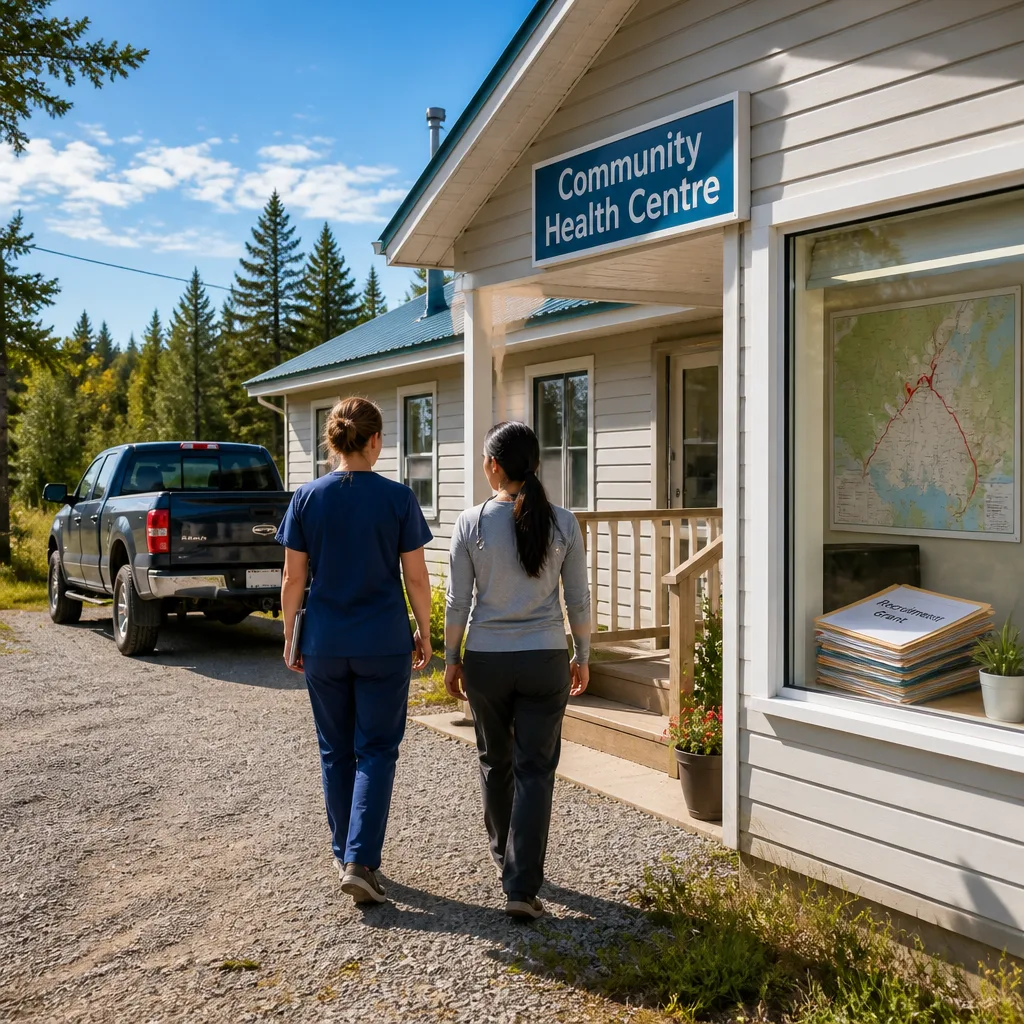
Alberta has moved to strengthen health services in rural and remote communities by directing $9 million to primary care initiatives, including nearly $8 million through a Rural Team Recruitment Grant designed to expand local care teams.
Funding aimed at keeping care closer to home
The province’s latest intake from that recruitment grant awarded $3.4 million to 23 clinics, supporting the creation of 53 new full‑time health‑care positions in rural and remote communities. The measures form part of Alberta’s broader Rural Health Action Plan and are funded through federal dollars provided under a bilateral health‑care agreement.
Health officials framed the investment as a way to reduce travel times and relieve pressure on both rural family physicians and acute‑care services such as emergency departments. Alberta’s minister of primary and preventative health services, Justin Wright, said the aim is to let people access diagnosis and treatment locally rather than driving great distances.
“My vision for health care is that you're not having to drive three hours to meet with the people you need to see to diagnose you,” Wright told The Macleod Gazette.
Where the money is going
The recent recipients include clinics serving communities across the province. Some of the locations identified in the latest grants are:
- Consort, about 220 kilometres east of Red Deer near the Saskatchewan border
- Vermilion, about 190 kilometres east of Edmonton
- Crowsnest Pass, in the deep southwest roughly 145 kilometres west of Lethbridge
- Other communities on the list include Stettler, Ponoka, Grande Prairie, Crossfield, Sundre, Langdon and Stirling
Combined, the populations of some of the named towns represent a fraction of Alberta’s urban centres, underlining the sparsity of residents served by these clinics.
| Funding stream | Amount | Purpose / impact |
|---|---|---|
| Rural Team Recruitment Grant (latest intake) | $3.4 million | Supports 23 clinics and 53 full‑time positions |
| Overall provincial allocation (federal funds) | $9 million | Supports rural primary care aligned with Rural Health Action Plan |
| Municipality Supported Clinics Grants (recent award) | $1 million | Funds for seven municipalities to support new staff |
Expected effects and remaining questions
Officials say the initiative is intended to make care more accessible locally, which could lessen reliance on emergency departments and reduce travel burdens for patients. The $3.4‑million tranche will immediately fund dozens of positions, but the broader $9‑million envelope is part of an ongoing federal‑provincial approach to rural health that includes other targeted grants.
One distinct portion of the program, called the Municipality Supported Clinics Grants, allotted $1 million to support staffing in seven municipalities. The province says such measures are intended to ease load on primary providers and improve continuity of care for residents living outside major urban centres.
While the funding announcement outlines immediate hires and locations, it does not detail long‑term sustainability plans for the newly created positions or how recruitment will address persistent workforce shortages in remote settings. The success of the grants will depend in part on whether clinics can retain staff and integrate new roles into local service models.
For rural Albertans, the grants represent a targeted attempt to close the gap in access that many say exists between urban and remote populations. The province describes the funding as a practical step toward a system where patients need not travel hours to obtain basic diagnostic or specialty advice.
As clinics begin to onboard new staff, officials will need to monitor effects on wait times, emergency department visits and overall continuity of care to assess whether the investments achieve the hoped‑for reductions in travel and pressures on acute services.















