
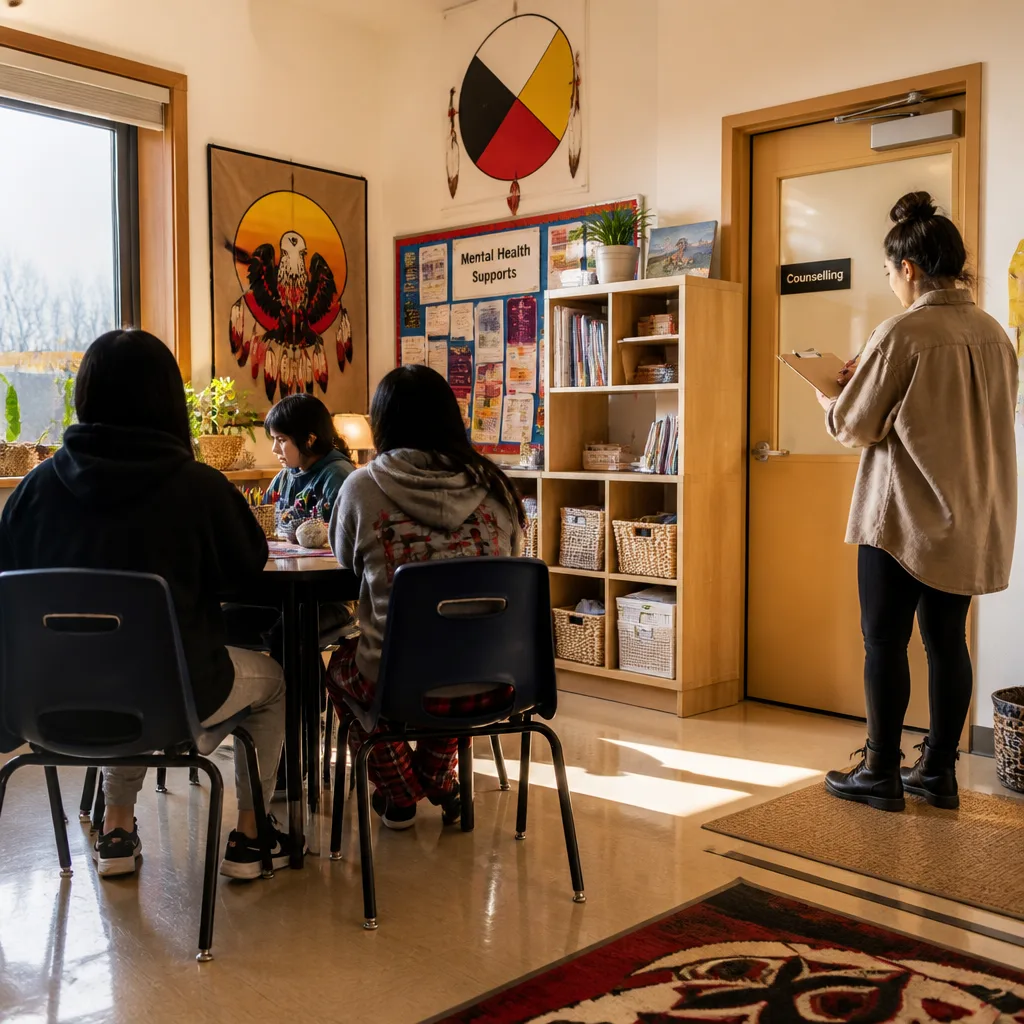
The Alberta government is directing $4.9 million to on‑reserve First Nations schools through a new Specialized Learning and Mental Health Supports Grant intended to help pay for the higher costs of delivering services in rural and remote communities.
Funds meant to keep services close to home
The grant is designed to allow schools to hire specialised staff and broaden mental‑health programming so that young people do not have to leave their communities to access care. Education Minister Demetrios Nicolaides framed the funding as an effort to strengthen both students’ academic confidence and their overall well‑being.
“The funding is designed to boost both academic confidence and overall well‑being,” the Education Minister said.
Indigenous Relations Minister Rajan Sawhney said providing services near where students live will help them stay connected to their cultures.
“Delivering these services close to home helps young people remain rooted in their cultures,” the minister said.
Building on existing investments
The new $4.9‑million grant is additional to $101 million already committed in Budget 2026 under the First Nations, Métis and Inuit Grant. Alberta officials say the combined funding is intended to address both educational and wellness needs within community schools.
Educators working in the affected communities report early benefits from the combined investments. Dr. Daphne Mai’Stoina of KTCEA and Wayne Jackson of Whitefish Lake have said the funding is helping to strengthen cultural identity, a sense of belonging, and access to essential wellness resources where students live and learn.
Practical implications for schools and students
School administrators can allocate the grant to a range of needs related to specialized learning and mental‑health supports. The announcement highlights two primary objectives:
- Reduce the need for students to travel outside their communities to access mental‑health services.
- Support recruitment or expansion of specialised educational staff and programming tailored to community needs.
Those priorities reflect recurring concerns among Indigenous educators and families about interruptions to schooling and cultural disconnection when students must leave their communities for care.
| Item | Amount |
|---|---|
| Specialized Learning and Mental Health Supports Grant | $4.9 million |
| First Nations, Métis and Inuit Grant (Budget 2026) | $101 million |
Context and consequences
Delivering mental‑health and specialised learning resources in remote and on‑reserve schools can involve higher costs because of travel, recruitment challenges and the need for culturally relevant programming. Provincial funding that targets these cost drivers aims to make supports more sustainable and accessible.
By emphasising services that allow students to remain in their home communities, the government and educators also link mental‑health supports with cultural continuity — an approach that community leaders say is important to student well‑being.
The announcement does not specify how the new grant will be divided among on‑reserve schools or the timetable for distribution. Local education authorities and Indigenous leadership will have roles in determining how funds are used to meet community priorities, officials said.
For families and school staff, the most immediate measure of success will be whether the funding reduces barriers to care, strengthens culturally appropriate programming and helps keep students engaged academically and socially without needing to leave their communities for supports.















