
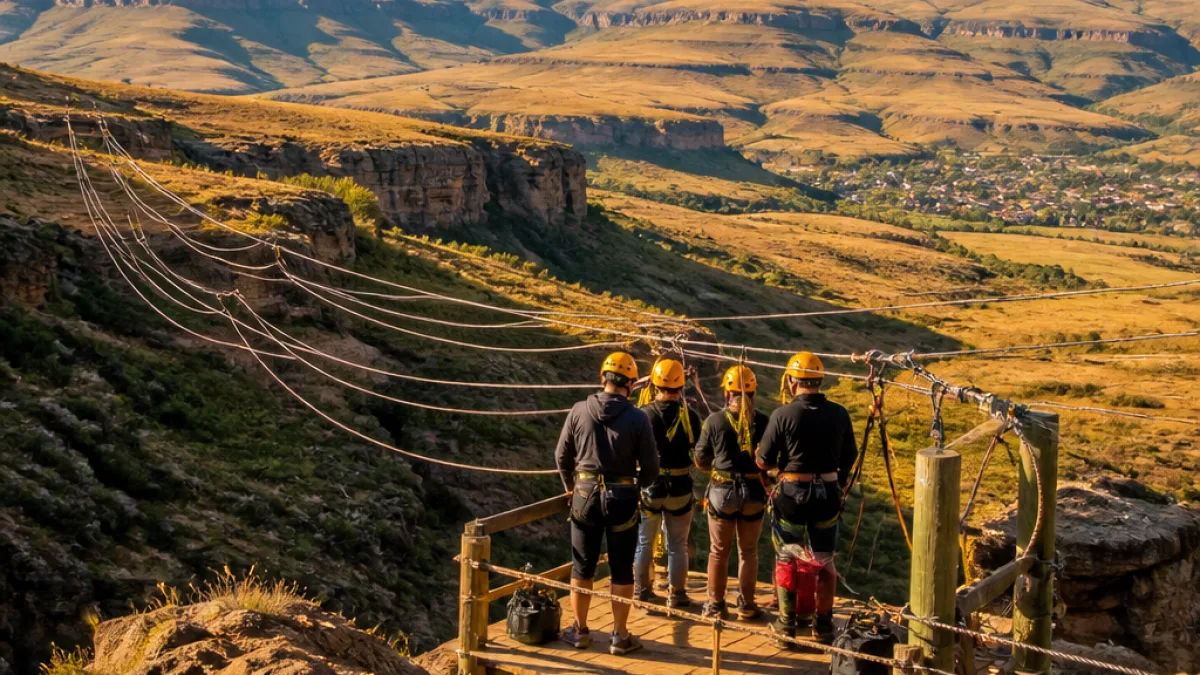
Golden Gate Highlands National Park has added a new way for visitors to take in the Maluti Mountains: a commercially operated zipline running across seven cables and between elevated platforms that offers panoramic views of the park’s sandstone cliffs and high‑veld plains.
The attraction was introduced by South African National Parks (SANParks) in partnership with the Golden Gate Zipline operation and is designed to combine an outdoor adventure with careful attention to the park’s natural and cultural heritage, according to the operator.
Local jobs and tourism income
The zipline is expected to contribute to increased tourism in Clarens and to generate additional income streams for SANParks, the operator told SAnews. The project has already created 20 jobs for local residents, and a further cohort of staff are undergoing training.
- Seven zipline cables connect a series of elevated platforms across the landscape.
- 20 direct positions were created for residents of Clarens and the Free State.
- 10 additional people are currently in training, a process that the operator says takes between six and 12 months.
Golden Gate Zipline Director Mika Lutchman told SAnews the business prioritised local hiring and training: "We have made sure that we hire staff locally. All our staff are local, from Clarens and the Free State. We want to promote local employment, training and skills development because all our guides receive specific skills training, certification and first‑aid training."
"It was very important for us to develop a sustainable product, one that is in symbiosis with the environment in which it finds itself. It was important for us not to disturb vegetation or protected species, and not to damage rock."
Environmental safeguards
According to the operator, environmental considerations and impact assessments were part of the planning and development process. The project reportedly took about two years to establish, with architects and engineers working to minimise disturbance to vegetation, protected species and rock formations.
Officials said professional‑grade harnesses, equipment and trained guides will support the activity. The operator underlined the need for certification and first‑aid training among staff, and said systems are in place to manage safety and visitor flow.
Practical implications for visitors and the local economy
The zipline adds to existing activities in the park, which already offers hiking, horse riding and heritage interpretation including fossil sites and rock art. Operators expect the new offering to increase overnight occupancy at SANParks accommodation in Golden Gate, as visitors combine the adventure experience with longer stays in Clarens and surrounds.
For prospective visitors, the key points are:
- Bookings: the activity is run commercially and is likely to require advance bookings, particularly during holiday periods.
- Safety: certified guides and professional equipment are used, and staff receive specific training and first‑aid certification.
- Impact: the development followed environmental assessments intended to protect the park’s biodiversity and cultural sites.
| Feature | Detail |
|---|---|
| Cables | 7 |
| Jobs created | 20 |
| Staff in training | 10 (6–12 months training) |
| Development time | About two years |
Local tourism businesses in Clarens are likely to benefit if the zipline increases visitor numbers and overnight stays. SANParks and the operator said they anticipate higher occupancy at park accommodation, though no financial projections were provided in the report.
As with any activity introduced into a protected area, monitoring will be important: to ensure the attraction continues to operate within the bounds of its environmental approval, to assess impacts on wildlife and vegetation, and to measure its contribution to local employment and tourism growth.
The zipline at Golden Gate Highland National Park positions the reserve among a growing number of South African protected areas that are diversifying visitor offerings to balance conservation goals with community benefits and sustainable tourism development.














