Wildfire smoke is becoming a factor in holiday planning for many people in Montana, according to new research from the University of Montana. The findings suggest that the effects of fires extend beyond air quality and emergency response, reaching into the way residents choose when and where to travel.
A survey of more than 4,400 Montana residents, carried out in spring 2026, found that 57% expected smoke to influence their summer travel plans. About four in 10 respondents said they had already changed, postponed or cancelled a summer trip because of smoky conditions.
Travel decisions are shifting
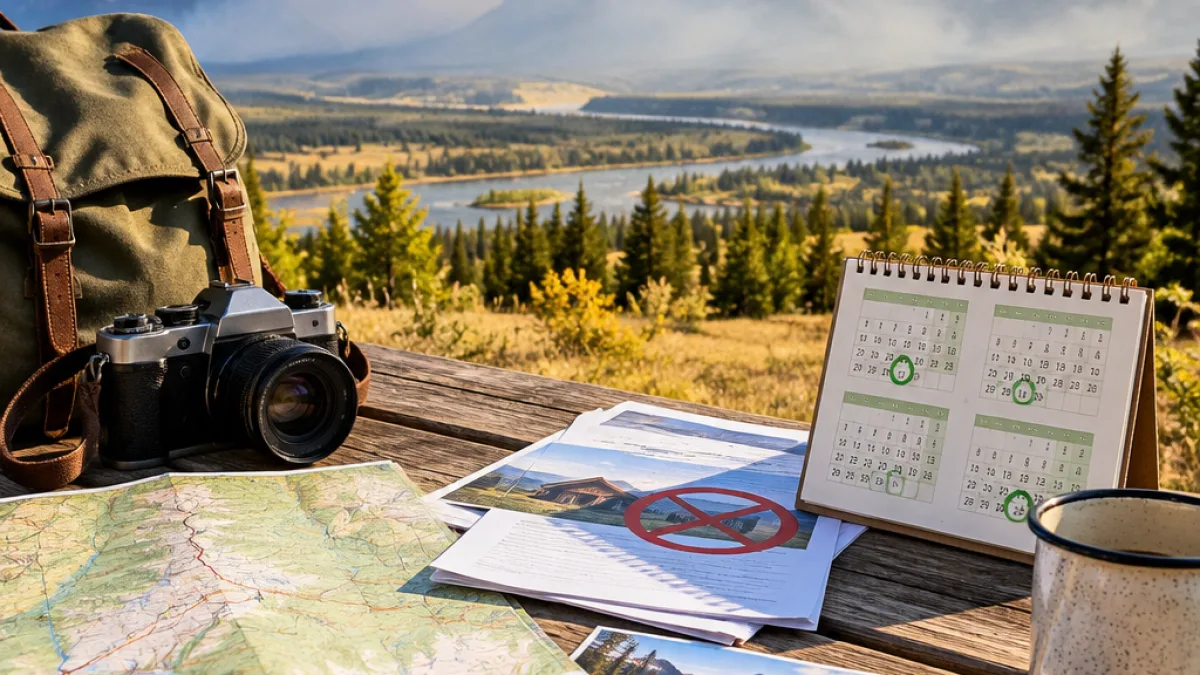
The research indicates that people are not necessarily abandoning travel altogether. Instead, many are looking for ways to work around the period when wildfire smoke is most likely to affect their plans. Some respondents considered alternative destinations, while others prepared backup arrangements or looked at travelling outside the peak fire season.
| Finding | Reported result |
|---|---|
| Residents surveyed | More than 4,400 |
| Expected smoke to affect summer travel | 57% |
| Changed, delayed or cancelled a summer trip | About four in 10 |
Carter Bermingham, a researcher at the university’s Institute for Tourism and Recreation Research, said the scale of the response was notable. The results showed that the issue affected more than a small group of travellers, with a majority anticipating some change to their plans.
“We thought it would be a few people, but I think to see the majority of folks that it’s impacting their travel plans is something we found was interesting, whether that was building backup plans, trying to avoid the peak fire season, choosing different locations to try and avoid that altogether.”
Tourism looks to the shoulder season
For businesses that depend heavily on summer visitors, the findings could encourage a broader approach to seasonal tourism. Bermingham said operators could consider building their offers around months such as April, May, September and October, when visitation is already beginning to extend beyond the traditional summer period.
That could include developing activities and packages that are not concentrated only in the busiest part of the year. Such a shift may give travellers more flexibility while helping tourism businesses avoid relying on a single season, particularly when smoke or fires disrupt outdoor plans.
- Travellers may create backup itineraries before leaving home.
- Some may choose different locations to avoid smoky conditions.
- Tourism businesses may place more emphasis on April, May, September and October.
Bermingham cautioned that the effect is not uniform across Montana. Geography and local climate play a role in how smoke moves and settles. In the mountainous western part of the state, valleys can hold smoke for longer, making conditions more noticeable than in eastern areas.
“Obviously the western part of the state, with how mountainous it is and the valleys, smoke can kind of collect more. It can kind of be more present as opposed to the eastern part of the state, so it’s not the same everywhere for everybody.”
Further research planned
The study forms part of a five-year project funded by the United States Department of Agriculture. The wider project is examining how wildfire smoke affects visitor numbers and spending across the Rocky Mountains and Northern Plains.
The current research focuses on Montana residents, while future work may also survey tourists directly. That could provide a fuller picture of how smoke affects people who are considering a visit, including whether they cancel a journey, change their destination or move their travel to another time of year.
For now, the findings offer a clear indication that wildfire smoke is influencing leisure choices in Montana. As residents become more accustomed to planning around changing conditions, the tourism sector may need to respond with greater flexibility, more varied seasonal offerings and realistic alternatives for travellers whose outdoor plans are affected.