
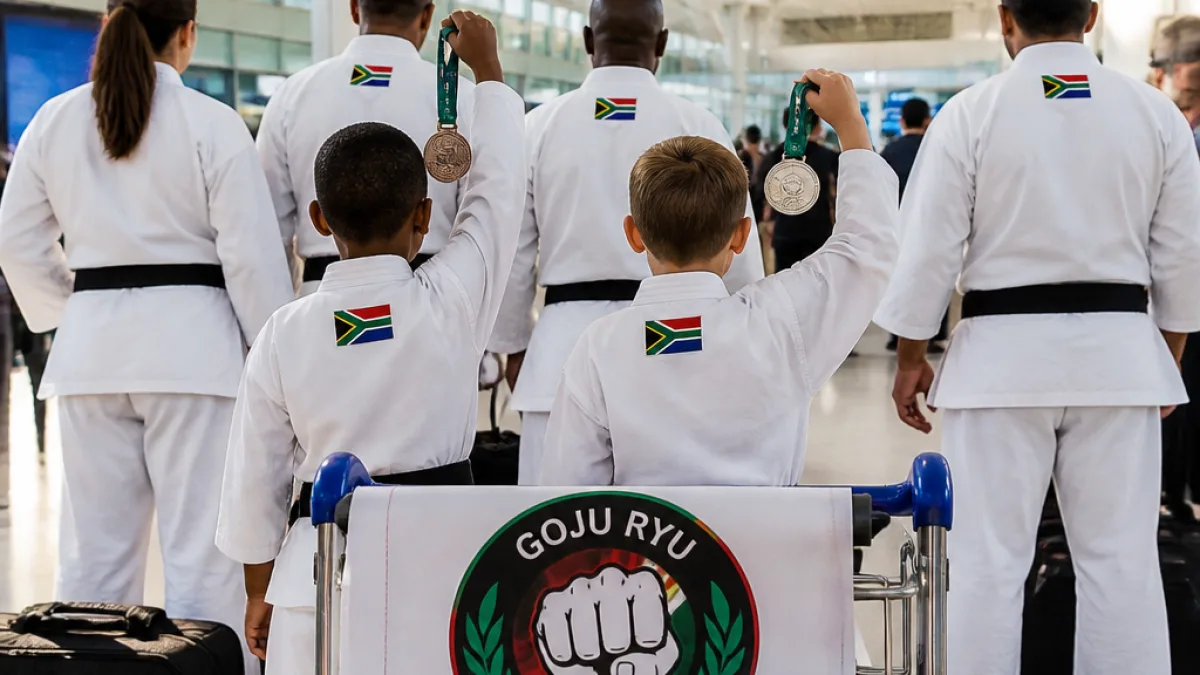
Karate athletes from South Africa’s Goju Ryu clubs, including competitors from Western Cape clubs and a seven-strong contingent from Randburg, returned from the 25th Milo International Karate Championship in Malaysia having secured podium places and international exposure.
Medals and experience for a mixed-age team
The South African Goju Ryu delegation consisted of 14 athletes and four coaches. Randburg’s dojo contributed seven athletes, aged between nine and 44, and two coaches. Coaches from other Goju Ryu branches completed the national coaching team.
The trip yielded two notable individual medals. A young competitor from the Randburg group, Thandile Mbentse, finished third in the girls’ individual kata (9–10 years), earning a bronze for her concentration and technique. Senior competitor Leilah Bhyat fought through a competitive draw to claim silver in the under-68kg female kumite.
| Athlete | Club | Event | Result |
|---|---|---|---|
| Thandile Mbentse | Randburg | Individual kata (Girls 9–10) | Bronze |
| Leilah Bhyat | Randburg | Individual kumite (Female senior under 68kg) | Silver |
Coaching, youth development and pride
Sponsors and parents celebrated the results, while coaches emphasised the longer-term benefits of competing at world-class events. The trip combined high-level competition with cultural exposure — athletes and accompanying family members toured local landmarks and experienced Malaysian hospitality.
A highlight off the mat was a visit to the Batu Caves, where the team tackled the site’s 272 steps, a memorable cultural stop that parents described as bonding and instructive for the younger competitors.
“The competition was incredibly stiff. The standard was world-class and every point had to be earned,” said sensei Nigel Jirira, reflecting on the level of opposition and the lessons taken back to the dojo.
Local impact and what this means for Western Cape karate
While the Randburg dojo produced the medal-winning performances, Western Cape clubs travelled as part of the national Goju Ryu contingent and benefited from the same exposure to international refereeing, different fighting styles and performance pressure. Coaches say that exposure to such standards helps refine training programmes back home and provides role models for younger practitioners.
For the Western Cape, representation at an event of this calibre helps maintain momentum for martial arts programmes that often operate with limited resources. The experience of competing abroad — facing varied styles and meeting other young athletes — is routinely cited by trainers as a catalyst for improved local participation and standards.
Looking ahead
Coaches plan to use the lessons learned in Malaysia when preparing athletes for national tournaments and for selection to future international events. The return of medal-winning juniors and seniors alike will also be used as an encouragement to recruit new members and to bolster junior training sessions in the province.
- Delegation size: 14 athletes, 4 coaches (South African Goju Ryu contingent)
- Randburg contribution: 7 athletes, 2 coaches
- Podium finishes: Bronze (Thandile Mbentse), Silver (Leilah Bhyat)
- Cultural highlights: Batu Caves visit and local cuisine experiences
The trip underlined the value of international competition for South African martial arts. For the Western Cape and for the Randburg club members who travelled, the medals are tangible returns; the broader prize may be sharper training, stronger youth pathways and a deeper pool of athletes willing to test themselves on the world stage.
Coverage of grassroots sport often shows progress in small, steady steps. For these Goju Ryu athletes, Malaysia provided a steep climb — on and off the mat — that paid off in both medals and lessons to take back to their dojos.














