
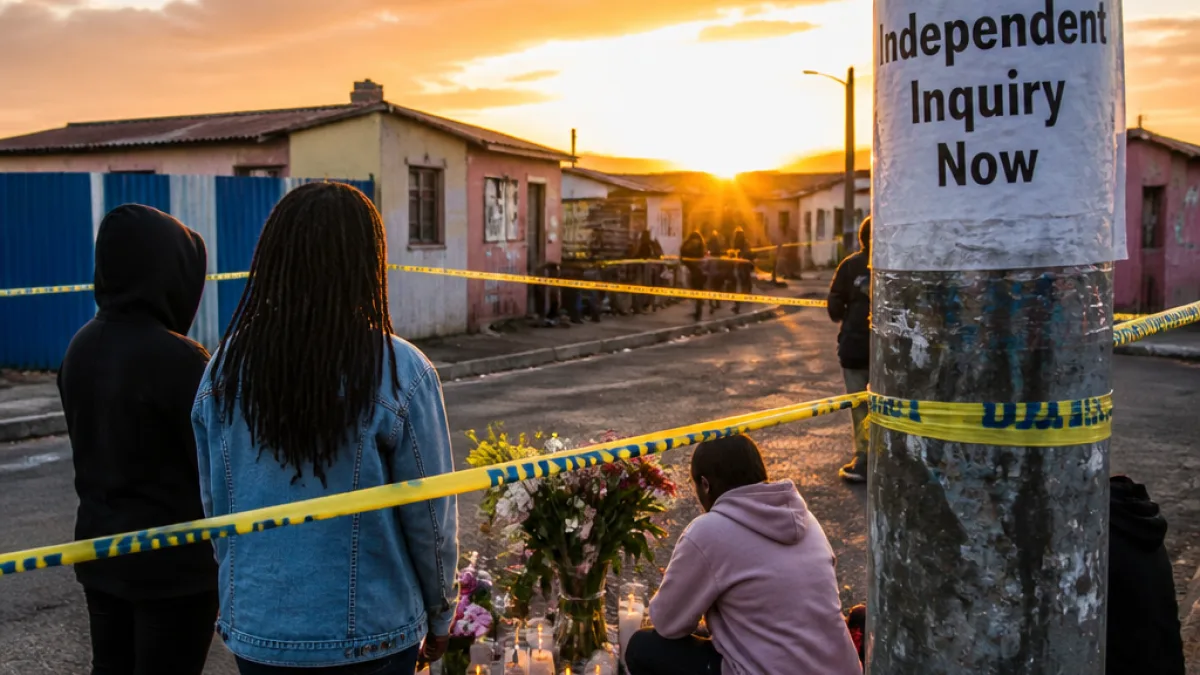
The United Democratic Movement (UDM) in the Western Cape has called for comprehensive, independent investigations after eleven people were killed in separate shootings in Langa, Gugulethu and Khayelitsha over the weekend. The party said the incidents expose deeper problems involving illegal firearms, organised criminal networks, drugs and extortion that successive short-term responses have failed to resolve.
UDM: condemnation is not enough
In a statement, the Western Cape chairperson of the UDM, Ms Bulelwa Zondeka, expressed condolences to the victims' families and wished the injured a full recovery. The party condemned the killings and warned that treating each mass shooting as a standalone tragedy, followed by temporary intervention and promises of arrests, will not stem the violence.
"We condemn these killings in the strongest terms."
The UDM said the recurring violence is tied to a broader criminal economy. It urged law-enforcement agencies to follow every illegal firearm recovered with investigations that go beyond the person found carrying it — asking where the weapon originated, who supplied it and to what other crimes it may be linked.
From illegal guns to extortion: a connected problem
The party highlighted concerns that drugs and extortion may be connected to the latest shootings, arguing that illegal firearms, gangsterism, drugs and extortion form an interlocking criminal ecosystem. The UDM said these elements cannot be tackled in isolation and called for coordinated action across policing, prosecution and community safety structures.
While the UDM stopped short of naming specific suspects or operations, its statement pressed for investigations that trace supply chains and criminal networks rather than focusing only on arrests at the point of violence.
Trust in policing under strain
A second major concern raised by the UDM is the relationship between residents of gang-affected areas and the South African Police Service (SAPS). The statement said that although residents are regularly urged to give information and told they can do so anonymously, many fear retaliation against themselves or family if they engage with police.
Where there are allegations that confidential information shared with law enforcement finds its way to criminals, the UDM demanded those claims be independently investigated. The party warned that even the perception of compromised information destroys trust and cripples crime intelligence, noting that the state cannot ask witnesses for courage while failing to guarantee their safety.
- Independent probes: The UDM wants outside investigations into shootings and allegations of compromised intelligence.
- Follow the guns: Every recovered illegal firearm should trigger tracing inquiries into supply and links to other crimes.
- Integrated response: Illegal firearms, drugs, extortion and gang activity must be tackled as a connected problem.
Calls for a sustained, coordinated response
The party also criticised what it described as a fragmented response to the crisis. It argued that temporary blitzes or ad hoc arrests do not dismantle organised criminal economies fuelled by fear, intimidation and corrupt supply lines for weapons and drugs. Instead, the UDM called for a sustained, co-ordinated approach that combines community protection, robust intelligence management and efforts to disrupt funding and supply channels.
Police spokespeople were not quoted in the UDM statement. The party’s remarks add to pressure on provincial and national policing authorities to demonstrate measurable progress in lowering gang violence and ensuring that communities feel able to cooperate with law enforcement without fear of reprisals.
Practical implications for affected communities
The UDM’s intervention highlights two immediate implications for residents of Langa, Gugulethu and Khayelitsha: a continuing risk from organised gun violence, and persistent anxiety about the safety of anyone providing information to police. Where trust between communities and police erodes, effective crime intelligence and targeted policing become much harder.
| Problem | UDM demand |
|---|---|
| Illegal firearms | Trace origins and link to wider criminal activity |
| Extortion and drugs | Address as part of organised criminal economy |
| Compromised intelligence | Independent investigation and witness protection |
For provincial authorities and SAPS, the UDM’s statement is a demand for more than rhetoric: it seeks demonstrable systems that protect informants, trace weapon flows and break the financial and logistical networks that sustain gang violence. The party said government must take community fears seriously rather than chiding residents for silence.
The shootings over the weekend are the latest in a long pattern of fatal violence in some Cape Town townships. The UDM’s call for independent investigations and an integrated strategy adds to other community and civil-society demands for durable solutions that go beyond short-lived crime-fighting operations.
As the province awaits details from law enforcement about arrests or seizures linked to the weekend incidents, the UDM has signalled it will continue to press for accountability and measures to rebuild trust between police and the communities most affected by gang violence.













