
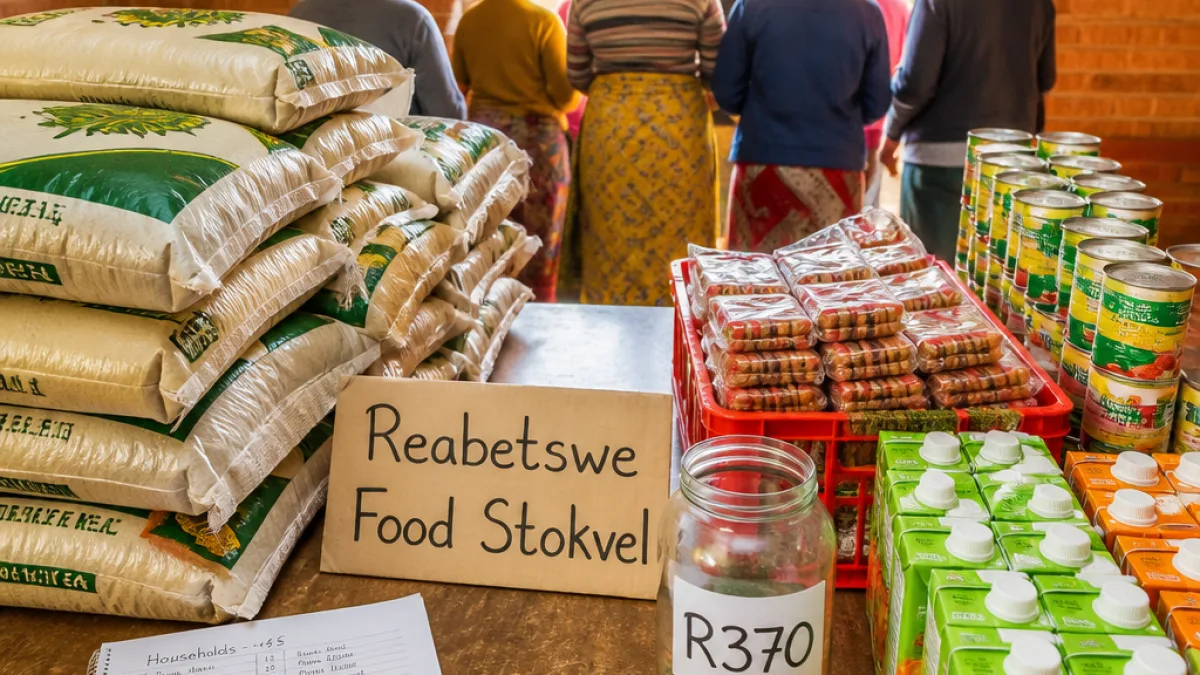
Neighbour-led stokvel stretches tight budgets and buys extra food for December
In Tsetse Village outside Mahikeng, three neighbours who grew frustrated with poor stokvel management started their own food savings group in 2023. What began as a small arrangement has grown into the Reabetswe Food Stokvel, a community effort that now includes 45 households who each contribute R370 a month to buy groceries, toiletries, meat and snacks in bulk.
The stokvel has become a buffer for families who contend with rising food prices and irregular incomes. Members say the pooled purchasing power makes it possible to afford extras over December and to start the new year without accumulating the short-term debt many previously relied on.
“Now in December, we can also buy juice, biscuits and meat. Before the stokvel, December was just pap and hope,”
The quote comes from Mapiti Seleka, a 41-year-old mother of a six-year-old who is unemployed and contributes her R370 social grant to the stokvel. Seleka said that before the group she had depended on loans from mashonisas (informal moneylenders) and that the stokvel changed both how her family shops and how they manage debt.
Co-founder Kedisaletse Molefe and fellow organiser Katlego Malgas helped set up the Reabetswe group after a disagreement with the administration of a previous stokvel that excluded toiletries and snacks and left members feeling short-changed. The new arrangement is deliberately broader in scope: the contributions cover not only staple groceries but also toiletries, meat and snack items that many households want during the December holidays.
How the stokvel helps members
- Bulk buying reduces per-item cost and stretches household budgets, especially when food inflation rises.
- Members can afford special items in December and keep surplus stock into January when many households face cash shortages.
- Regular contributions reduce reliance on informal lenders and help members avoid short-term debt spikes at year-end.
Members said the stokvel’s planning allows them to buy for the whole group, preserving affordability and ensuring that those with the tightest budgets can access more nutritious food and personal necessities during months when cash is scarce.
| Established | Members | Monthly contribution | Primary purpose |
|---|---|---|---|
| 2023 | 45 households | R370 | Groceries, toiletries, meat and snacks |
Stokvels are a long-standing feature of South Africa’s informal economy and social life. Community savings groups provide both financial discipline and collective buying power for members who do not always have access to formal credit or enough regular income to absorb price shocks.
For people like Seleka, the practical benefits are immediate. She said the Reabetswe stokvel means she can feed her child without resorting to borrowing during the festive season and that leftover stock helps the family through the usually lean early months of the year.
Beyond immediate material relief, stokvels can strengthen local social bonds. Neighbours who contribute and manage the group together share responsibility for purchases and distribution, and organisers typically rotate tasks so that record-keeping and bulk buying are spread among members.
Reabetswe’s origin story underlines common challenges: members left a previous stokvel because they felt its management was unsatisfactory and that essential items were excluded. That prompted the three founders to set up an alternative that more directly reflected household needs.
While this group’s model — fixed monthly contributions and bulk purchasing — is straightforward, it depends on consistent payments and trust among members. The stokvel’s organisers say steady participation has allowed planning for December and the months after, but such groups can face pressure if members’ incomes fall or if unexpected expenses prevent contributions.
For communities across the North West, Reabetswe’s experience offers a practical example of how mutual aid and disciplined saving can reduce vulnerability to food price spikes and the year-end squeeze. It also highlights how local solutions adapt to include items beyond staples — toiletries and treats — that make a material difference to family life.
Members of the stokvel keep their own records and coordinate bulk purchases; they say the system has helped families stay afloat without the short-term borrowing that previously pushed many into debt. As food costs remain a primary concern for low-income households, community initiatives such as Reabetswe show how pooled resources can provide immediate relief and modest resilience.
Contact and practical note: Households interested in forming similar groups commonly begin by agreeing on a monthly contribution amount, a transparent record-keeping system and a schedule for bulk purchases. Local NGOs and community leaders often help with initial administration, but the basic mechanism relies on neighbours deciding together what their community needs most.















