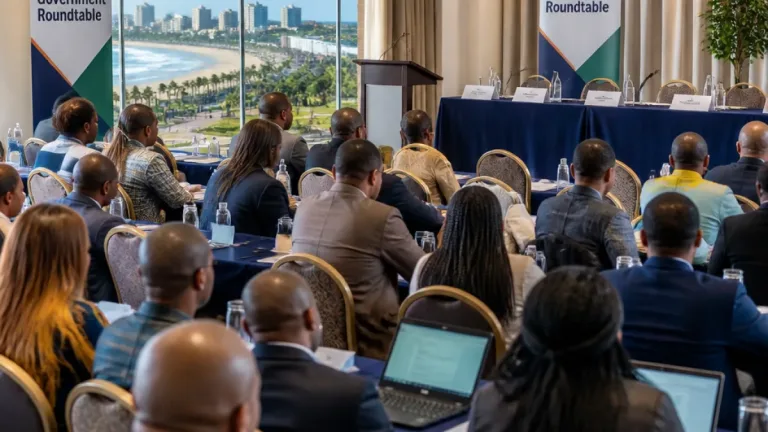
Durban — President Cyril Ramaphosa has warned that efforts to deepen regional integration within the Southern African Development Community (SADC) are being undermined by rising discrimination and hostility towards migrants in some communities, as leaders gather in Durban this weekend for the 46th SADC Summit.
Migration a central challenge as summit opens
Speaking at a public lecture hosted at the University of KwaZulu-Natal’s Westville campus, Ramaphosa said South Africa could not credibly promote regional integration abroad while allowing exclusionary conduct to take root at home. The address preceded high-level summit meetings that will focus on political and economic cooperation across the region.
“We cannot preach integration at summits and practise exclusion in our streets,”
The president acknowledged that criminal conduct by some foreign nationals had heightened public concern, but he said the actions of a few could not justify broad hostility towards entire migrant communities. Ramaphosa described such hostility as a repudiation of the solidarity on which SADC was founded, and said the region should strive for a system in which people move by choice rather than necessity.
Regional approach urged
International Relations and Co-operation Minister Ronald Lamola also emphasised the need for a regional response to migration during summit preparations, according to reporting of the lecture and summit briefings. Both ministers framed migration as an issue that requires coordinated laws, protocols and political leadership across SADC states to reduce tensions and protect human rights.
Ramaphosa reiterated a broader vision in which migration flows are guided by established laws and regional protocols rather than ad hoc, often hostile, local responses. He said the region’s history has long been shaped by movements of people and that contemporary policy must reflect that reality.
What this means for KwaZulu-Natal
KwaZulu-Natal hosts large cross-border and internal migrant communities and has been at the centre of national debates about migration and social cohesion. Local authorities and civil-society organisations in the province will be watching the summit’s outcomes closely for commitments or mechanisms that could be implemented at municipal and provincial level.
Possible local implications include:
- Increased coordination between provincial departments and national migration agencies on protection and public order measures;
- Stronger emphasis on community outreach to reduce discrimination and misinformation about migrants;
- Calls for clearer regional protocols that municipalities can use to manage cross-border movement and support vulnerable residents.
Leaders frame migration as both humanitarian and strategic issue
The tone from Pretoria framed migration not simply as a security concern but as a matter of regional solidarity and development. According to the reporting, Ramaphosa said SADC should work towards enabling movement that serves choice and opportunity, rather than desperation.
That framing places migration policy at the intersection of human-rights protection and economic planning. For provinces such as KwaZulu-Natal, with major ports and transport links, the debate touches on labour markets, service delivery and local social dynamics.
Summit context and expectations
The SADC Summit is expected to focus on economic integration and political cooperation alongside the migration agenda. South Africa currently holds the SADC chairship, and ministers involved in the summit have reportedly prioritised economic integration during the chairship period.
| Issue | What leaders emphasised |
|---|---|
| Migration | Need for regional protocols and protection against discrimination |
| Integration | Economic and diplomatic cooperation across SADC |
| Local impact | Community cohesion and service-delivery pressures in provinces like KZN |
Delegations and observers in Durban will be assessing whether summit communiqués and planned protocols will include concrete measures to protect migrants, reduce community tensions and facilitate orderly movement for people seeking work or refuge within the region.
Pressure for practical outcomes
Observers say that for summit rhetoric to translate into change, member states must agree on enforceable measures and support for local authorities. Civil-society groups have previously urged SADC to pair high-level commitments with funding and implementation plans that reach municipalities and border communities.
As the summit proceeds, attention will fall on whether member states outline actionable steps to prevent discrimination, improve cross-border cooperation and ensure the safety and dignity of migrants across Southern Africa.
Reporting from Durban.