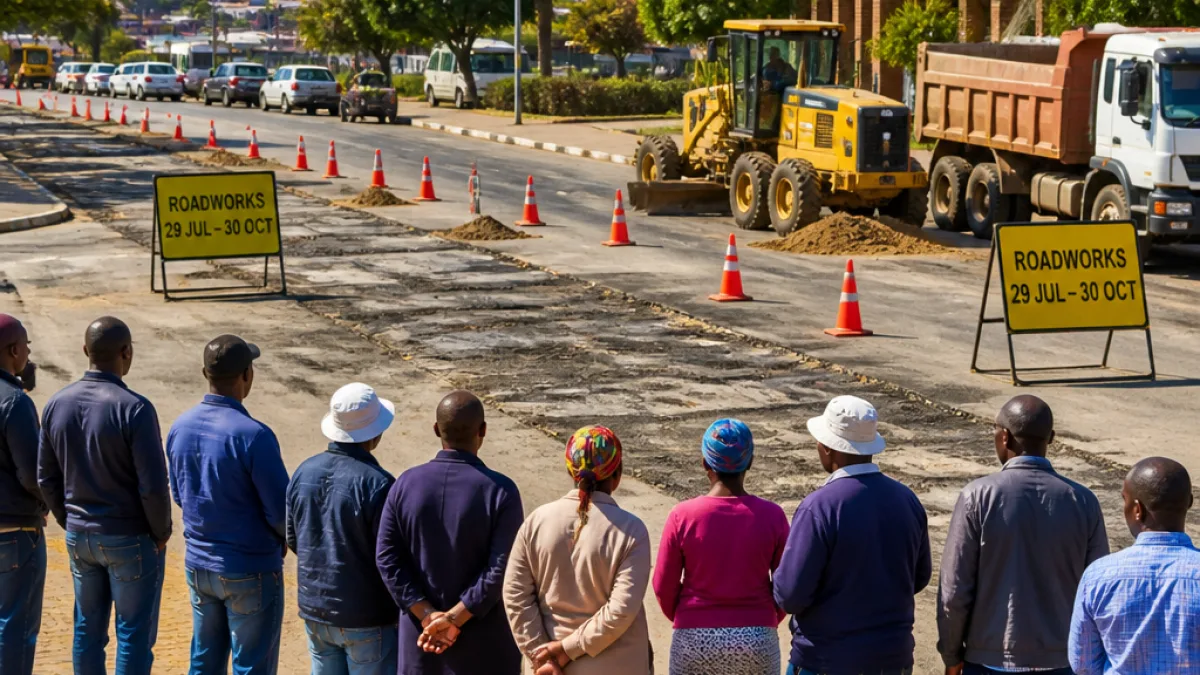
Road repairs in Polokwane CBD and suburbs prompt concern over lasting impact
Large-scale roadworks across Polokwane’s central business district and surrounding suburbs have drawn scrutiny from residents and experts who say the work raises questions about whether the municipality is finally addressing long-standing infrastructure failures or merely applying short-term patches.
Work on key routes in the CBD, Ladanna, Flora Park, Nirvana and Westenburg is scheduled from 29 July to 30 October, with signs in place to warn motorists, the Citizen reported. The timing of the project has been viewed through the lens of a recent National Treasury performance assessment seen by the Polokwane Observer, which rated the city’s service delivery as “distressed” and recorded what it described as an “alarming 80% backlog on roads”.
- Roadworks planned: 29 July–30 October
- Affected areas: CBD, Ladanna, Flora Park, Nirvana, Westenburg
- Treasury finding: 80% roads backlog
The Treasury assessment, as reported, says only 20% of intended road repairs were completed, signalling a large gap between planned and delivered projects. It also flagged more severe municipal challenges beyond roads — including wastewater treatment plants that are operating beyond capacity and risks of untreated effluent entering local water sources.
“You may have the books balancing, but on the ground you will not have matching service delivery,” Associate Professor Ricky Mukonza of Tshwane University of Technology said, according to the Citizen.
Professor Mukonza described the backlog as “quite shocking” for a municipality of Polokwane’s size and warned that sound municipal finances do not automatically translate to improved services. He said the issue is often not about the skill of workers but the political and administrative will to ensure projects are completed and that service providers deliver lasting quality.
Service gaps and system losses
The Treasury report, as seen by local media, set out a broader picture of service shortfalls across Polokwane’s seven municipal clusters. Key figures cited in the reporting include:
| Service | Share without service |
|---|---|
| Municipal water | 28% without |
| Sanitation | 52% without |
| Electricity | 13% without |
The report also quantified resource losses: the municipality was said to be losing 34.4% of its water and 14.7% of its electricity to leaks and theft. Cable theft and vandalism were specifically highlighted as recurring problems, and the municipality reportedly said it may need to deploy 24-hour armed security to protect vital infrastructure.
Residents ask whether repairs will last
For many residents the immediate concern is practical: will resurfaced roads withstand heavy use and seasonal rains, and will simultaneous problems with water and sanitation be addressed? Local traders in the CBD told the Citizen they welcome resurfacing but worry that short-term fixes will not solve long-term deterioration or prevent repeated disruption.
The Treasury assessment nonetheless rated Polokwane as sound on finances, governance and administration, and found no political instability, the reporting said. That contrast — between sound finances on paper and poor performance on the ground — is central to debate about municipal priorities and procurement, and whether contractors are delivering durable work.
Experts and community representatives will be watching the outcome of the road programme closely. If the work is completed to a high standard, it could signal a turning point in repairing visible infrastructure and restoring confidence ahead of local elections. If problems persist, the findings in the Treasury assessment will add pressure on municipal leaders to explain how available funds are being used and to commit to lasting maintenance plans.
As the roadworks proceed, residents are urged to follow municipal notices and traffic signs and to report any incidents of theft or vandalism that may affect projects. Local media reporting and the Treasury assessment will remain sources for residents seeking transparency about delivery and outcomes.