
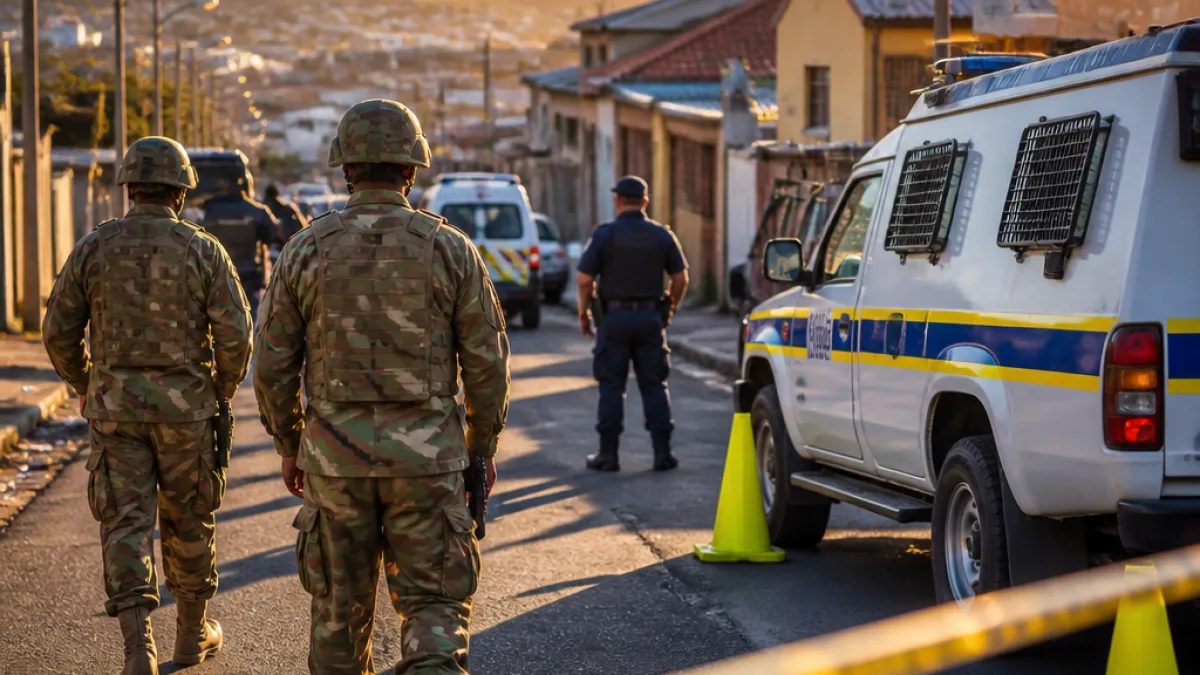
Concerns are mounting over the effectiveness of Operation Prosper after more than 30 murders were recorded in the Western Cape over a single weekend, and reports that the week before saw in excess of 100 killings across the region. The operation — which includes a deployment of the South African National Defence Force (SANDF) to support the police — has come under sharp scrutiny from national oversight structures and analysts.
Oversight chair questions impact
Ian Cameron, chairperson of the National Assembly's Police Portfolio Committee, told the SABC that despite the high-profile deployment there has been no measurable reduction in mass shootings and gang-related violence.
“Operation Prosper is not prospering. It hasn't shown any real result in terms of curbing any form of gang violence or extortion group violence, whatever the case may be,”
Cameron said the persistence — and in some weeks the escalation — of killings pointed to operational weaknesses. He said authorities were effectively “fighting blind”, that criminals on the ground appeared to be aware of planned policing actions, and that deployment was poorly coordinated.
Criticisms of force levels and intelligence
According to Cameron, the numbers of SANDF personnel committed so far have not been sufficient to destabilise entrenched gang networks. He said seizures of drugs and firearms had been achieved, but these successes had not yet translated into the arrest of gang leaders or the dismantling of entire crime structures.
Political analyst Professor Theo Neethling, research fellow in the Department of Political Studies and Governance at the University of the Free State, agreed that the operation had generated visibility but could not be judged a success while major gangs continue to operate and violence persists.
“There was some short-term visibility, but it hasn't been a complete success until now, because the major gangs remain, and the fact is the violent crime continues unabated,”
Both Cameron and Neethling highlighted the need for intelligence-led operations and tighter coordination between agencies if the temporary military support is to have a lasting effect.
What the numbers show
Available reporting places the recent figures in stark relief:
- Last weekend: more than 30 murders reported in the Western Cape.
- Previous seven-day period: reports indicate in excess of 100 murders across the region.
| Period | Reported murders |
|---|---|
| Most recent weekend | >30 |
| Previous seven-day period | >100 |
Operational challenges highlighted
Critics have pointed to several recurring issues that undermine the impact of security deployments: poor inter-agency coordination, insufficiently resourced intelligence, and a mismatch between visible troop numbers and the scale of gang networks. Those problems, according to commentators, allow criminal groups to anticipate operations and remain a step ahead of law enforcement.
Proponents of temporary military deployments argue soldiers can provide immediate disruption and visibility, buy time for police to gather intelligence, and free up police capacity for targeted investigative work. Detractors counter that without a clear intelligence strategy and follow-up arrests, the effect will be transient.
What comes next
The Police Portfolio Committee — which has oversight responsibility for national policing strategy and operations — will likely press for clearer performance metrics and a rigorous assessment of whether military support is being used in ways that enable durable gains. The committee chair’s public remarks signal Parliament’s interest in closer scrutiny.
For residents living in affected communities the immediate priority remains safety. Analysts say any long-term reduction in violence will depend not only on short-term stability operations but on coordinated investigations, targeted arrests of gang leadership, and interventions that disrupt the financial and logistical networks that sustain organised crime.
Provincial and national law-enforcement agencies have not released a consolidated casualty or arrest figure that corresponds to the recent weekend and seven-day tallies cited by oversight sources. The coming days should show whether authorities adjust tactics — including force levels and intelligence coordination — in response to the recent upsurge in killings.
Riaan Bester, Western Cape correspondent (Cape Town)













