
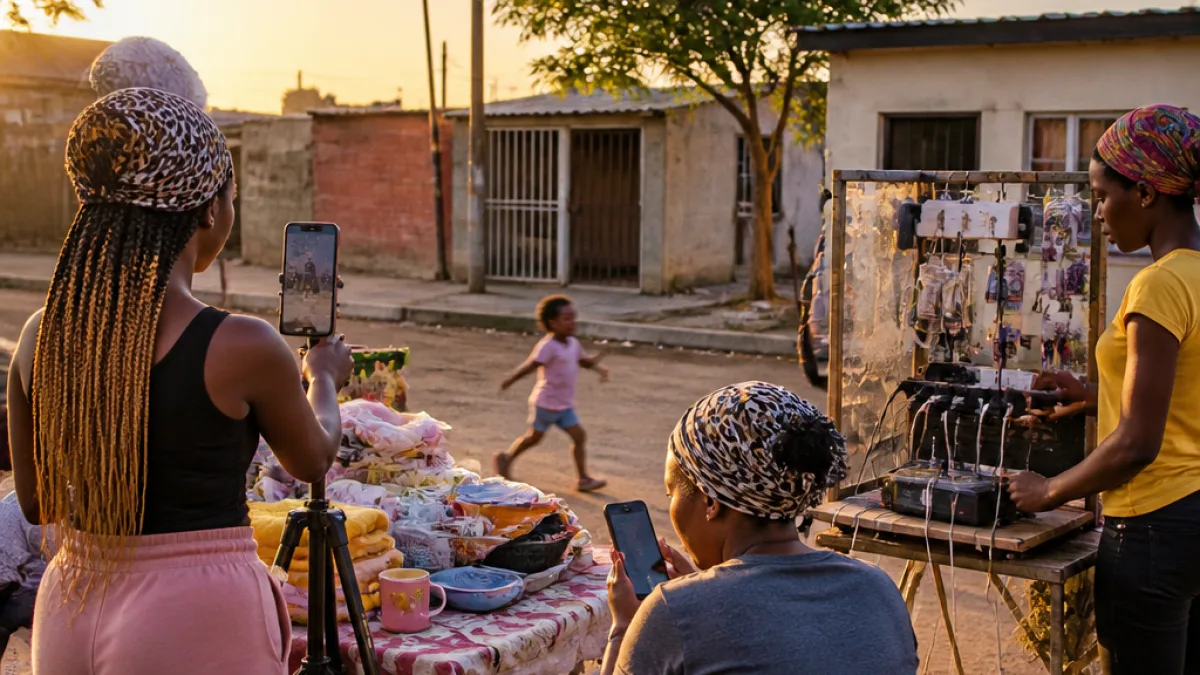
The North West continues to rank among South Africa’s provinces with the highest unemployment, and a growing number of residents are abandoning traditional job searches in favour of earning through social media.
From scarcity to small-scale digital income
In Mahikeng, content creators say they have turned everyday routines into revenue streams by monetising their social media pages. These creators rely on inexpensive tools — chiefly their smartphones — and content that reflects domestic life, parenting and local experiences.
Boitumelo Mzingaye, a Mahikeng-based creator, described how sharing her family life has become a modest but meaningful source of income. She said she monetised her platform and is able to make a "good profit" from posting videos about her children and lifestyle.
"I monetized my page, my platform, social media platform, about my family. I somehow earn money from it. And I do make a good profit from it," she said.
Mzingaye emphasised the accessibility of digital income: once people have a smartphone they can use it to their advantage, she said, adding that content creation no longer requires a particular look or an expensive lifestyle to succeed.
Practical realities for jobseekers
For many households in the province, digital income is not a ticket to wealth but a buffer against immediate hardship. Content creators in Mahikeng and surrounding towns report using social platforms to cover basic needs and reduce financial stress while formal employment remains out of reach.
However, turning social media into a reliable income stream comes with constraints. Not everyone has consistent access to data, a stable electricity supply, or the time to produce regular content. Those barriers limit who can benefit from the digital economy.
- Accessible tools: Smartphones and basic apps lower the entry threshold for content creation.
- Authenticity over aesthetics: Local creators say ordinary family life and candid content can attract viewers.
- Barriers persist: Data costs, electricity interruptions and the need for consistent output restrict opportunities.
What this means for workers and communities
The rise of social media work in the North West reflects both resilience and structural labour-market failure. While creators like Mzingaye find short-term relief, social media income rarely substitutes for formal, stable employment with benefits and social protections.
For mineworkers, domestic workers and others affected by volatile labour markets in the province, small-scale digital earnings can supplement household income but do not address long-term joblessness.
How to approach the opportunity safely
Local practitioners and those experimenting with content creation should be mindful of risks and practical steps to improve outcomes:
- Protect personal privacy when posting family content, and consider informed consent for children appearing online.
- Manage data costs by using offline editing tools and scheduling uploads when cheaper or free connections are available.
- Diversify income streams where possible — platform monetisation, small sales and community partnerships can complement ad revenue.
Policy and support gaps
As more residents pivot to digital work, there is scope for local government, NGOs and community organisations to provide support. Training in digital literacy, workshops on safe content practices, and advocacy for affordable data and reliable electricity would widen access.
While the provincial unemployment challenge remains a structural issue, the emergence of content creators shows resourcefulness among North West residents. For now, these informal digital livelihoods provide a measure of relief for families navigating scarce job prospects, but they are not a substitute for comprehensive employment strategies that deliver sustainable, protected work.
Reporting from Mahikeng highlights how creativity and technology are reshaping household economies in the province. As these trends grow, both public and private sectors will need to consider how to support safe, equitable access to the digital economy.














