
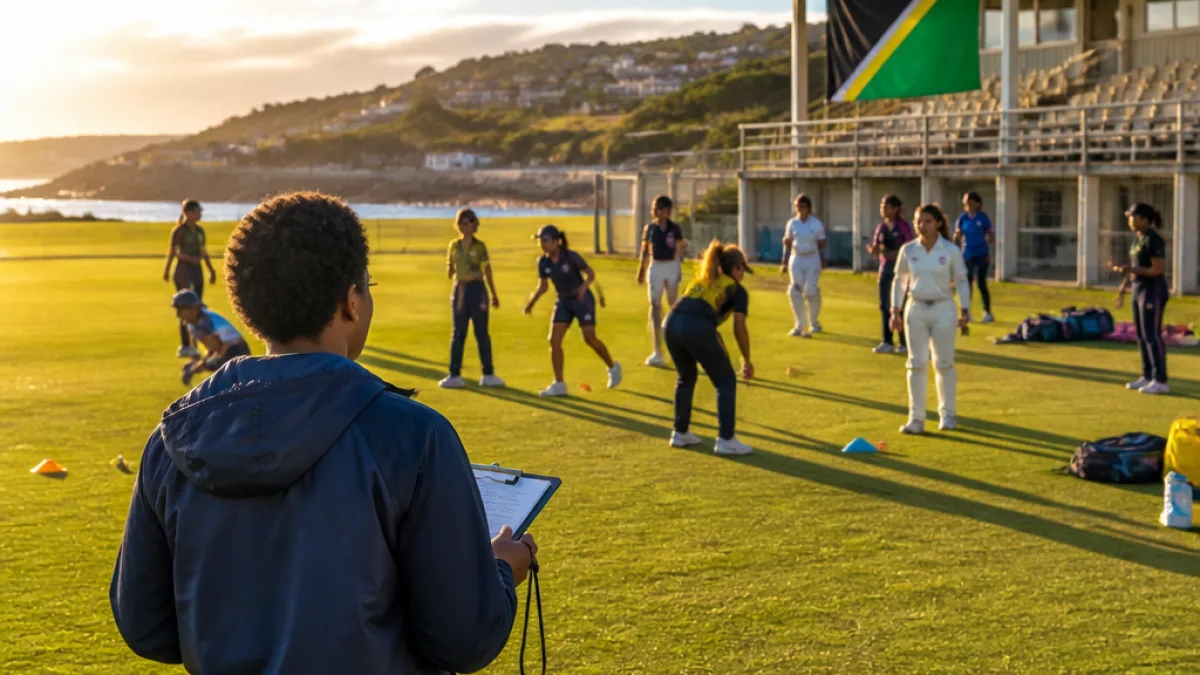
Coach aims to create continuity between U19s and senior side
Lolwethu Dekeza has taken on the dual role of head coach for the Eastern Cape Iinyathi senior women’s team and the U19 squad, signalling a deliberate attempt to tighten the pathway from junior cricket to the provincial senior ranks. Dekeza said he intends to build a sustainable structure and culture within the programme so results follow naturally.
"It caught me off-guard," Dekeza said of the offer to coach both sides. The surprise has given way to a methodical approach: combined training sessions, aligned playing philosophies and deliberate succession planning that links schools, colleges and provincial selection.
Dekeza brings formal coaching credentials and a record working with youth. He holds a Cricket South Africa (CSA) Level 3 Coaching qualification, a Diploma in Sports Management and has coached junior boys’ teams in the Border region. He most recently guided the Eastern Cape Iinyathi U16 side to a Division 2 runners-up finish and produced that tournament’s leading run scorer.
- Dual role: Head coach of both Iinyathi senior women and U19s.
- Qualifications: CSA Level 3 coach; Diploma in Sports Management.
- Past results: Coached U16s to Division 2 runners-up and developed a tournament leading run scorer.
Building identity, depth and continuity
Dekeza said the senior team had been among the lower-ranked sides in Division 2 last season, and his immediate focus is on culture and identity rather than instant results. "Rome wasn’t built in a day," he said, stressing that creating a coherent playing philosophy is the foundation for long-term improvement.
To achieve this he plans to implement weekly combined training sessions between the U19s and the senior team so players learn the same systems and can transition seamlessly when promoted. That approach, he said, will also allow selectors and coaches to plan for specific positions and build depth.
He is also developing relationships with nearby colleges and universities to widen the talent pool and to provide continuity in case players are recruited by other provinces or higher-tier teams.
| Short-term goal | Medium-term goal | Long-term goal |
|---|---|---|
| Establish weekly combined trainings | Create a steady pipeline from U19 to seniors | Produce an elite, consistently competitive Iinyathi side |
From school coaching to provincial stewardship
Dekeza’s coaching background spans school cricket and age-group provincial sides. He has worked at Dale College, Hudson Park Primary and Selborne Primary, and his experience with boys’ age-group teams is expected to inform his approach with women and girls.
He is candid about the scale of the task. The region has seen instability and resource constraints over the past few seasons, and talent has sometimes been lost to larger provinces. Dekeza’s solution emphasises planning, shared training, and closer ties with educational institutions to keep players within the Eastern Cape pipeline.
He said being responsible for both teams gives him the latitude to plan across age groups, identifying who can fill specific roles in future senior XIs and ensuring the coaching methodology is consistent.
Practical changes and what to expect this season
While Dekeza did not provide a detailed calendar, he outlined the practical elements he will prioritise in his first year:
- Regular combined sessions for seniors and U19s to foster a unified playing culture;
- Scouting and collaboration with local schools, colleges and universities to widen selection options;
- Role-specific training to create depth and clarity about player positions;
- A measured focus on performance targets tied to player development rather than immediate promotions.
Those changes aim to reduce the churn that has affected the province’s women’s programme and to create internal options when players are lost to other teams.
Why this matters for Eastern Cape cricket
Women’s cricket in the Eastern Cape has potential but has struggled with continuity and resources. A unified coaching structure — led by a qualified coach who has delivered age-group success — offers a practical route to improving competitiveness. If the model works, it could stabilise the region’s talent development and reduce the exodus of promising players.
Dekeza’s appointment will be watched closely by stakeholders in the Border and Eastern Cape cricket communities as an early test of whether a single-coach pathway can accelerate progress from schoolyards and primary schools to the provincial stage.
For now, the message from the new head coach is clear: start with identity, train together, and allow performance to follow from structure and continuity.














