
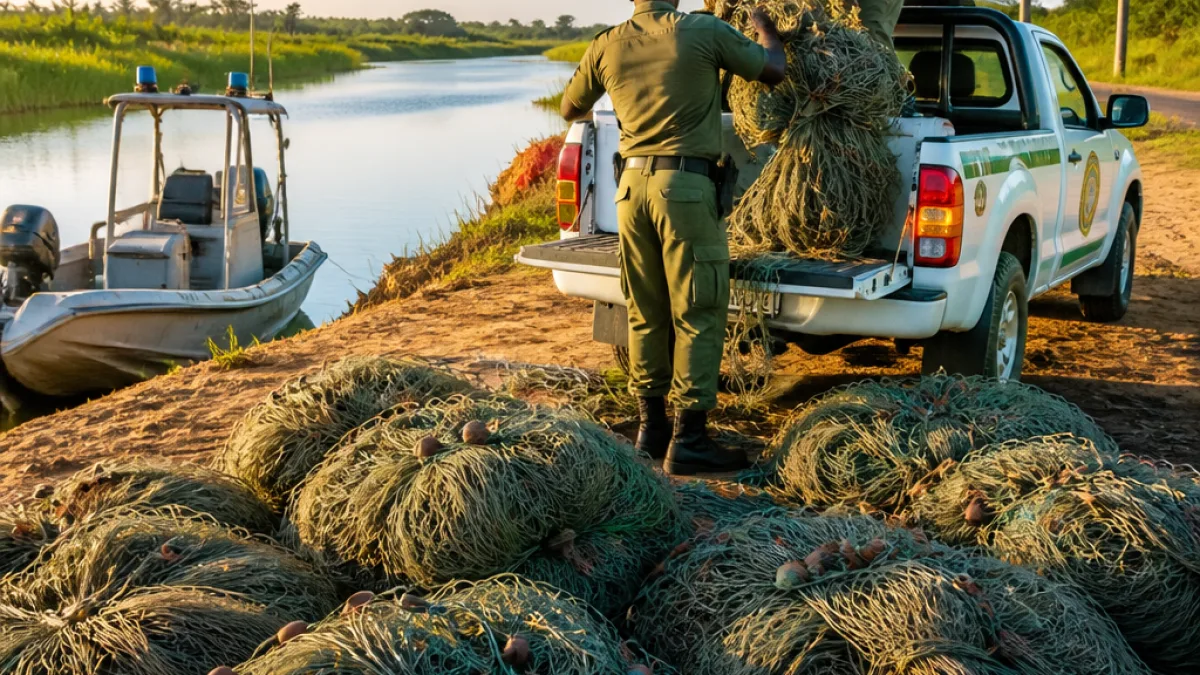
KOSI BAY, north KwaZulu‑Natal — A sustained crackdown on illegal fishing in the Kosi Bay lake system has exposed the scale of gill‑netting in one of the province’s most biodiverse estuary complexes, with anti‑poaching teams removing nearly 300 gill nets over the past year — a combined length of almost 23km.
Protected waters under pressure
Legally protected as a nature reserve since 1987, the Kosi Bay system — comprised of four interconnected lakes — is prized for its clear waters and diverse marine and freshwater species. Traditionally, local communities have harvested fish using wood and reed traps that allow juvenile fish to escape. But conservation authorities say population growth and rising unemployment in the surrounding region have increased pressure on fish stocks.
Unlike traditional traps, gill nets form a near‑impenetrable curtain of synthetic mesh that catches fish indiscriminately, including juveniles and breeding adults. Authorities warn this kind of gear accelerates declines in species diversity and undermines both conservation and sustainable livelihoods.
Joint operation, multiple agencies
In a recent joint operation involving nearly 60 officers, members of the South African Police Service worked alongside the Department of Forestry, Fisheries and the Environment (DFFE), iSimangaliso Wetland Park Authority, Ezemvelo KZN Wildlife, the Border Management Agency and customs officials. The coordinated enforcement action in and around the town of eManguzi resulted in the arrest of a supermarket owner and at least one local resident, authorities confirmed.
“We can confirm that arrests were made but given that investigations are still ongoing, will not disclose further details at this stage,” said the national Department of Forestry, Fisheries and the Environment. “We have prioritised this issue for further investigation and targeted enforcement.”
The department added it had prioritised the matter for further investigation and targeted enforcement but declined to provide specifics because inquiries remain under way.
Scale of the problem
To put the scale of the nets into perspective, enforcement teams say the roughly 23km of removed nets is long enough to stretch from Durban City Hall to Pinetown or from Sandton City to Midrand. The removal figure is cumulative for the past year.
| Feature | Detail |
|---|---|
| Number of lakes | 4 (Makhawulani, Mpungwini, Nhlange, Amanzimnyama) |
| Gill nets removed (past year) | Nearly 300 |
| Combined length | Almost 23km |
| Recent operation participants | ~60 officers from SAPS, DFFE, iSimangaliso, Ezemvelo KZN Wildlife, Border Management Agency, Customs |
Community impact and conservation concern
Local fishers have long relied on the Kosi lakes for subsistence and income. Conservationists say indiscriminate gill‑netting threatens that tradition by depleting stocks and reducing catches for lawful, small‑scale fishers. Juvenile fish trapped in nets do not reach breeding size, making it harder for populations to recover.
Authorities and conservation agencies face the difficult task of balancing law enforcement with the socioeconomic realities that drive illegal fishing. Enforcement officers have focused on removing nets, seizing gear and arresting syndicate members, but departmental spokespeople acknowledge that long‑term solutions will require more than raids.
What authorities are doing
- Increased joint patrols and targeted enforcement operations in the Kosi Bay system.
- Seizure and removal of illegal gill nets and associated equipment.
- Investigations into suspected syndicates responsible for supplying and using nets.
There was no immediate public detail on court appearances or charges laid against those arrested following the eManguzi operation. The national department's statement signalled ongoing probes.
Local voices and next steps
Community leaders have previously voiced frustration that illegal fishing not only damages the environment but also undercuts local livelihoods and traditional practices. Conservation authorities say engagement with communities, alongside enforcement and alternative livelihood programmes, will be important to reduce illegal activity.
For now, the lesson from this year’s removals is stark: the combination of readily available synthetic gear and local economic pressure has turned a once‑sustainable fishery into a hotspot for destructive activity. How swiftly investigators move from seizures to successful prosecutions, and whether parallel social interventions follow, will determine whether the Kosi lakes recover their resilience.
Reporting from northern KwaZulu‑Natal.














