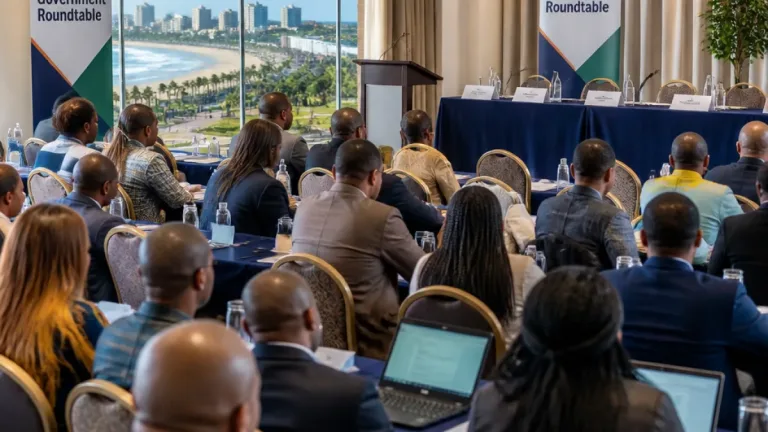

The National Council of Provinces (NCOP) delegation that visited the Northern Cape during its annual Provincial Week has commended visible improvements in infrastructure projects but warned that persistent implementation weaknesses at municipal level continue to undermine service delivery and public confidence.
Oversight visit finds progress — and recurring problems
The delegation, which conducted oversight in the Sol Plaatje, Siyancuma and Siyathemba local municipalities, told reporters that while there were "pockets of progress" since previous visits, a set of chronic issues remains. The Provincial Whip of the NCOP, Patrick Mabilo, said the visit inspected water treatment works, housing developments and a tiger-eye mining plant as part of assessing follow-up on earlier recommendations.
Mabilo highlighted patterns of contractor failures, project delays, reliance on consultants and weak financial controls as continuing barriers to improved service delivery. He said the findings point less to a lack of planning or commitment and more to inadequate implementation and follow-through.
"The effectiveness of the NCOP oversight process will depend on time-bound implementation of recommendations, regular reporting on undertakings and firm consequence management where commitments are not honoured,"
The NCOP delegation’s concerns echo findings reported by the Auditor-General, which were referenced by the delegation during the visit.
Key figures underline the scale of the challenge
During presentations to the delegation, officials noted several indicators that signal financial and operational distress in parts of the province. The NCOP highlighted the following:
- R656 million in irregular expenditure across municipalities (Auditor-General figure, as cited by the NCOP).
- Nine municipalities classified as distressed.
- 30 of 144 senior management posts vacant in those municipalities.
- 45% non-revenue water, contributing to significant losses.
- An estimated R2.93 billion annual revenue loss attributed to non-revenue water.
None of the province’s water systems achieved Blue Drop certification in the 2023 assessment, the delegation said — a further indicator of challenges in water quality management and compliance.
| Metric | Value |
|---|---|
| Municipal irregular expenditure | R656 million |
| Municipalities distressed | 9 |
| Senior management vacancies | 30 of 144 |
| Non-revenue water | 45% |
| Estimated annual revenue loss | R2.93 billion |
Housing projects and local service shortfalls
The NCOP specifically noted delays in low-cost housing projects under the 150 Housing Programme in parts of the province, including Griekwastad, Schmidtsdrift and Campbell. Mabilo said significant delays remain in the Siyancuma Local Municipality.
The delegation also reported an over-reliance on external consultants in several departments and municipalities. That pattern was flagged by the Auditor-General and is seen as detrimental to building sustained local capacity and institutional memory.
Calls for time-bound action and stronger consequence management
To address the recurring problems, the NCOP delegation called for:
- Time-bound implementation of its recommendations;
- Regular and transparent reporting on commitments made by municipal and provincial officials;
- Clear consequence management where promises are not met.
The delegation’s statement framed these measures as necessary to restore public trust and to ensure oversight yields tangible improvements rather than merely documenting failings.
Municipal managers and provincial departments now face heightened scrutiny to demonstrate that projects in their care move beyond planning into reliable delivery. The NCOP’s Provincial Week is designed to close the oversight loop by revisiting past recommendations and assessing whether corrective steps have been implemented.
The delegation’s findings add pressure on local government in the Northern Cape to address administrative vacancies and financial irregularities, and to tackle the operational losses associated with high levels of non-revenue water. How provincial and municipal leadership respond to these recommendations will determine whether the observed infrastructure gains translate into sustainable service improvements for communities across the province.