
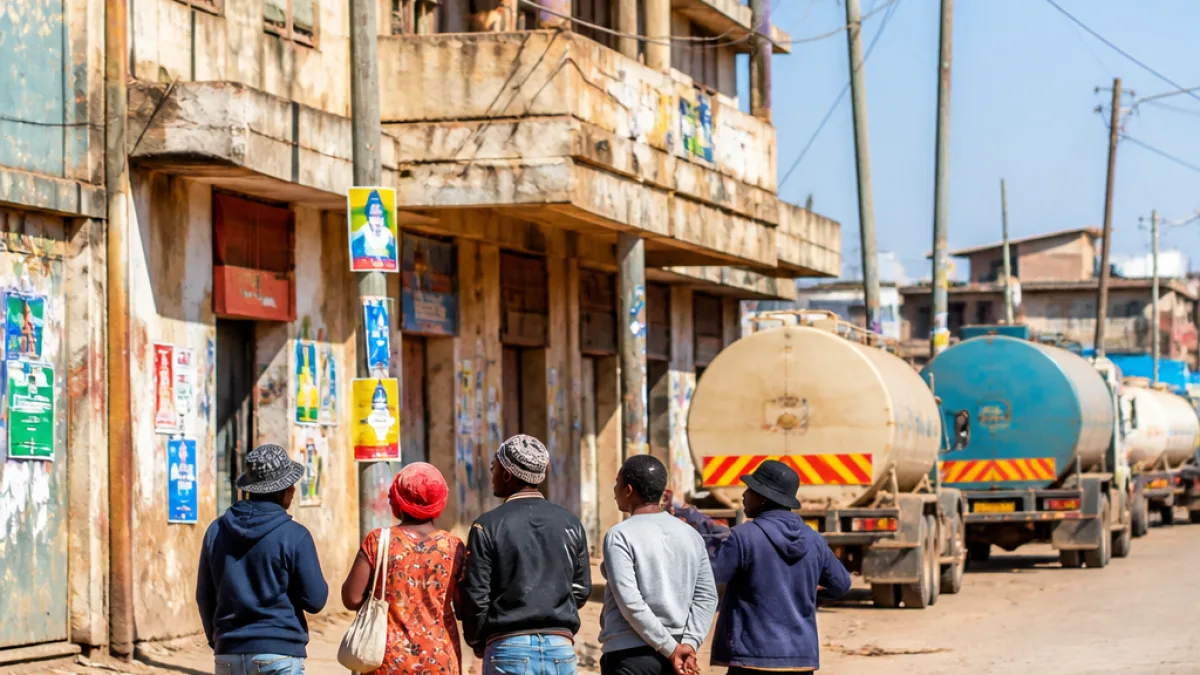
Mayoral race focuses attention on crumbling services and investor confidence
The contest for Mthatha’s mayoral seat in the King Sabata Dalindyebo (KSD) municipality has accelerated as candidates set out plans to confront long‑standing service failures, high unemployment and persistent crime ahead of the 4 November 2026 local government elections.
With campaign activity increasing across the economic hub of the former Transkei, the rivals include the Economic Freedom Fighters (EFF) candidate Ncedo Kolanisi, the United Democratic Movement (UDM) candidate Prince Mlimandlela Ndamase, and the Land Party candidate Pasika Nontshinga. The ruling African National Congress (ANC) has not formally announced its mayoral nominee but media reports have linked Nkosi Mandla Mandela with the party’s possible ticket. The Democratic Alliance (DA) has said it will not field a mayoral candidate in KSD.
Localised problems highlighted by the contenders reflect longstanding grievances in Mthatha: failing and vandalised infrastructure, unresolved land claims stretching back two decades, stock theft, extortion that discourages investment, and shortages in health services and youth opportunities.
- Service delivery: Candidates identified reliable water and electricity supply as immediate priorities.
- Crime and investor confidence: Extortion of investors and widespread stock theft were raised as obstacles to economic stability.
- Social services: Concerns about infant mortality, drug abuse and a shortage of 24‑hour clinics were cited.
The EFF’s Ncedo Kolanisi, a former student leader at Walter Sisulu University, said improving municipal revenue was essential so the council could afford repairs and services. He warned that many large businesses were not paying rates and that stronger revenue collection would be a priority.
“We plan to intensify revenue collection, particularly on businesses, because you find that a lot of big businesses are no longer paying rates,” Kolanisi said, according to reporting.
UDM candidate Prince Mlimandlela Ndamase, a former ANC Youth League leader, said residents wanted dependable water and electricity and a decisive approach to lawlessness. He described neglect of infrastructure as a driver of civic decline and said the UDM would aim to halt and reverse that deterioration.
Party positions and public pledges are unfolding against a backdrop of multi‑layered challenges. Candidates frame immediate priorities largely around:
| Priority | What candidates say |
|---|---|
| Water and electricity | Essential, must be stabilised to restore daily life and support businesses |
| Infrastructure maintenance | Address vandalism and decay so earlier gains are not lost |
| Crime prevention | Confront extortion, stock theft and drug‑related offences to protect investment and livelihoods |
Beyond campaign rhetoric, the practicalities of reversing decades of neglect will hinge on the municipality’s administrative capacity, the political composition of the council after the elections, and cooperation with provincial departments. The KSD municipality has faced repeated service challenges in recent years, making any promised interventions dependent on available funding and operational competence at municipal level.
Residents and local business owners told reporters they want tangible, short‑term actions rather than long policy statements. For many in Mthatha, reliable municipal services and safer streets are immediate tests of a mayoral administration’s credibility.
As the election approaches, voters in Mthatha will weigh competing pledges against track records and the realistic ability of parties to implement change. The campaign period now centres on whether candidates can translate promises into detailed, fundable plans to stabilise services, restore investor confidence and address crime.












