MBOMBELA — Communities across Mpumalanga have told Parliament that the proposed Water Services Amendment Bill must do more than set legal standards: it must fix the day-to-day reality of intermittent taps, unsafe tanker deliveries and weak local governance.
Hearings focus on lived experience
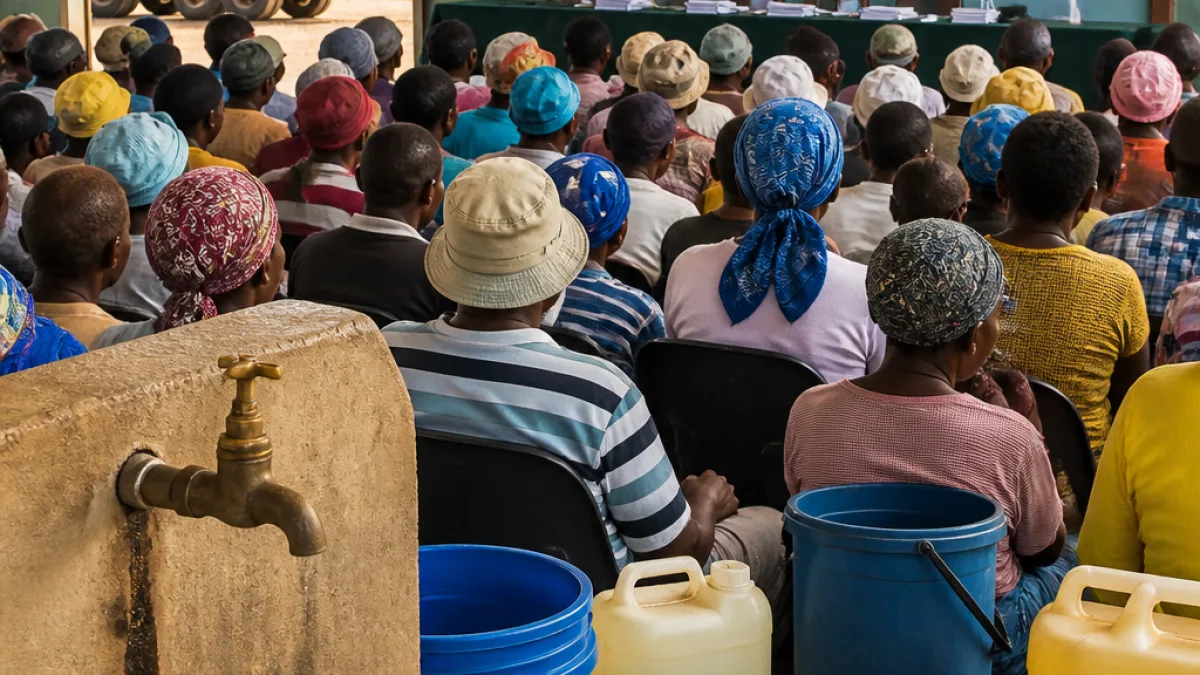
The Water and Sanitation Portfolio Committee is holding public hearings on the bill that seeks to ban private buying, selling and trading of water, allow the department to revoke licences from failing providers and to intervene directly when taps run dry. Residents and civic groups who attended hearings in Mbombela over the weekend pressed MPs to ensure the legislation improves people’s lived experience, particularly in communities with either intermittent or no municipal supply.
Speakers emphasised that the province’s water problems are not only technical but also stem from governance and corruption at local government level, which they say undermines efforts to secure sustainable water and sanitation services.
Concerns about tankers, quality and illegal abstraction
One persistent concern raised was the growing reliance on water tankers to meet shortfalls. Community representatives told the committee that the tanker deliveries often fail to meet basic quality standards and are an unreliable stop-gap for households and clinics.
Representatives of organised local government and civil society also raised the issue of illegal tapping of water sources. The South African Local Government Association (SALGA) provincial representative, Walter Mngomezulu, warned that authorities were not doing enough to stop unlawful abstraction by users such as farms and mines.
“Whether it’s a mine or a farmer, I can tell you by December, we are going back to Day Zero if that is not attended to,” Walter Mngomezulu said, according to reporting from the hearings.
What the bill proposes
The Water Services Amendment Bill, as presented to the committee, would:
- Ban the private buying, selling and trading of water;
- Allow the national department to revoke licences from failing water service providers;
- Permit direct national intervention where taps run dry;
- Introduce minimum competency standards to prevent neglect of water infrastructure;
- Increase penalties for non-compliance and for unlicensed water service providers.
Speakers at the hearings welcomed some of these measures but stressed implementation would determine whether the law changes everyday outcomes for households.
Local politics and the ballot box
With the local government elections looming, attendees said water shortages are likely to influence voter decisions. Communities facing repeated supply failures told the committee they will hold councils to account at the ballot box, expecting candidates to offer credible plans for restoring reliable water services.
Practical gaps flagged at hearings
Several practical gaps were highlighted that the bill must address or be accompanied by complementary measures, including:
- Clear mechanisms for ensuring tanker water meets safety and quality standards;
- Stronger municipal oversight and transparent processes to tackle corruption related to procurement and maintenance;
- Resources and capacity-building to meet the proposed minimum competency standards;
- Effective enforcement against illegal abstraction, with coordinated action between national and provincial authorities.
Table: Key contested elements and community concerns
| Bill element | Community concern |
|---|---|
| Ban on private water trading | May reduce unregulated sales but needs alternatives for immediate access |
| Revocation of licences | Requires rapid, transparent process to avoid service gaps |
| Minimum competency standards | Needs funding and training for municipal staff |
| Stricter penalties | Must be paired with enforcement capacity |
Implementation is the test
Speakers who attended the hearings repeatedly returned to one theme: legal change alone will not solve water insecurity unless the national and provincial governments pair new powers with the necessary funding, staffing and anti-corruption measures.
Some civic actors expressed cautious support for the bill’s intentions, but insisted on visible, measurable improvements in supply and water quality before they would judge the legislation a success.
The portfolio committee’s hearings continue as it seeks a balance between stronger national oversight and empowering municipalities to manage water services. For Mpumalanga communities whose taps run dry, the coming months will test whether parliamentary drafting translates into steady water and safer tanker deliveries.
Nomsa Mahlangu
Mpumalanga Correspondent (Mbombela)