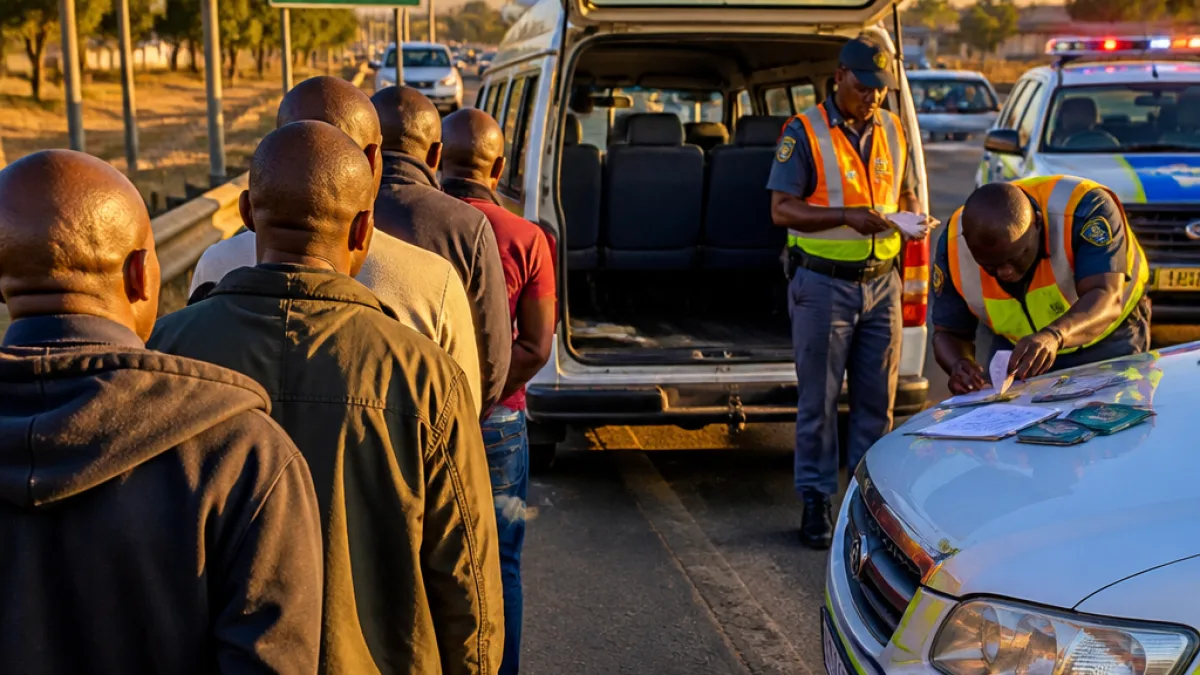
More than 20 migrants travelling from Musina in Limpopo to Pretoria were arrested on Thursday evening after a routine stop and search by North West traffic officers at the Maubane off‑ramp on the R101 near Hammanskraal, North West Community Safety and Transport Management said.
Where and when the arrest took place
The arrests occurred at about 17:30 during what law enforcement described as a standard stop on the R101 at the Maubane off‑ramp — an area officials note sits at a quadripoint between North West, Gauteng, Mpumalanga and Limpopo. The vehicle stopped was a white minibus taxi with Gauteng registration, driven by a South African.
Who was detained and where they were taken
According to Oshebeng Koonyaditse of the North West Community Safety and Transport Management, the passengers were all men identified as Ethiopian nationals. During inspection, officers found that 13 of the men were carrying identity documents that were subsequently judged to be fraudulent, while seven had no documentation at all. All those detained were taken to Makapanstad Police Station for processing.
“Upon inspection passengers who are all men, were identified as Ethiopian nationals. Thirteen of them had identification documents that were found to be fraudulent and seven had no documents at all. They were all taken to the Makapanstad Police Station for processing,” Koonyaditse said.
What the enforcement action means locally
The operation highlights two persistent issues for Limpopo and neighbouring provinces: the use of long‑distance taxi services for cross‑provincial and cross‑border movement, and the circulation of fraudulent travel documents. The R101 corridor is a frequent route for informal passenger transport between northern towns and Gauteng, and law‑enforcement stops here are intended to curb unsafe vehicles, human trafficking and illegal migration.
Passengers using minibus taxis are reminded that law‑enforcement checks are routine and may include inspections of identity documents and vehicle condition. Those found with fraudulent or no documentation can expect to be detained and processed by SAPS pending further investigation or referral to the relevant immigration authorities, as in this case.
Numbers at a glance
| Item | Figure |
|---|---|
| Time of stop | 17:30 |
| Vehicle | White minibus taxi (Gauteng registration) |
| Nationality of passengers | Ethiopian nationals (as identified by officers) |
| Documents fraudulently presented | 13 |
| No documents | 7 |
| Processing station | Makapanstad Police Station |
Context and next steps
Koonyaditse described the stop as part of routine traffic and safety enforcement. Cases involving fraudulent identity documents and undocumented migrants typically result in further investigation by SAPS and may involve the Department of Home Affairs or border security units if immigration offences are suspected. The arrested men will remain in police custody while processes are completed.
Community leaders and commuters along the R101 corridor often voice concern that organised networks exploit long‑distance taxi routes to move people and contraband. Civil‑society groups and human‑rights organisations emphasise that migrants and asylum seekers should receive fair treatment and that alleged document fraud must be properly investigated to determine whether documents were forged or stolen.
Practical information for travellers and residents
- Carry valid identification and, if travelling across provinces or borders, ensure travel documents are up to date and genuine.
- If you encounter a law‑enforcement stop, cooperate and present documentation when asked; refusal may result in detention.
- Report suspicious transport operations to local SAPS stations or provincial traffic authorities.
The North West Community Safety and Transport Management provided the account of the operation. SAPS in the area and the Department of Home Affairs may issue further statements as processing continues at Makapanstad Police Station.
This incident underlines the complex dynamics at provincial borders and the ongoing role of traffic enforcement in addressing both road safety and irregular migration in the region.