A viral clip featuring a Limpopo entrepreneur who turned sweet potatoes into yoghurt has drawn international attention and, according to the viral report, attracted global buyers.
From staple crop to value‑added product
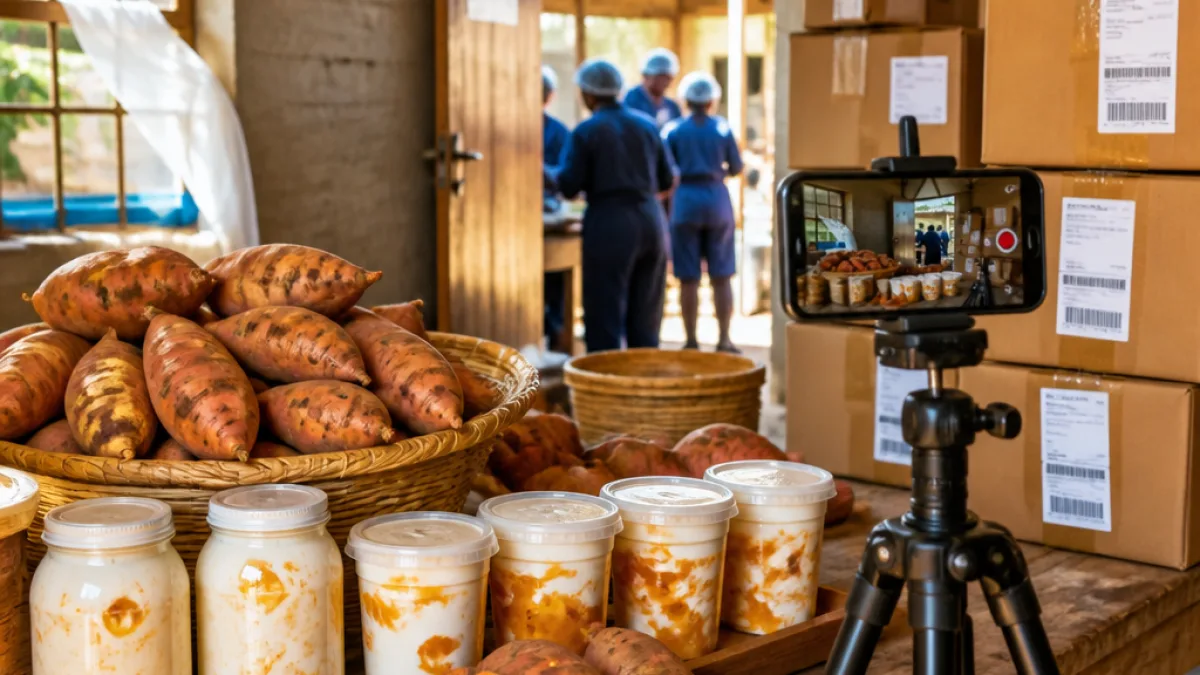
The short video, circulated widely on social media and picked up by national lifestyle outlets, shows the process and pitch for a product described as sweet potato yoghurt. The footage highlights how a familiar provincial crop can be transformed into a novel dairy‑style product, creating a new market pathway for growers and small processors in the province.
Sweet potato is widely cultivated in parts of Limpopo and the broader northern provinces. Turning tubers into shelfable, higher‑value foods is a form of value‑adding that can increase returns to growers and provide opportunities for small and medium enterprises to develop branded food products for local and export markets.
What the viral attention means locally
Viral exposure often has two immediate effects for a small business: it raises public awareness and can generate inbound commercial interest. In this case, the reporting states the entrepreneur has attracted buyers beyond South Africa’s borders, suggesting demand for novel, plant‑based or regionally distinctive food items.
For Limpopo, where many smallholders and emerging commercial farmers grow sweet potato for household consumption or local sale, successful examples of product innovation can signal business models that uplift entire value chains — from field to factory to retail shelf.
- Producers: value‑adding increases the possible price per kilogram compared with raw tubers.
- Processors: local processing can create jobs and skills in rural towns and informal settlements.
- Buyers: both local retailers and international importers are increasingly interested in unique, plant‑based products.
Practical considerations for scaling
Turning a viral moment into a sustainable business requires more than publicity. Producers and processors must consider food safety, shelf‑life, packaging, labelling, certification for export and consistent supply. While the video demonstrates an innovative product, formal market entry — especially into overseas markets — brings regulatory and logistical requirements.
Local entrepreneurs aiming to replicate or scale similar ideas should investigate:
- Food safety and quality management systems appropriate for dairy substitutes or fermented products;
- Packaging that protects product integrity and meets retail standards;
- Certification and export documentation if engaging international buyers;
- Reliable sourcing agreements with growers to ensure year‑round supply.
A moment for provincial actors
Provincial agriculture departments, extension services and incubation programmes often support value‑adding initiatives. A high‑profile success story can help attract training, small‑business funding and partnerships with universities or research institutions that assist with product development and scaling.
| Aspect | Local relevance |
|---|---|
| Crop | Sweet potato — commonly grown in Limpopo |
| Product | Sweet potato yoghurt — plant‑based, fermented or thickened product featured in the viral video |
| Opportunity | Value‑adding, job creation, new market channels |
While the viral report emphasises the international interest, careful planning is essential to convert curiosity into sustained trade. Community cooperatives, small food processors and entrepreneurs across Limpopo would need support to meet food safety standards and to navigate export rules if they are to benefit from emerging demand.
Local markets remain important: many consumers across towns and rural areas are adventurous and may welcome locally made, novel products. Provincial retailers and informal traders could provide testing grounds before national or international roll‑out.
As the clip spreads online, it offers a useful prompt for stakeholders in Limpopo’s agricultural economy to think more broadly about product development. The episode demonstrates how traditional crops can be reimagined into higher‑value foods, potentially deepening markets for small‑scale producers while creating new business opportunities in the province.
Reporting on the viral video emphasised the novelty of the product and the attention it has drawn. Further details about the entrepreneur, production scale and specific buyers were not provided in the initial coverage.
For producers or entrepreneurs wishing to explore similar routes, provincial agricultural offices and small‑business support centres can provide guidance on certification, packaging and market development. Such support is often the difference between a passing trend and a lasting business.