
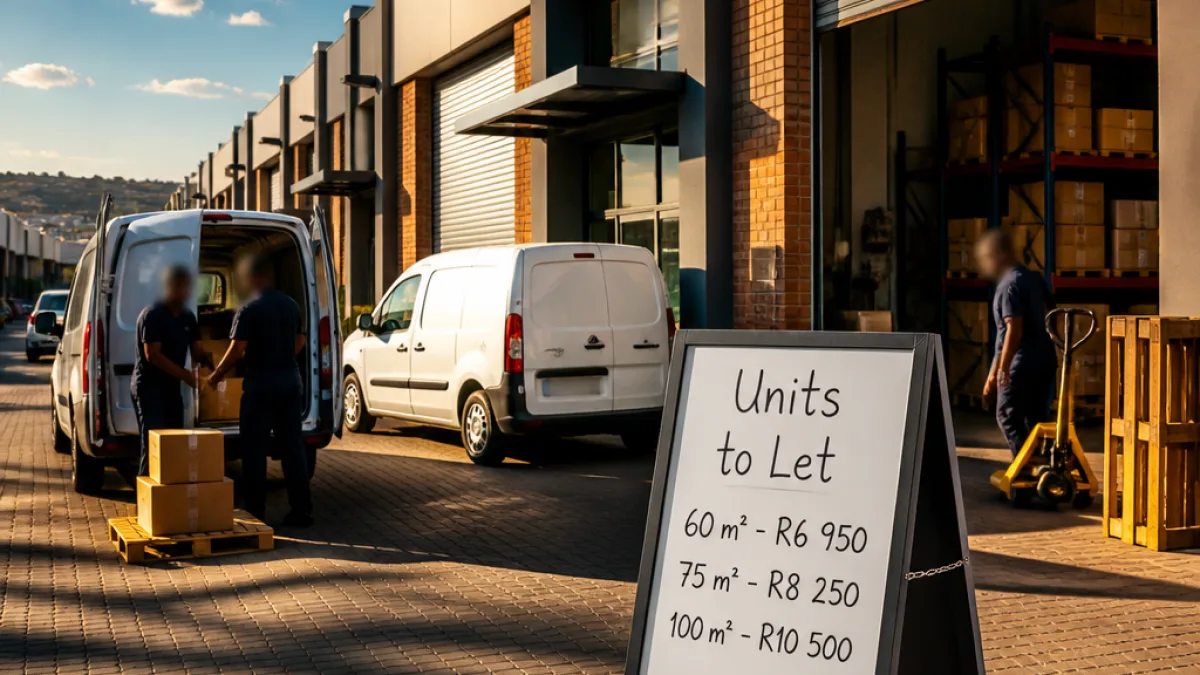
Strong July signals structural shift towards smaller, flexible industrial space in Johannesburg
Johannesburg recorded an unexpected spike in demand for small industrial units in July, with Inospace, the country’s largest privately owned multi-let industrial property company, reporting its best-ever leasing month in the city.
The company signed 67 new leases covering 22,265 square metres in Johannesburg during July, producing a capital value of R42.5 million. The figure is 27% higher than the previous best month, underlining what the firm describes as a structural shift in the market towards smaller, more flexible warehousing and industrial space.
"July is historically a quiet month for us given the school holidays, so to post our best leasing performance yet tells us something important about where this market is heading," said David Bernstein, managing director at Inospace.
Bernstein told reporters the numbers reflect both the resilience of the SME market and the strength of Johannesburg’s industrial nodes. He said Inospace has made a deliberate strategic decision to concentrate growth in Gauteng because the company believes the next phase of demand for multi‑let industrial space will be won here.
The report shows rental dynamics are changing within the city’s industrial market. Average rentals in Johannesburg have climbed to about R80 per square metre, but smaller-format units are commanding markedly higher rates. In one of Inospace’s Micro Warehouse offerings, rentals reached R173 per square metre — more than double the average for larger units.
- 67 leases signed in July, covering 22,265 m²
- Capital value of new leases: R42.5 million
- Average rental in Johannesburg: R80/m²; micro warehouses up to R173/m²
Two Johannesburg nodes were highlighted as particularly strong: Midrand — led by Inospace’s Allandale Exchange park, where vacancies are reported to be at an all‑time low — and the airport node, where larger parks are said to be close to full occupancy. For residents and small business owners, the trend indicates improved availability of modern, small-scale industrial space close to major transport and customer corridors.
| Metric | July result |
|---|---|
| New leases | 67 |
| Area leased | 22,265 m² |
| Capital value | R42.5 million |
| Average rental (Johannesburg) | R80/m² |
| Micro Warehouse rental | R173/m² |
Local implications are practical. For small traders, e‑commerce operators and light‑manufacturing start‑ups, demand for smaller, flexible space near customers and logistics hubs can reduce travel times and overheads. For landlords and developers, the higher yields on micro units create an incentive to convert or subdivide existing parks. For city planners and councillors, the shift raises questions about infrastructure — road capacity, municipal services and local employment opportunities — in areas seeing intensified industrial use.
Bernstein said Inospace is rolling out more micro‑warehouse suites across its portfolio to meet the appetite for compact, well‑located premises. The company framed the July performance as validation of its Gauteng strategy and evidence that the SME market is resilient even in months when activity traditionally softens.
For Johannesburg residents keeping an eye on rents, jobs and industrial land use, the data point to a market adapting to the needs of smaller businesses and rapid fulfilment models. How this translates into long‑term changes in vacancy, traffic patterns and municipal revenue will depend on how quickly developers, councils and transport authorities respond to the renewed appetite for city‑edge industrial space.
As Inospace expands its micro‑warehouse roll‑out, the coming months will show whether July was a one‑off outlier or the start of a sustained reorientation of Johannesburg’s industrial property market towards smaller, higher‑return units.














