
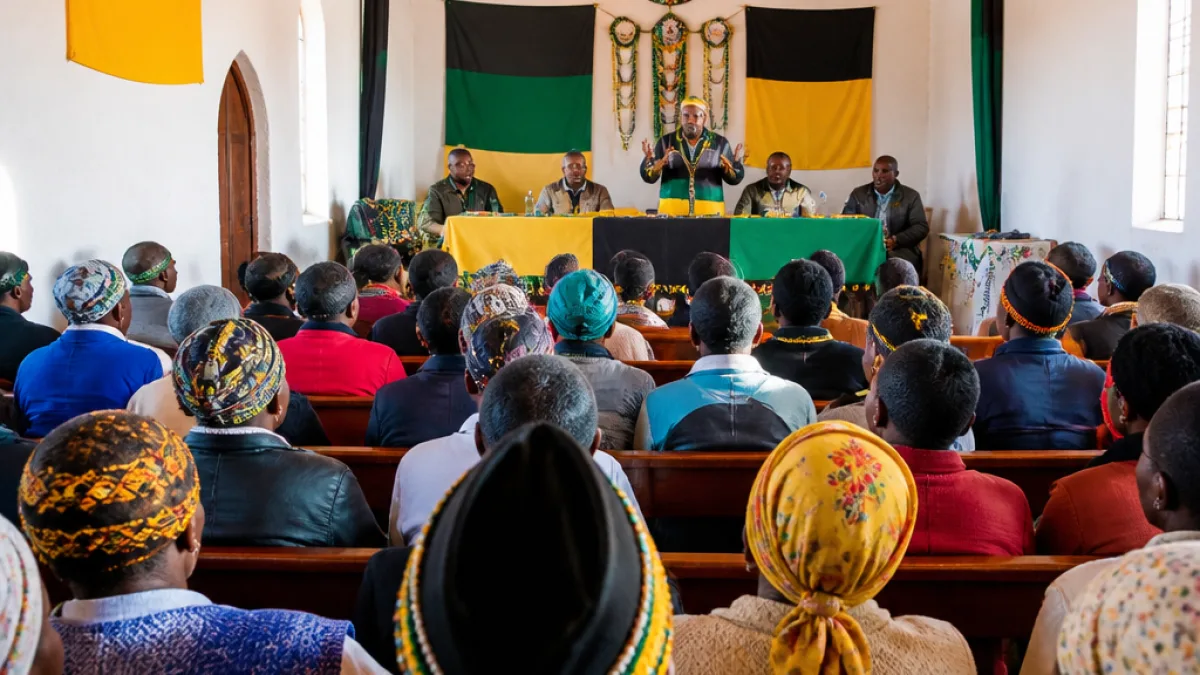
The leader of the uMkhonto weSizwe Party, Jacob Zuma, has begun a week-long courtesy visit to several traditional kingdoms in the OR Tambo district of the Eastern Cape, the party reported on Sunday. The delegation included national, provincial and regional party leadership and aims to strengthen working relations with traditional councils.
Church visit in Mthatha highlights inequalities
Zuma’s first stop was at a church in Zimbane Valley, Mthatha, where he addressed congregants and spoke about socioeconomic challenges facing black communities. According to the party, he raised concerns about youth unemployment, access to free basic education and crime.
“Today we have so many graduates who cannot find jobs. There are those who do not want our children to be employed. They want us to remain poor. With us, there will be no black people who will suffer with poverty just because they are black. No church will suffer while assisting our people just because it is led by a black person.”
Those remarks were reported by the party and carried by national media. The comments frame the visit as both a consultative outreach to traditional leaders and a platform to set out the party’s social priorities.
Party leadership says visit is not electioneering
Sibonelo Nomvalo, the party’s secretary-general and a Member of Parliament, told reporters the visit was not intended as electioneering. He said the delegation’s aim was to “conscientize” residents about the need for an alternative political voice in the province.
Nomvalo described the Eastern Cape as “the most underprivileged province in the country” and criticised what he characterised as insufficient political work by other parties on the ground. He urged communities to reject parties that, in his view, do not serve their interests and presented the MK Party as that alternative.
Nomvalo also addressed recent internal changes in the party’s leadership, saying those changes were informed by material conditions affecting the organisation and were not spontaneous.
Why the OR Tambo tour matters locally
The Eastern Cape remains one of the country’s poorest provinces, with chronic unemployment and service delivery challenges. Visits by high-profile national figures to traditional authorities can have several local implications:
- Legitimacy and influence: engagements with traditional councils often lend moral and political legitimacy to visiting leaders among rural constituencies.
- Policy signalling: public remarks on employment and education set expectations about the party’s priorities and potential policy focus.
- Community mobilisation: such visits can be used to mobilise support, particularly where traditional leaders remain influential civic intermediaries.
While the party insists the tour is consultative, political analysts often note that interactions between party leaders and traditional authorities can have electoral ramifications, especially in rural areas where traditional leadership retains authority over community affairs.
What was said — and what remains unsaid
The reported remarks emphasise broad themes — poverty, youth unemployment and protecting black-led institutions — but they do not set out specific policy proposals or programmes that will address those problems. No dates were given for subsequent visits or a detailed schedule, and the party has not released a written programme outlining how its outreach will translate into concrete interventions.
| Element | Reported detail |
|---|---|
| Who | Jacob Zuma and MK Party national, provincial and regional leadership |
| Where | Traditional kingdoms in OR Tambo district; first stop Zimbane Valley, Mthatha |
| Focus areas | Strengthening relations with traditional councils; unemployment, education, crime, poverty |
Practical implications for residents
For residents, the visit underscores continued attention by national political actors to the Eastern Cape’s rural areas. Those concerned about employment and education should note that public events like these are opportunities to press visiting leaders for concrete plans, timelines and commitments. Traditional councils may also use these meetings to seek support for local development projects.
The tour will be followed closely by other political parties and community organisations in the province, particularly as the uMkhonto weSizwe Party frames itself as an alternative voice in a region where voting patterns have, historically, favoured the governing party.
Further details about the itinerary or any formal agreements with traditional councils were not available at the time of the report.
Reporting was based on the party’s account of the visit and national media coverage.












