
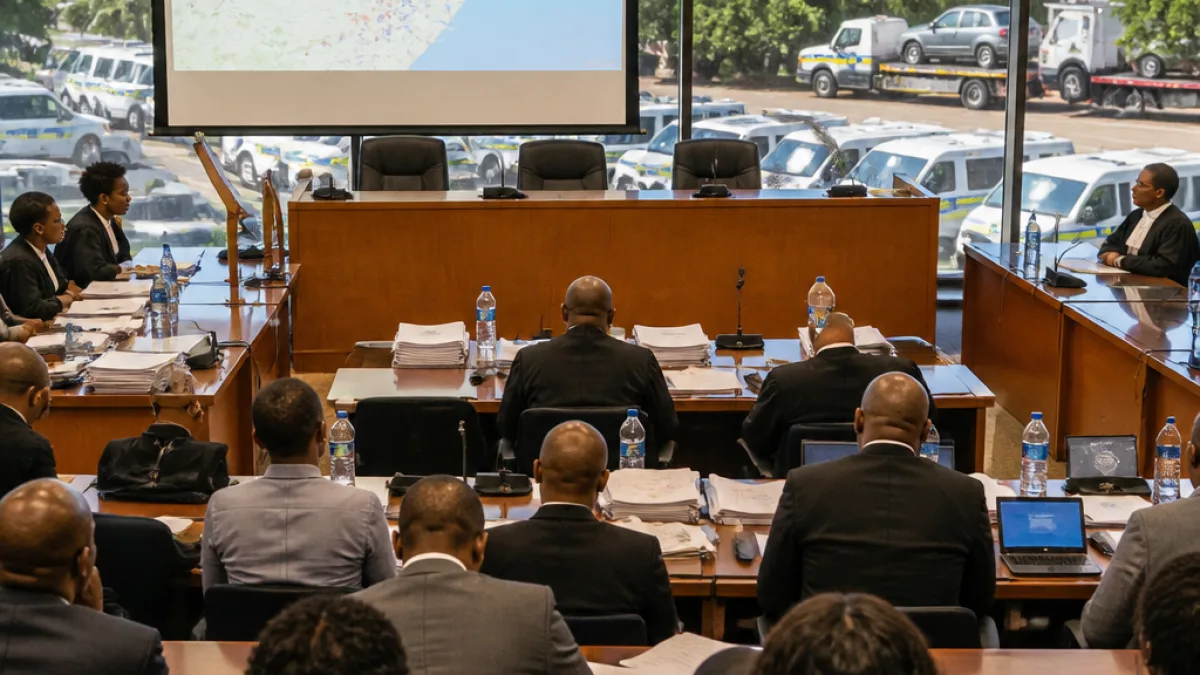
The Madlanga Commission was told this week that specialised police task teams operating in KwaZulu‑Natal have been linked to a string of lethal operations. According to testimony from the Independent Police Investigative Directorate (IPID), 77 cases involving these units resulted in the deaths of 149 people, and to date not one member of a task team has been convicted in relation to those incidents.
Allegations of misuse and lethal mindset
Len John, deputy director of IPID, told the commission that units originally formed to combat Cash‑In‑Transit (CIT) robberies and organised crime were alleged to have been used for other ends. The inquiry heard that task teams were sometimes deployed to target suspected CIT perpetrators, taxi operators and people believed to be tied to rival drug networks.
John said some officers allegedly operated with the mindset that their job was to “go out to kill”, rather than arrest suspects.
IPID raised concerns about the conduct of operations and the way they were reported afterwards. The commission heard that some shootings were only reported late, delaying independent investigators and at times leaving crime scenes cleared of officers’ presence by the time IPID arrived. In several matters, IPID told the inquiry the available evidence did not support police claims that suspects had fired first.
Wider web: taxi conflicts, tow‑truck referrals and drug networks
Evidence presented to the commission broadened the focus from police conduct to alleged links between law enforcement and other contested industries. Testimony suggested parts of the tow‑truck industry in KwaZulu‑Natal had become embroiled in turf wars, corruption and the illicit drug trade. IPID said some tow‑truck operators were paid for referrals after crashes, and that some operators allegedly paid corrupt officers to shield vehicles suspected of carrying drugs from being searched.
The commission’s hearings portrayed overlapping conflicts — policing, taxi violence, tow‑truck turf and drug networks — that may have shaped how task teams were deployed and how operations unfolded on the ground.
- 77 task‑team cases cited by IPID as involving deaths
- 149 people reported killed in those operations
- 0 convictions of task‑team members in relation to those cases, IPID said
Questions about accountability and evidence
IPID’s submission drew attention to investigative obstacles. Late reporting of scenes and gaps in the evidence raised questions about whether policing procedures and post‑shooting investigations met the standards required to establish the facts. The commission heard that in some cases police accounts of being shot at were not supported by forensic or witness evidence gathered by investigators.
The testimony fed into a larger, ongoing enquiry by the Constitutional Court‑mandated Madlanga Commission, established to examine allegations of systemic failures and human rights infringements within policing. The commission aims to determine whether institutional or individual accountability is warranted, and whether reforms are required to policing structures and oversight.
Local impact and community concerns
For communities in KwaZulu‑Natal, especially those living in areas where task teams have operated, the commission’s hearings are significant. Families of those killed in police operations continue to call for credible investigations, timely reporting and prosecutions where warranted. Civil‑society groups and rights organisations have repeatedly urged stronger oversight mechanisms to prevent abuses, and to ensure independent investigations are not hindered by delayed reporting or evidence gaps.
Police statements, prosecutors’ findings and any disciplinary outcomes were not detailed in the material provided to the commission this week. The hearings will continue to test the evidence and hear responses from police leadership and other parties implicated in testimony.
What to watch next
The commission is expected to consider submissions from multiple state bodies, oversight agencies and witnesses over the coming weeks. Key matters to follow include whether IPID’s allegations prompt criminal prosecutions, disciplinary action within the police service, or recommendations for systemic reform to prevent future violence linked to task‑team operations.
| Item | Figure |
|---|---|
| Task‑team cases with deaths (as presented) | 77 |
| People reported killed in those cases | 149 |
| Convictions of task‑team members (reported) | 0 |
The commission’s work touches on the urgent need for transparent policing and robust oversight in KwaZulu‑Natal. For many residents of the province, the hearings offer a rare forum to piece together a troubling chapter in local law enforcement and to press for answers about deaths that have left families searching for justice.
Reporting from the Madlanga Commission will continue as more witnesses give evidence and state responses are heard.














