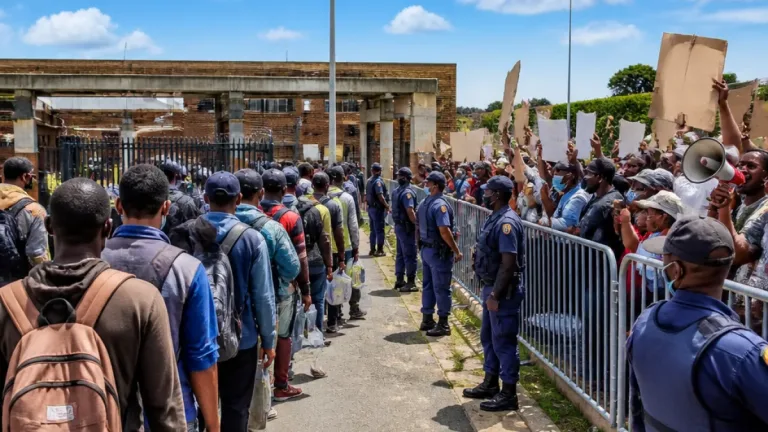
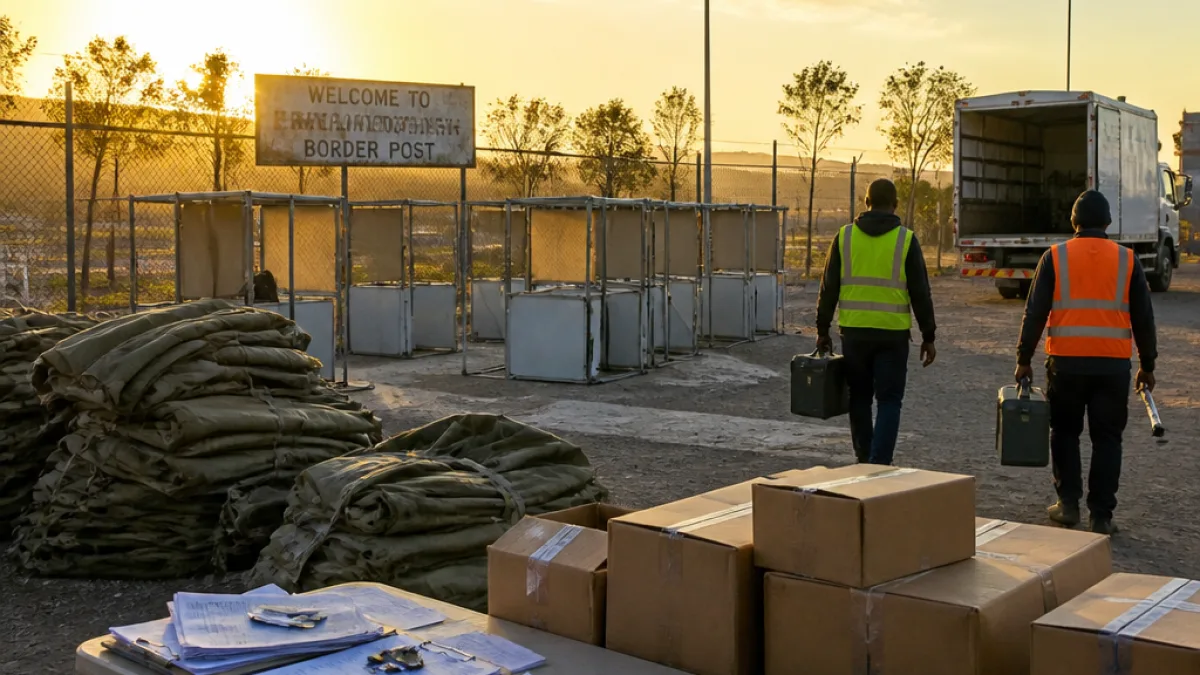
The government has closed the temporary repatriation facility near the Beitbridge border post in Musina after processing 48 948 foreign nationals, the Inter‑Ministerial Committee on Migration said on Tuesday. Authorities stressed that immigration enforcement remains the responsibility of the state and warned communities against conducting unlawful identity checks or attempts to remove undocumented migrants.
Temporary centre met falling demand, government says
The Musina Temporary Repatriation Processing Centre was established on 26 June to respond to a period of heightened migration pressure at one of South Africa’s busiest land border crossings. Government said the centre had always been intended as a short‑term intervention and was decommissioned after the number of people requiring processing and repatriation assistance declined.
At the height of its operations the facility could accommodate around 20 000 people, but by 1 August capacity had been reduced to about 1 500 as arrivals dropped. There were also several days when no one presented for processing, government reported.
Numbers processed and profile
Of the 48 948 people processed at Musina, 46 744 (about 95.5%) were classified as border jumpers. A further 2 204 individuals had presented through recognised ports of entry. The largest national group processed were Malawian nationals, followed by Zimbabwean and Mozambican nationals, government said.
| Measure | Number |
|---|---|
| Total processed | 48 948 |
| Classified as border jumpers | 46 744 |
| Presented via ports of entry | 2 204 |
Warning to communities
The Inter‑Ministerial Committee on Migration made a point of cautioning local communities against taking enforcement into their own hands. In a statement, government said:
“Communities must not undertake unlawful identity checks, intimidation, removals or other acts of vigilantism against any person.”
The closure follows reports of heightened tensions in some communities around undocumented migration. By reiterating that immigration enforcement is a state responsibility, the government sought to discourage harassment and illegal evictions of foreign nationals, which can escalate quickly in border towns such as Musina.
Costs, logistics and the decision to decommission
Authorities said the centre’s running costs – including hired equipment, generator fuel, officials and extra security – could no longer be justified given the reduced demand. Maintaining the facility at its earlier scale was therefore deemed unsustainable. Government emphasised the temporary nature of the intervention from the outset.
Local stakeholders and civic groups in Musina have previously raised concerns about service pressures and social tensions linked to migration flows. The decommissioning will shift responsibility for routine immigration matters back to standard ports of entry and the Department of Home Affairs’ existing operations in the region.
What the closure means for Musina residents and migrants
- Immigration processing and enforcement will revert to existing state agencies and ports of entry rather than the temporary centre.
- Community members are legally prohibited from conducting identity checks or forcibly removing people from areas where they live or work.
- Those with questions about immigration status should engage with official authorities rather than informal groups to avoid legal risk and potential abuse.
Local civic leaders and service organisations will be watching how government manages follow‑up support and whether routine processing capacity at the border and nearby offices is sufficient to handle any future surges. The Inter‑Ministerial Committee on Migration did not provide a timetable for reopening similar facilities, saying the centre was closed because demand had fallen.
Musina, as a border town adjacent to the Beitbridge crossing into Zimbabwe, remains a focal point for migration management in Limpopo. The government’s clear instruction against vigilantism aims to reduce the risk of confrontations while migration policy and operational responses are adjusted at provincial and national levels.
Reporting for Limpopo, the Inter‑Ministerial Committee on Migration provided the processed figures and the cautionary statement referenced in this report.