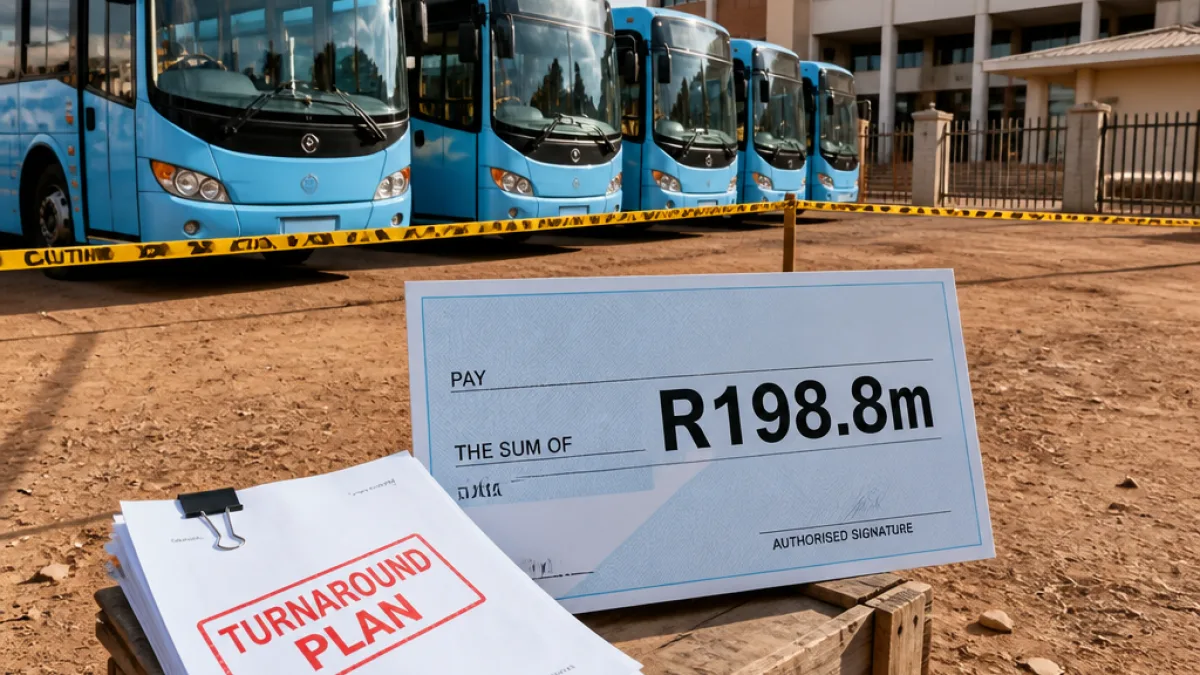
POLOKWANE — Great North Transport (GNT), Limpopo’s provincial bus operator, has until 31 August to present a convincing turnaround plan to the Companies and Intellectual Property Commission (CIPC) or risk a directive to stop operating or being placed under business rescue, the Democratic Alliance (DA) in Limpopo has said.
The request for a firm plan arrives as GNT seeks a further R198.8 million in bridge financing from the province, despite receiving almost R1 billion in taxpayer support since the 2016/17 financial year, the DA reported. The commission has raised concerns that GNT’s ongoing operations may be unlawful under the Companies Act unless the entity demonstrates a credible recovery strategy.
DA insists on independent verification
The DA has made clear it will not endorse the additional funding unless any bailout and the transport operator’s retrenchment consultation process under Section 189 are part of a turnaround plan that is independently verified and subjected to thorough scrutiny.
According to the party, representations to the Limpopo Standing Committee on Public Accounts (SCOPA) by GNT and the Limpopo Economic Development Agency (LEDA) argued that a turnaround was underway and that extra funding was necessary to secure long-term sustainability. The DA, however, maintains that internal assessments point to problems beyond a need for cash injection.
Internal problems flagged by GNT
GNT’s own assessment, cited by the DA, lists operational and governance weaknesses the operator is facing, including:
- technical deficiencies;
- weak internal controls;
- a lack of operational capacity;
- difficulties recruiting critical skills;
- allegations of theft of spare parts and diesel;
- problems with workplace culture.
The DA argues these problems suggest structural failures that could not be solved by a single tranche of emergency funding alone.
What’s at stake for commuters and provincial finances
If CIPC decides that GNT’s current operations are unlawful and issues a directive, commuter services run by the operator could be suspended or the company may be placed under business rescue. That would carry immediate implications for staff and for thousands of passengers who rely on scheduled bus services for work, school and other essential travel.
GNT has received provincial support through funding for buses, maintenance, employee costs, severance packages, statutory obligations and settlement of historical debt. Yet the DA says that cumulative support has not resolved GNT’s financial or operational difficulties.
Deadlines and recent milestones
| Item | Date / Amount |
|---|---|
| CIPC turnaround plan deadline | 31 August |
| Latest bridge financing requested | R198.8 million |
| Provincial support since 2016/17 | Almost R1 billion |
Sources close to the matter have described the CIPC intervention as one of GNT’s most immediate threats. The company reportedly accepts that previous funds have not produced sustainable results.
Questions for provincial oversight
Members of the DA in Limpopo say that any further funding must be conditional on independent verification of the turnaround plan and full transparency over the retrenchment consultation process. The party also wants a thorough audit of the governance and operational failures flagged in internal assessments before taxpayer money is committed.
LEDA and GNT appeared before SCOPA to outline progress on turnaround measures and to make the case for further financial support. The DA, however, said that presenting progress in isolation from robust third‑party scrutiny does not provide sufficient assurance to the public that funds will deliver sustainable change.
A decision on whether the additional funding will be approved by provincial authorities is expected to hinge on the quality and verifiability of the plan GNT submits to CIPC before the end of the month.
For now, commuters and staff face uncertainty. Any outcome that affects GNT’s ability to operate will reverberate across the province, particularly in rural and peri-urban areas where alternative public transport options are limited.
Reporting for this article relied on statements and reporting attributed to the DA, GNT, LEDA and SCOPA as presented in recent briefings and public comments.