The Gauteng Provincial Government has raised the alarm over rising water demand across the province, saying reservoir and tower storage levels are falling even as pumping systems operate at or near full capacity. The warning comes as the province’s three metropolitan municipalities consume roughly 70% of the water supplied by bulk provider Rand Water, placing strain on the system.
Pressure on bulk supply and local infrastructure
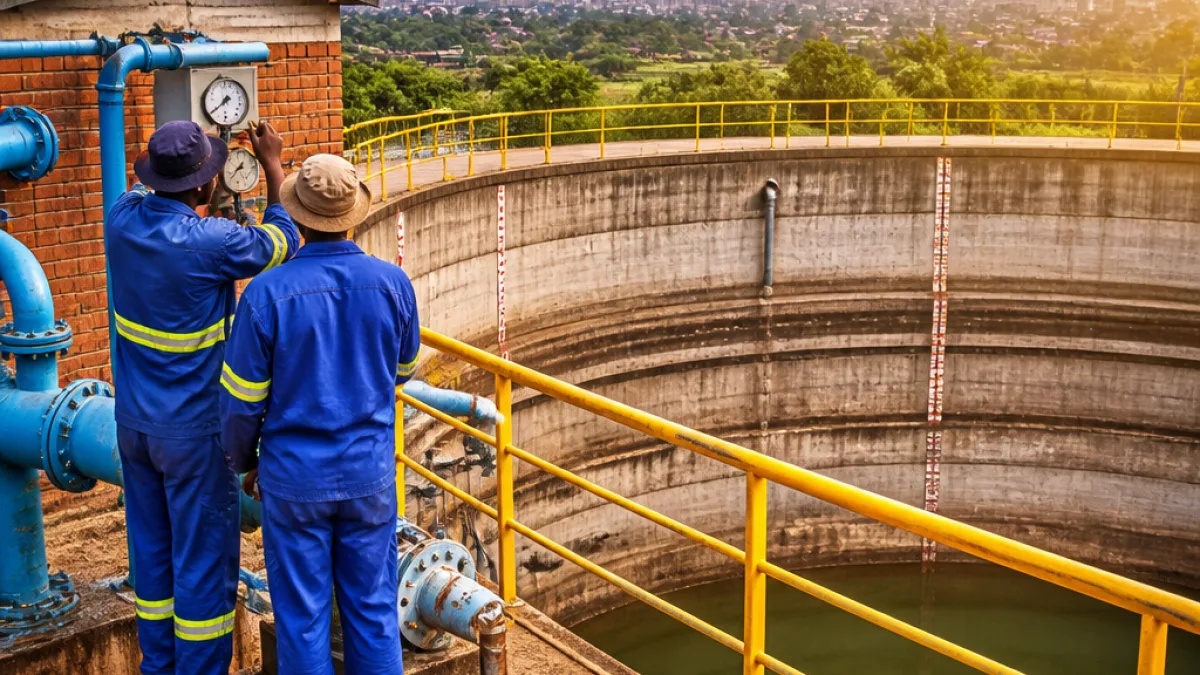
Department spokesperson Elijah Mhlanga told reporters the increasing consumption pattern is putting significant pressure on the province’s water supply network. He said the decline in stored reserves is occurring despite municipal systems working hard to meet demand.
“The Gauteng Provincial Government has noted with concern the continued rise in water consumption across the province… reservoir and tower storage levels are declining despite the systems operating at or near full pumping capacity,”
Officials say the combination of high usage and the concentration of demand in Gauteng’s metros is testing the capacity of both bulk and reticulation infrastructure. When storage levels fall, the margin to absorb disruptions such as bursts, pump failures or temporary supply interruptions narrows sharply.
What residents and businesses are being asked to do
The province has issued an appeal for behaviour change rather than short-term fixes. Households, commercial operations and public institutions were urged to make water conservation an ongoing practice.
- Repair leaking taps and pipes promptly.
- Shorten shower times and avoid unnecessary baths.
- Use water-efficient appliances and settings where possible.
- Avoid hosing driveways and pavements; use a broom instead.
- Limit garden watering to essential periods.
- Report leaks, burst pipes and other losses to your local municipality quickly.
Practical impact and how residents can prioritise use
While the province did not announce immediate restrictions, municipal water managers typically consider measures such as controlled pressure reductions, scheduled supply interruptions, or temporary watering bans when storage levels drop to critical thresholds. Residents who rely on municipal supply should act now to reduce non-essential uses and prepare for potential local measures.
Business and institutional consumers—particularly those in industrial, hospitality and landscaped commercial properties—are significant contributors to consumption and were singled out for immediate action to reduce non-essential demand.
| Area | Suggested action |
|---|---|
| Households | Fix leaks; install flow restrictors; shorter showers |
| Businesses | Audit water use; adjust cooling and irrigation; repair losses |
| Municipalities | Monitor reservoir levels; communicate planned outages; accelerate repairs |
Where the pressure is greatest
Mhlanga noted the three metropolitan municipalities in Gauteng consume around 70% of the water supplied by Rand Water. That concentration of demand means supply strain is most acute in urban areas where population density and commercial activity are highest.
Residents are being asked to consider simple substitutions and timing changes to reduce peak demand. For example, shifting heavy water-use activities such as laundry to off-peak hours and using full loads in washing machines can lower daily draw on reservoirs.
Reporting faults to speed repairs
The provincial department emphasised the role of households in reporting leaks and burst pipes to their local municipality so that repairs can be carried out swiftly. Early reporting helps conserve the reserves that remain and reduces non-revenue water losses from the system.
The provincial appeal stopped short of declaring a formal water shortage alert, but officials said responsible use should now be regarded as a permanent adjustment rather than a temporary campaign. With storage levels declining while pumps run at capacity, the margin for unexpected problems is limited—making every litre conserved valuable.
For now, Rand Water and municipal engineers continue to monitor the situation and coordinate maintenance where necessary. Residents should look out for notices from their metro or local municipality about any planned restrictions or interventions.
Reporting from Johannesburg.