Minister expands water and sanitation access in Gauteng and Mpumalanga
Minister of Water and Sanitation Pemmy Majodina, accompanied by Deputy Minister David Mahlobo, concluded a two‑day service delivery programme that delivered 420 household sanitation facilities and three decentralised water supply systems across Rand West City Local Municipality in Gauteng and Victor Khanye Local Municipality in Mpumalanga.
The interventions were implemented through the department’s entities — Rand Water and the Rand Water Foundation — which the department said continue to play a central role in accelerating government efforts to improve water and sanitation in underserved communities.
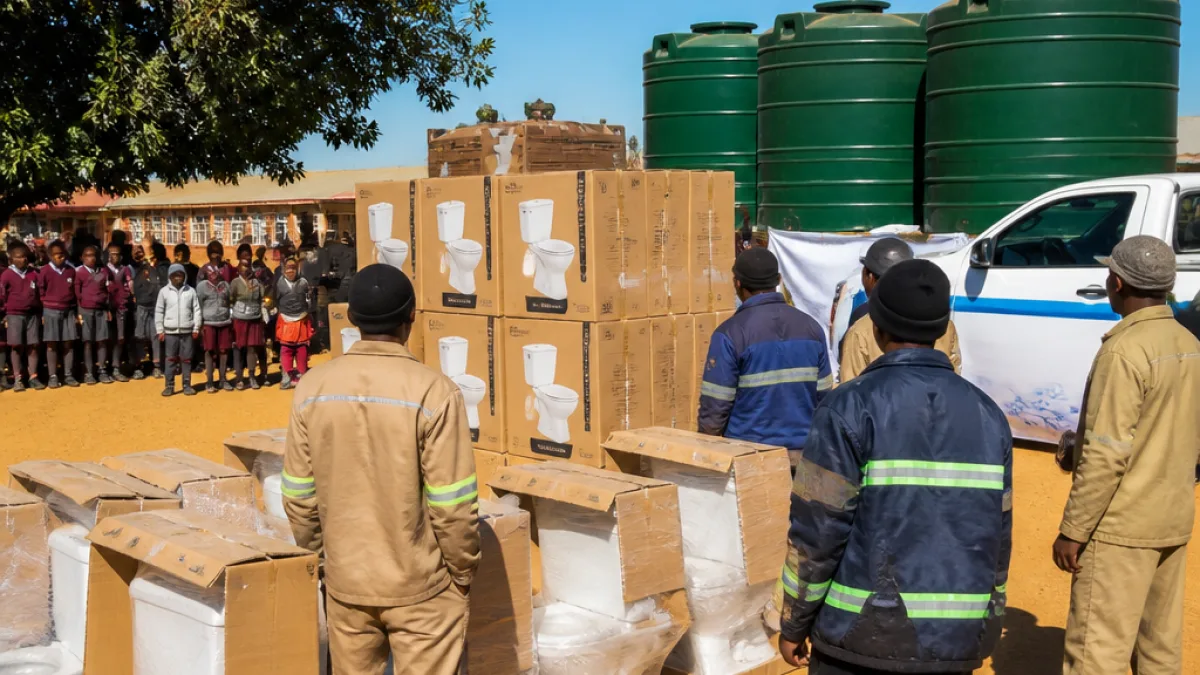
On 10 August 2026, the minister handed over 150 low‑flush sanitation systems in the Zenzele and OR Tambo informal settlements in Rand West City. That phase is estimated to benefit roughly 1,000 community members, while a broader foundation initiative that began in 2023 has now provided 430 low‑flush sanitation systems across the two settlements.
The programme in Rand West City also included the commissioning of a decentralised water supply system at Lukhanyo High School in Mohlakeng. The department expects the installation to provide reliable water access for about 1,400 learners, with anticipated improvements to both sanitation and learning conditions at the school.
Majodina and her team moved to Victor Khanye Local Municipality in Mpumalanga on 11 August 2026, where they handed over 270 low‑flush sanitation systems in Mimosa Township. Two further decentralised water systems were delivered in Brakfontein Village and Savanna Ward 7, intended to give immediate safe drinking water to approximately 450 households.
- 420 household sanitation facilities delivered in total across Gauteng and Mpumalanga.
- Three decentralised water supply systems installed: one at a high school in Mohlakeng and two in Victor Khanye communities.
- Direct beneficiaries include about 1,400 learners at Lukhanyo High School, roughly 1,000 residents in the Rand West settlements, and some 450 households in Victor Khanye.
The department framed the work as part of a continuing drive to close longstanding service gaps. Using decentralised systems and low‑flush sanitation is a common approach in areas where bulk reticulation or sewer networks are absent or difficult to extend in the short term.
| Location | Sanitation units | Decentralised water systems | Estimated beneficiaries |
|---|---|---|---|
| Zenzele & OR Tambo (Rand West City) | 150 | — | ~1,000 residents |
| Mohlakeng (Lukhanyo High School) | — | 1 (school system) | ~1,400 learners |
| Mimosa Township (Victor Khanye) | 270 | 2 (Brakfontein Village & Savanna Ward 7) | ~450 households |
| Total | 420 | 3 |
Residents and community representatives who joined the handovers described immediate relief at having functioning sanitation and drinking water closer to homes and schools. The department highlighted that the Rand Water Foundation’s work since 2023 had already placed several hundred low‑flush systems in the same settlements, indicating a phased approach rather than a single large rollout.
Using decentralised water systems has both advantages and limits. On the one hand, such units can restore safe drinking water quickly where extending bulk supply would take years. On the other, they are not substitutes for long‑term reticulation and sewer infrastructure; municipalities and provincial departments must coordinate on maintenance, water quality monitoring and future integration into larger networks.
For residents, practical questions often centre on operation and upkeep: who will maintain pumps and treatment units, how will consumables and electricity costs be covered, and what mechanisms will be in place to report breakdowns. The department and Rand Water typically say local government and community structures will be involved in ongoing management, but formal agreements determine responsibilities.
As service delivery continues to be a focal point ahead of the local government sphere’s next planning cycles, the handovers demonstrate a continued reliance on state water entities and foundations to deliver interim solutions. Whether these measures translate into sustained access will depend on joint planning between the Department of Water and Sanitation, Rand Water, municipalities and local communities.
Further information on how affected households and schools should report faults or seek support was not included in the handover statement; residents were advised to liaise with their municipal ward councillors and Rand Water Foundation outreach teams for follow‑up arrangements.