
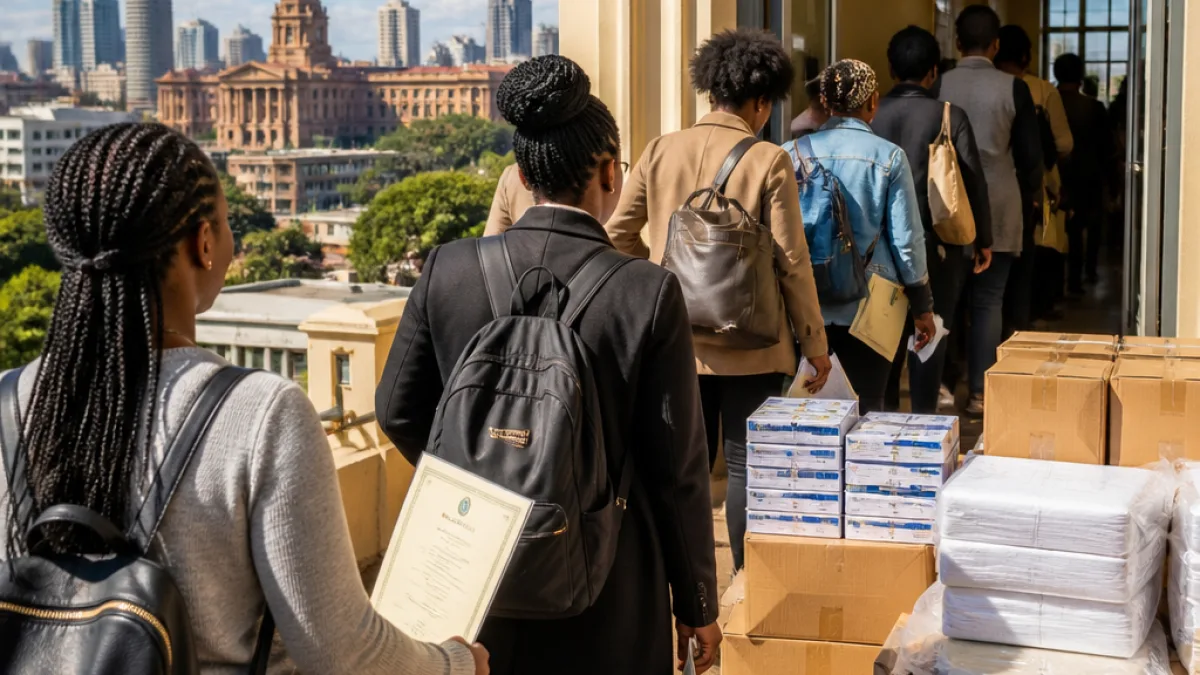
Gauteng says its programmes during the 2025/26 financial year placed women at the centre of economic recovery and social development, producing measurable gains in employment, skills training and government procurement.
Numbers show deliberate, gender‑responsive approach
According to the province’s 2025/26 report, more than 35 000 women accessed work through the Community Works Programme and the Expanded Public Works Programme during the period under review. Women represented 60% of opportunities created through provincial public works and infrastructure projects, the report said, a result the province attributes to deliberate gender‑responsive employment policies.
Skills development also featured prominently. The report states that over 18 500 women took part in targeted skills programmes ranging from enterprise development and business compliance to trades historically dominated by men, such as bricklaying and domestic electrical wiring. The establishment of a Women in Transport Help Desk was listed as part of efforts to open underrepresented industries to women.
Procurement and enterprise support
The Office of the Premier is said to have exceeded its procurement targets for women‑owned enterprises during the year. Province‑wide expenditure on black women‑owned businesses reached approximately R1.35‑billion, the report shows, illustrating the potential of state procurement to advance economic transformation.
Officials framed these results not as an end state but as part of a deliberate strategy to use public spending, work creation and skills training to reduce poverty and inequality among women in Gauteng.
Programmes and impact at a glance
- Employment: 35 000+ women placed in work via public works programmes.
- Workforce share: Women made up 60% of provincial public works opportunities.
- Skills: 18 500+ women trained in enterprise and technical trades.
- Procurement: ~R1.35‑billion spent with black women‑owned businesses.
The province also highlighted coordinated work across healthcare, housing, agriculture, social protection and the fight against gender‑based violence and femicide (GBVF) as complementary pillars supporting women’s socio‑economic advancement.
What this means for residents
For many women in townships and inner‑city neighbourhoods of Gauteng, the combination of short‑term work opportunities, targeted skills training and access to procurement markets can provide both immediate income and a longer pathway to sustainable livelihoods. Community Works and Expanded Public Works placements typically combine income support with local public‑goods delivery, while skills training aims to reduce the barriers to formal employment and small business growth.
Provincial authorities said their approach recognises that economic empowerment is a critical tool to address both poverty and gender inequality — especially where women head households and carry disproportionate care responsibilities.
Data table: Key 2025/26 figures
| Indicator | 2025/26 result |
|---|---|
| Women placed in public works | 35 000+ |
| Share of public works opportunities filled by women | 60% |
| Women participating in skills programmes | 18 500+ |
| Spend with black women‑owned businesses | R1.35‑billion |
Policy analysts and community groups have long argued that targeted public investment and procurement are necessary but not sufficient to achieve sustained gender equality. Gauteng’s report positions these interventions as part of a broader package that includes GBVF prevention, health and social support.
While the province describes the figures as evidence of progress, it also acknowledges the scale of the challenge ahead. The report stresses that continued focus on gender‑responsive budgeting, monitoring and the removal of structural barriers to women’s participation in certain sectors will be required to build on these gains.
For residents seeking to benefit from provincial programmes, the report encourages engagement with local ward offices and sector help desks — such as the Women in Transport Help Desk — for information on available training, procurement registration and work placement opportunities.
Gauteng’s 2025/26 numbers provide a snapshot of a province attempting to align public spending with gender equity objectives. Whether the gains translate into sustained improvements in household incomes and broader economic inclusion will depend on follow‑through, implementation at local level, and continued monitoring of outcomes for marginalised women.














