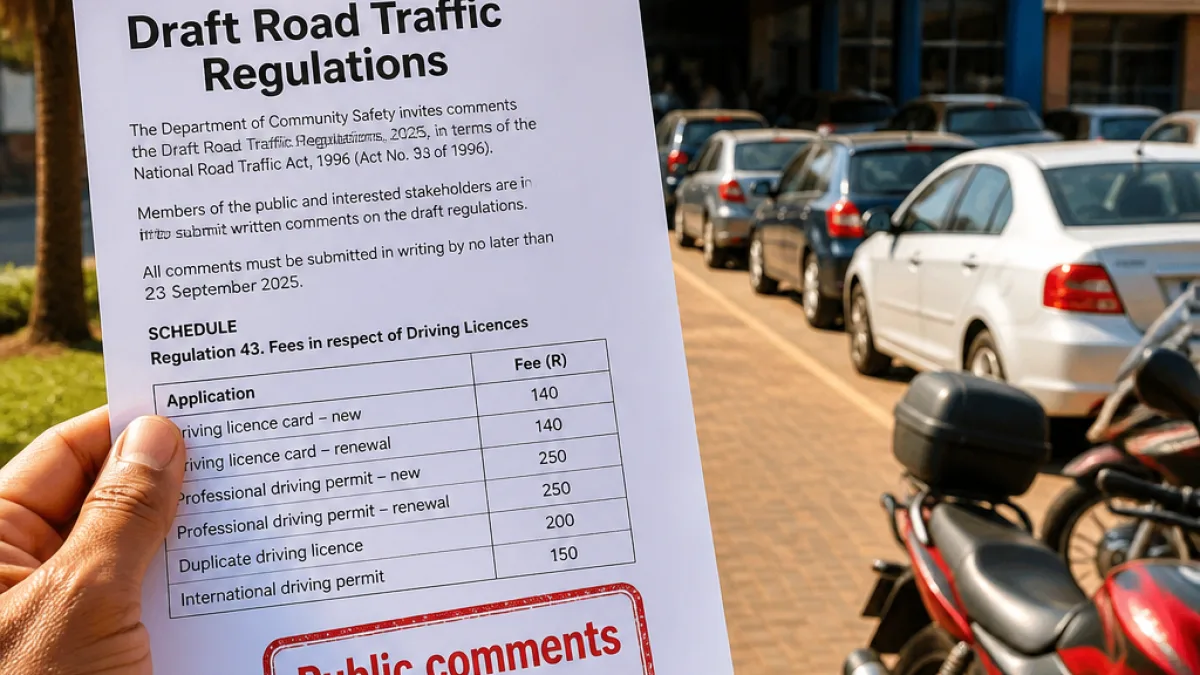
Gauteng motorists face proposed increases to vehicle registration and licensing fees under draft provincial road traffic regulations that the transport department has opened for public comment. The regulations set out mechanisms for the periodic review and adjustment of tariffs and will be open for submissions until 23 September.
What the draft increases say
The department’s public notice lists specific jumps for different vehicle categories. Among the figures published:
- Motorcycles, motor tricycles and motor quadricycles: increases of up to R264.
- Light vehicles (hatchbacks): proposed rise to R564 (from R528).
- Sedans and SUVs: proposed increases of up to R1,836.
The draft regulations are intended to clarify the legal and administrative processes that govern how the province reviews and adjusts these motor vehicle tariffs.
Province defends review as routine and necessary
Melitah Madiba, head of communications at the Gauteng department of transport, said the exercise is not arbitrary but a "strictly regulated statutory exercise" done to keep the revenue and services linked to licensing in step with operational costs and infrastructure needs.
"The department wishes to provide clarity to motor vehicle owners, transport operators and the public regarding the legal principles and administrative mechanisms governing the periodic review and adjustment of motor vehicle registration and licensing tariffs across the province," said Madiba.
Madiba pointed to Treasury regulation section 7.3.1, which requires the accounting officer — in this case the MEC for transport — to review fees and charges at least annually when finalising the budget. The review, she said, is intended to:
- maintain financial sustainability;
- offset inflationary operational increases; and
- support continuous road infrastructure development and traffic management services.
Where to see the details and how to comment
The official schedule of approved tariffs will be published in the provincial gazette. Members of the public can also inspect the draft fee structures at any local registering authority (RA) or driving licence testing centre (DLTC) across Gauteng. The department has called for written submissions from affected parties and members of the public before the closing date of 23 September.
Given the range of vehicles and the potential cost impact for private owners, transport operators and small businesses that run fleets, the department is stressing transparency in how the tariffs are reviewed and adjusted.
What this means for motorists
For most private motorists the change will appear as a modest increase in the annual cost of keeping a vehicle legally licenced. For commercial operators and fleet managers, cumulative increases across many vehicles could be more significant and may feed into operating costs for businesses that rely on road transport.
Practical points for residents considering a submission:
- Check the full draft schedule at your nearest RA or DLTC or in the provincial gazette.
- Prepare concise, focused comments — for example on affordability, proposed mechanisms for future reviews, or the impact on small operators.
- Submit before 23 September to ensure your views are considered.
Context — why fees change
The department framed the changes as part of routine public financial management. Licensing fees are classified as non-tax revenue and are subject to annual review to ensure they reflect inflation and the real cost of services such as vehicle licensing administration, road maintenance contributions and traffic management.
| Vehicle category | Current / proposed (where stated) |
|---|---|
| Motorcycles, tricycles, quadricycles | Increase of up to R264 |
| Light vehicles (hatchbacks) | From R528 to R564 |
| Sedans and SUVs | Up to R1,836 |
The department says publishing the draft regulations and the official tariff schedule provides clarity for vehicle owners and operators and aligns the process with sound public financial management practices.
With the clock ticking to the 23 September deadline, motorists and transport stakeholders who want a say should inspect the draft at their local RA or DLTC and lodge written comments in time.
Reporter note: the figures and dates above are taken from the Gauteng transport department’s published draft regulations and the department’s communications. The official gazette will carry the final published tariff schedule.