Gauteng has begun a three-year programme to restore, upgrade and protect traffic signals on priority provincial routes after months of damage and theft left vital intersections unsafe and unreliable, the provincial Roads and Transport department said.
Scope and intent of the programme
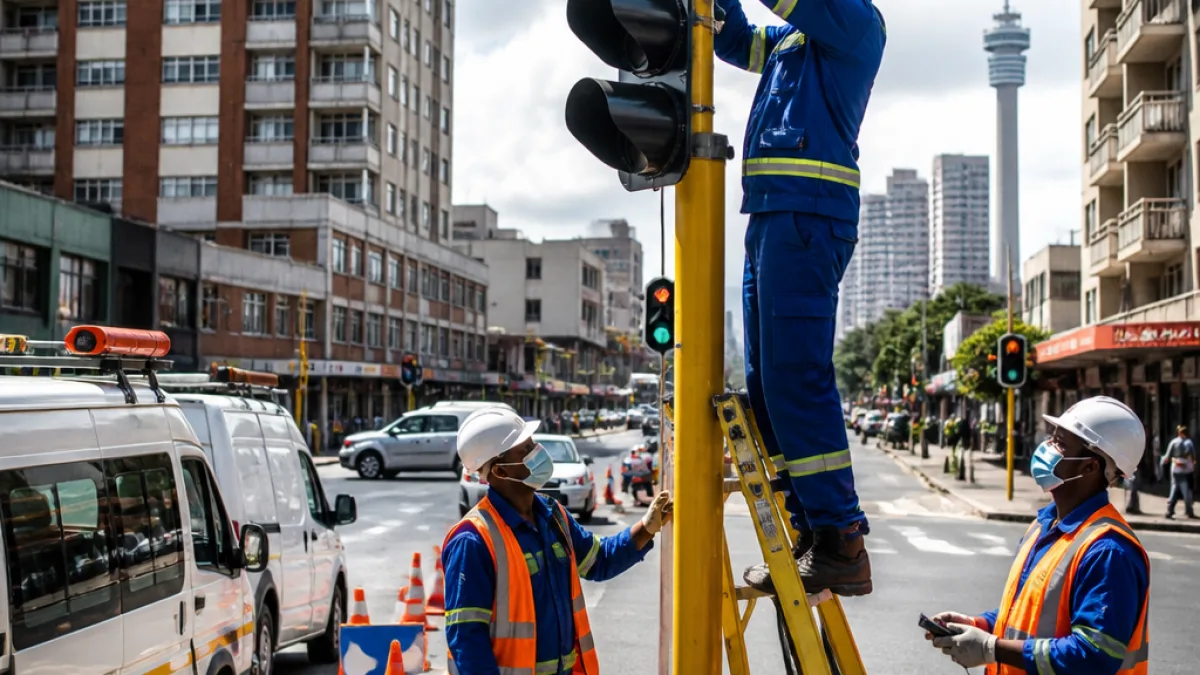
The provincial traffic signals repair and restoration programme, announced by MEC Kedibone Diale-Tlabela, will run for 36 months. Contractors appointed last month have started work on multiple priority intersections, with further interventions planned along key development corridors and strategic routes.
The department said the programme aims to:
- restore vandalised infrastructure;
- modernise existing traffic signals with up-to-date technology;
- strengthen security and management of traffic-signal assets; and
- establish a centralised control function to better coordinate and monitor signals.
“The programme represents a significant and ongoing effort to modernise the province’s traffic signal infrastructure through the deployment of the latest technology, while addressing the persistent challenges of cable theft, infrastructure vandalism, illegal connections and damage caused by vehicle collisions,” the department said.
Five priority areas for work
Work under the programme will focus on five key components outlined by the department:
- Installation of new traffic signals where infrastructure has been completely vandalised;
- Establishment and operationalisation of the Provincial Transport Management Centre (TMC);
- Upgrading of existing traffic signals;
- Retrofitting existing assets with modern technologies and enhanced security measures; and
- Maintenance and repair of existing traffic signal infrastructure.
| Component | Main focus |
|---|---|
| New installations | Replace completely vandalised signals |
| Transport Management Centre | Centralised monitoring and response |
| Upgrades | Bring older systems up to modern standards |
| Retrofitting | Security and technology enhancements |
| Maintenance | Ongoing repairs and preventative work |
Why this matters to commuters and communities
Traffic-signal outages and intermittent operation not only slow traffic but raise the risk of collisions and make busy junctions dangerous for pedestrians and taxi and bus users. The programme’s emphasis on modernisation and a central management centre is intended to reduce downtime and improve rapid responses to failures.
Residents who use provincial roads — including daily commuters, minibus-taxi operators and freight drivers — will likely see phased improvements over the 36-month period as contractors prioritise the most affected corridors. The department said work has already started at several priority intersections but did not list specific locations.
Department calls on residents to help protect infrastructure
MEC Diale-Tlabela has urged communities to play an active role in protecting critical road infrastructure. The department highlighted cable theft, illegal connections and vandalism as persistent problems that increase repair costs and extend outages.
While the department did not publish contact details for reporting incidents, it asked road users and community members to report theft and vandalism to the relevant authorities so repairs can be effected as quickly as possible.
Costs, contractors and timelines
The department confirmed contractors were appointed last month and work is now underway. It did not disclose the names of contractors or the total budget for the programme in its public statement. The 36-month timeframe reflects both the scale of damage across the provincial network and the need to phase works to limit disruption to traffic.
Transport sector stakeholders say long-term solutions must pair technical upgrades with community policing and targeted law-enforcement action against syndicates that steal copper cables and other components. The department’s plan to retrofit assets with enhanced security features aims to make theft less lucrative and repairs less frequent.
What road users should expect next
Commuters should expect phased works at priority intersections and occasional lane closures or changed signal operation while upgrades and maintenance are under way. Motorists are advised to follow temporary traffic signs and the directions of roadworks personnel at sites.
The department’s appeal to residents to report incidents is a reminder that protecting public infrastructure requires both government action and community vigilance. The success of the 36-month programme will depend on technical delivery, funding discipline and the cooperation of neighbourhoods across Gauteng.
— Gauteng correspondent