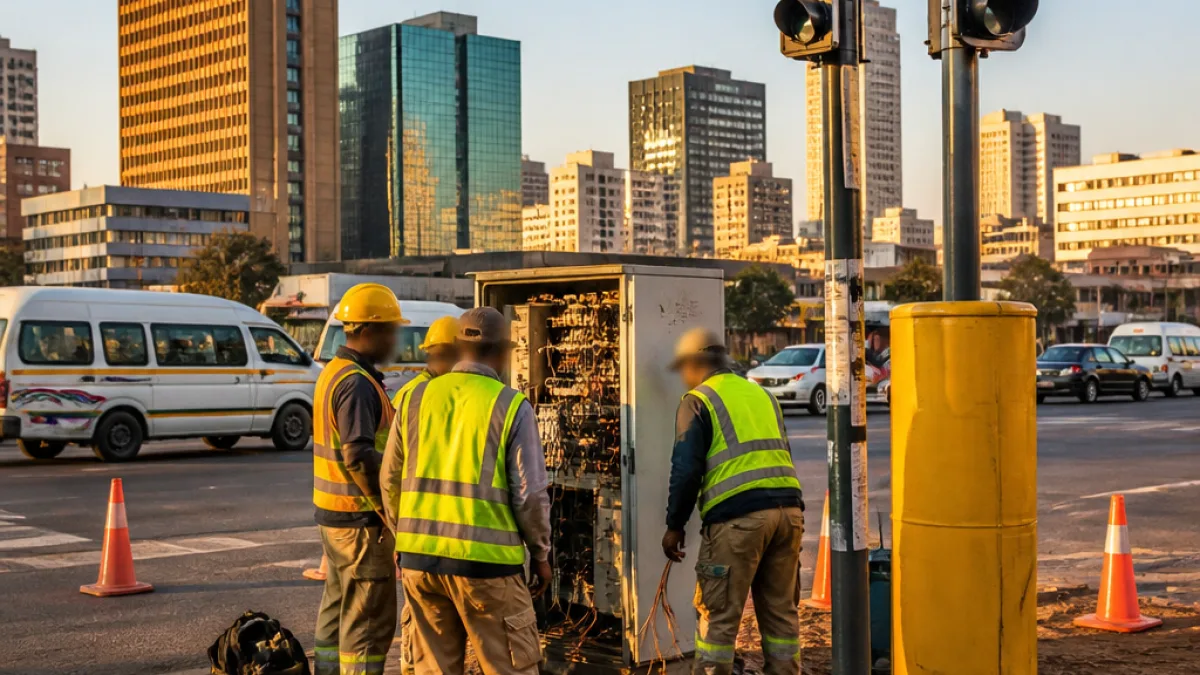
Gauteng has kicked off a province-wide programme to repair, modernise and protect traffic signal infrastructure after repeated incidents of theft and vandalism put road safety and commuter routines at risk.
The Gauteng Department of Roads and Transport appointed contractors last month and has already started restoration work at several priority intersections. The programme will run for 36 months and focuses on renewing vandalised equipment, upgrading signal technology and strengthening measures against cable theft, illegal connections and collision damage.
Government calls on communities to help protect assets
Gauteng MEC for Roads and Transport Kedibone Diale-Tlabela appealed to road users and neighbourhoods to remain vigilant and report suspicious activity so repairs are not repeatedly undone by criminal acts. She said the theft and vandalism of public infrastructure places an unnecessary financial burden on the province through costly repairs and restoration work.
"As the department undertakes this restoration programme, we are calling on all road users, communities, motorists, bikers, cyclists, pedestrians and runners to stand with us in protecting these critical assets. If you see or witness suspicious activity, theft or vandalism, kindly report it to the authorities for immediate action,"
The MEC warned that criminal activity targeting road infrastructure affects all commuters who depend on safe and reliable roads and public transport systems.
What the programme will do
While detailed technical plans were not published with the statement, the department said the programme will:
- restore vandalised traffic signal infrastructure at priority intersections;
- modernise existing traffic signal systems using newer technology;
- address persistent operational challenges such as cable theft, illegal connections and collision damage;
- strengthen protection and management of traffic assets along key development corridors and strategic routes.
Contractors have already begun work at several intersections and further interventions are planned along major routes. The department framed the work as part maintenance, part upgrade and part crime-prevention effort.
Why this matters to commuters
Traffic signals are central to intersection safety and the smooth flow of vehicles, public transport and pedestrians. Repeated damage or outages can increase the risk of collisions, congestion and delays for taxi, bus and private commuters.
For residents who rely on public transport, signal outages can mean longer waits at robot-controlled intersections, disrupted minibus-taxi routes and greater exposure to unsafe conditions at busy junctions.
How residents can help
The department urged ordinary citizens to do the following:
- Report suspicious behaviour near traffic signal cabinets or poles to the SAPS or local law enforcement;
- Notify the Gauteng Department of Roads and Transport when they observe vandalism or outages at intersections;
- Support efforts to protect equipment by informing local ward councillors and community policing forums about repeat incidents.
The statement did not list specific phone numbers or liaison offices; community members are advised to use existing SAPS contact channels and municipal reporting systems for immediate incidents.
Programme snapshot
| Item | Detail |
|---|---|
| Duration | 36 months |
| Immediate action | Contractors appointed; restoration work under way at multiple priority intersections |
| Main aims | Restore, modernise and protect traffic signal infrastructure; tackle cable theft and vandalism |
Local municipal roads departments and law enforcement agencies will be key partners in protecting the upgraded assets. The statement noted planned interventions along "key development corridors and strategic routes" but did not name those routes or provide a cost estimate for the programme.
Context: the cost of theft and vandalism
Cable theft and vandalism of traffic infrastructure have been recurrent issues in several South African metros. Repairing vandalised controllers, replacing stolen copper and restoring damaged poles and wiring is often expensive and time-consuming. The Gauteng Department framed this programme not only as an engineering exercise but as a crime-prevention measure that requires community cooperation.
For now, commuters will be watching whether the repairs lead to more reliable signals and whether the province can deter the thefts that keep pushing costs up and compromise road safety.
Residents with information about theft or vandalism around traffic signals are encouraged to report it to the SAPS or their local municipal offices for immediate action.