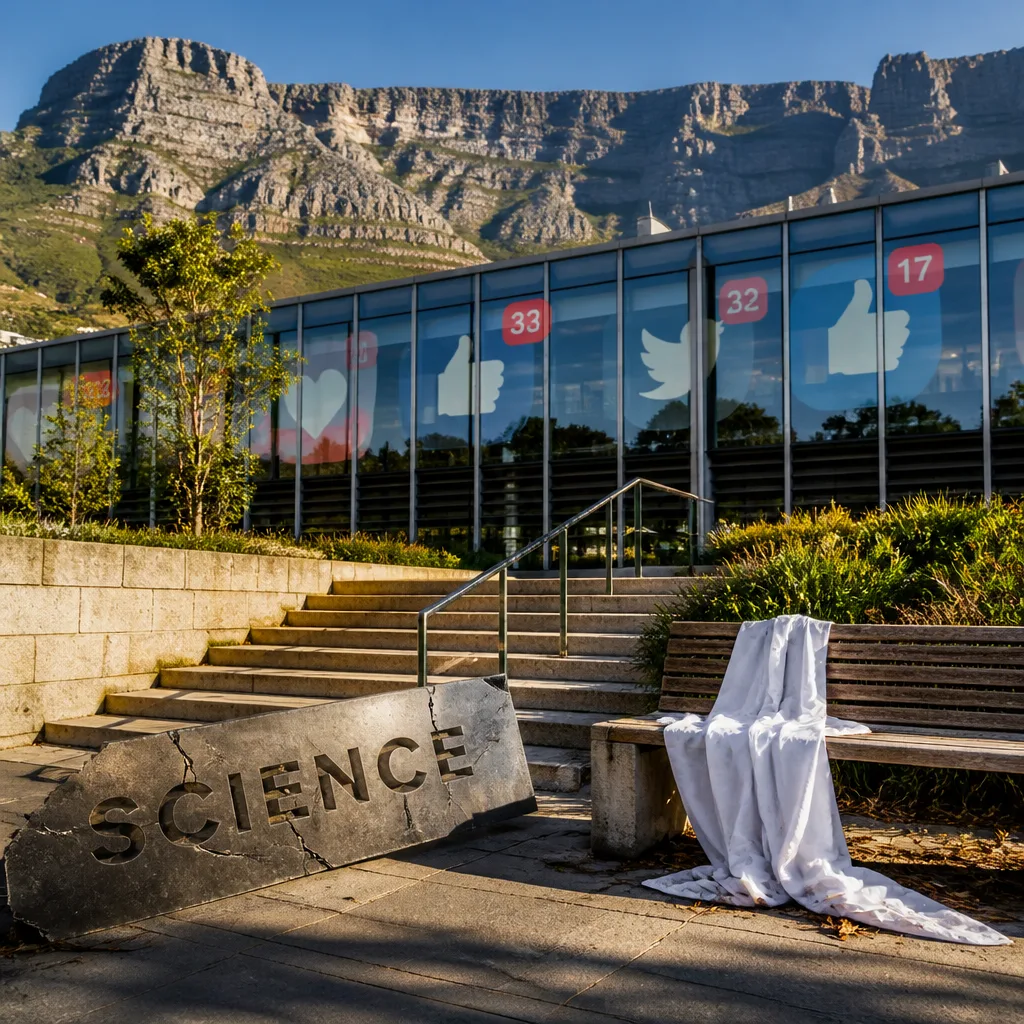
Public confidence in science has fallen sharply even as research advances at an unprecedented rate, a scholar of knowledge argues, with digital platforms and high-profile controversies driving a broader crisis in how societies recognise truth.
From progress to scepticism
Dariusz Jemielniak of Kozminski University, in his book Anti-Science: Shortcuts to a Big Idea, says the decline in trust is not simply a matter of public ignorance or poor communication. Rather, he places the problem squarely in a changing social relationship to knowledge.
"We have entered a period in which the relationship between information and truth has become fundamentally contested," Jemielniak said.
He points to a combination of long-standing and recent pressures. Historical surveys from the mid-20th century showed high levels of confidence in scientists and scientific institutions; science was tightly associated with progress, prosperity and problem-solving. Today, that reservoir of trust has been substantially depleted.
What has driven the decline?
Jemielniak outlines several interacting factors, drawn from decades of public and institutional developments and accelerated by contemporary digital infrastructure:
- Corporate-influence scandals and episodes that raise doubts about the independence of research.
- High-profile cases of fraud and retractions that undermine perceptions of reliable self-correction.
- Sheer volume of scientific output, which makes it harder for the public and even policymakers to separate robust results from preliminary findings.
- Digital platforms that accelerate and amplify shocking or polarising claims regardless of accuracy.
- Echo chambers and algorithmic reward for outrage, which simplify complex disputes into identity markers.
Those elements, he argues, form a "perfect storm": they do not by themselves destroy trust, but together they reshape how people judge truth and expertise.
Why the infrastructure matters
Jemielniak highlights how technologies that once promised broader access to information have also made falsehoods easier to spread. Social media algorithms, designed to maximise engagement, often favour sensational or emotionally charged material. That dynamic rewards content that polarises rather than explains.
As a result, epistemic conflict — disputes over what counts as knowledge — has become a form of content. Complex scientific debates are often reduced to simple identity signals: who you are or which community you belong to can determine which scientific claims you accept.
Implications for policy and public life
The trend has direct consequences for public policy areas where scientific advice matters, from public health and environmental regulation to technology governance. When citizens and decision-makers alike cannot agree on what constitutes reliable evidence, collective action becomes harder.
Jemielniak’s diagnosis is cautionary. He does not offer a single technical fix; rather, he points to a systemic challenge that combines institutional shortcomings with the affordances of modern digital communication. Understanding this complexity is a first step toward designing responses that restore confidence without oversimplifying scientific uncertainty.
| Driver | Effect on public trust |
|---|---|
| Corporate scandals | Perceived bias and commercial influence |
| Fraud and retractions | Questions about reliability and oversight |
| Digital amplification | Rapid spread of false or simplified claims |
For South Africa, where public debates have at times been intensely contested, the lessons are salient. Restoring trust will require attention to how institutions demonstrate independence, how research is communicated, and how digital platforms are governed — measures that must be both structural and pragmatic.
In short, the crisis is not merely about fixing misunderstandings; it is about rethinking the social architecture that governs how information becomes accepted as truth.