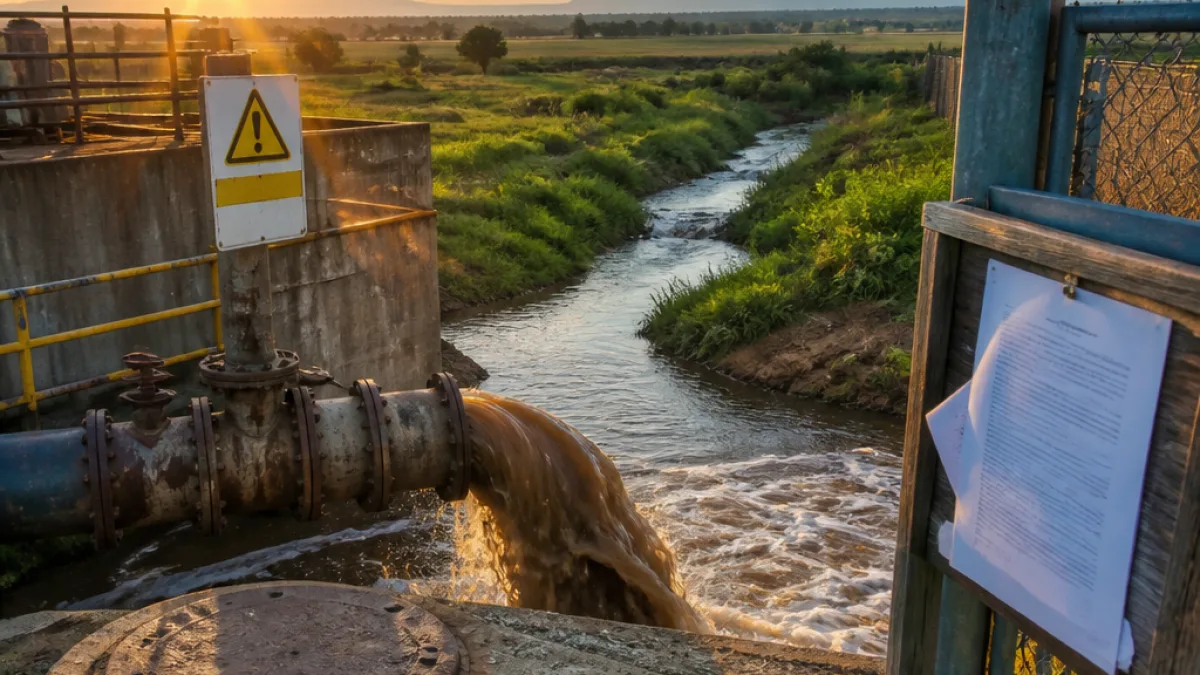
Department finds Ermelo plant discharging sewage into water resources
The Department of Water and Sanitation (DWS) says investigations at the Ermelo Wastewater Treatment Works show sewage was being discharged directly into surrounding water resources because of poor operations and maintenance. The finding was made during an oversight visit by Deputy Minister Dr Jack Bloom and local officials to assess pollution that has affected communities and nearby farms.
The department reported that the Ermelo plant was not authorised to undertake certain water uses and that failures in operation and maintenance resulted in effluent bypassing treatment units. Untreated and poorly treated sewage, the DWS said, has been reaching the Pet Dam, Brummer Dam, the Vaal River catchment and the Nels River, with negative impacts on water quality for domestic, agricultural and environmental uses.
- Officials present: Dr Jack Bloom (DWS Deputy Minister), Walter Mngomezulu (Gert Sibande District Municipality Executive Mayor), Mapulane Nkosi (Msukaligwa Local Municipality Mayor).
- Sites inspected: Ermelo plant, Breyton plant, Brummer Dam and affected farming areas.
- Legal action: A criminal case was opened and the Middelburg High Court found the municipality guilty of polluting water resources, ordering corrective measures.
“The department had issued several directives to the municipality for failure to take reasonable measures to prevent pollution of water resources,”
The quote above was attributed to Wisane Mavasa of the DWS in the department’s report on the oversight visit. The DWS noted repeated directives had been issued to the municipality to stop further pollution, but insufficient action led to legal proceedings and the court judgment.
Municipal leaders have previously announced plans to upgrade the Ermelo plant. In August 2025, Mayor Mapulane Nkosi officially handed a project to a contractor to expand the plant and to begin installation of a bulk sewer pipeline for Ermelo Ext 44 – Phase 1. During that event Nkosi highlighted the planned increase in capacity from 9 megalitres per day to 33 megalitres per day, intended to serve the growing Msukaligwa population.
| Item | Current | Planned |
|---|---|---|
| Ermelo plant capacity (ML/day) | 9 ML/day | 33 ML/day |
Residents and farmers in the catchment have reported negative effects on agricultural activities and water use. The DWS inspection focused on the immediate physical impacts where effluent entered water bodies and on the municipality’s systems and maintenance practices that allowed the bypasses to occur.
While the upgrade project was launched to address capacity constraints, the department’s findings underline that capacity increases will not solve pollution unless operations, maintenance, and lawful water‑use authorisations are in place and enforced. The Middelburg High Court ruling requires the municipality to take corrective measures to stop the discharge of poor-quality effluent and prevent further pollution of water resources.
For Ermelo residents, the consequences are practical and pressing: contaminated source water affects household access to safe water, raises treatment costs for water services, and harms irrigation and livestock water supplies. The long-term environmental health of local dams and rivers is also at stake, with implications for biodiversity and downstream users in the Vaal River system.
The DWS said it will continue oversight to ensure the municipality complies with directives and court orders. The pace and effectiveness of remedial work — whether through the current upgrade contract, improved operations and maintenance, or enforcement measures — will determine how quickly water quality can be restored.
As the situation develops, local residents and water users will be watching to see whether corrective measures are implemented and whether monitoring is stepped up to prevent further discharges.