Province urged to act as theft and ageing infrastructure threaten water security
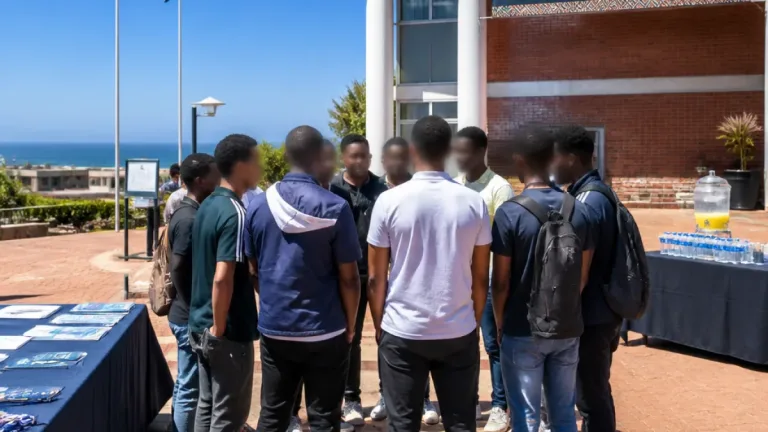
Government leaders, municipal officials and sector experts gathered in Middelburg this week to map responses to Mpumalanga’s growing water and sanitation crisis. Delegates at the Association for Water and Sanitation Institutions of South Africa (AWSISA) and Global South Water and Sanitation Mpumalanga Dialogue described a combination of infrastructure decay, power interruptions and organised cable theft that is forcing raw sewage into rivers and threatening potable supply.
MEC for Co‑operative Governance and Traditional Affairs Speedy Mashilo opened the dialogue and said the provincial focus remains on rural and farming areas where services are most fragile. The MEC set out plans to increase water harvesting and to partner with industry, naming mines and Rand Water as potential collaborators to bolster supply.
“Our biggest concern is around the farm areas. That is why we want to do water harvesting and form partnerships in various areas, such as with mines and Rand Water.”
Mashilo also warned that organised criminal networks have targeted wastewater infrastructure, removing cables that power pumping stations. Without electricity, systems stop and sewage is discharged into streams and rivers. “It is pure sabotage,” he said.
Scale of the challenge — funding, pipes and power
Speakers at the Middelburg Banquet Hall underscored three linked problems undermining service delivery across the province:
- Infrastructure age and condition: Many reticulation networks still contain asbestos pipes that require replacement.
- Power vulnerability: Load-shedding and local electricity interruptions stop pumping stations, affecting supply and wastewater systems.
- Deliberate sabotage: Cable theft by syndicates has knocked out power to treatment and pump facilities, with raw sewage spills reported into local rivers.
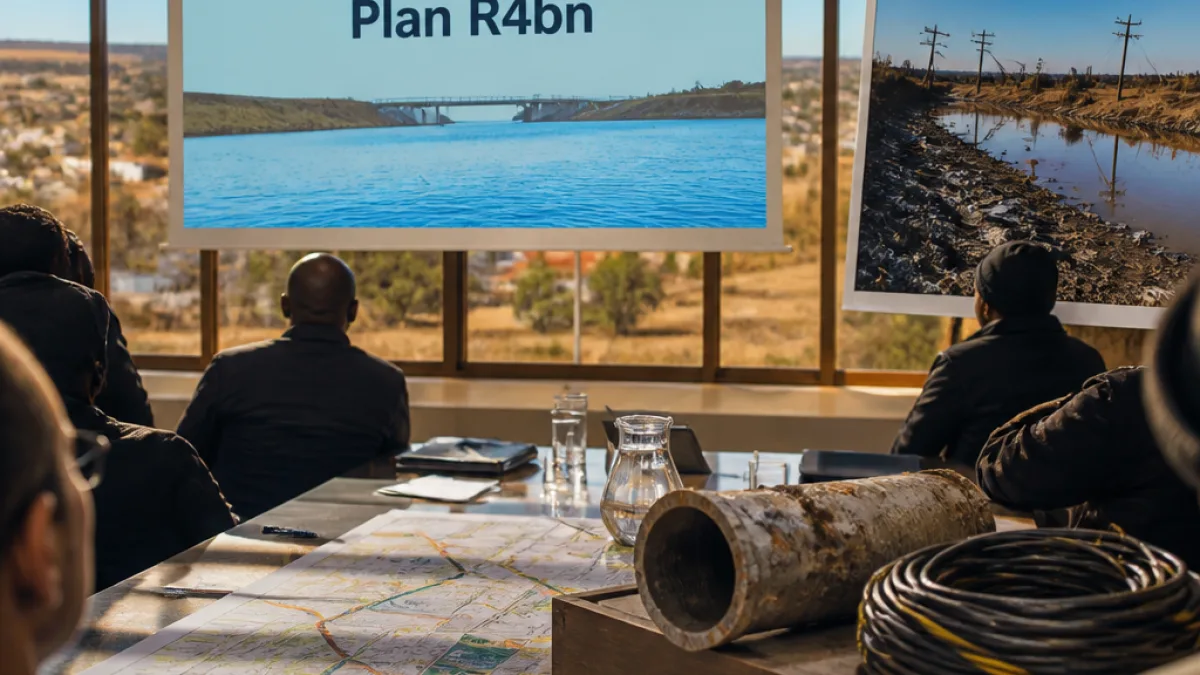
The MEC estimated that a comprehensive overhaul to address the broader network, including replacing asbestos pipes across Mpumalanga, would require R4 billion in funding.
| Issue | Consequence |
|---|---|
| Asbestos and ageing pipes | Leaks, bursts, contamination risk |
| Power cuts and load-shedding | Pumping stations stop, supply interruptions |
| Cable theft (organised) | Raw sewage spills; treatment plant failures |
Municipal perspective: Middelburg achievements and outstanding work
Steve Tshwete Local Municipality Mayor Mhlonishwa Masilela addressed delegates and highlighted recent local achievements while also pointing to remaining challenges. The municipality received five awards at the event for drinking water and wastewater management under the national Blue Drop and Green Drop assessment programmes — an acknowledgement of progress but not a signal that all risks are resolved.
Delegates discussed specific technical responses, including greater adoption of decentralised water-harvesting measures and the increased use of renewable energy to power pumping infrastructure. Mashilo said where feasible solar would be used to power windmills and pumps to keep water moving even during grid interruptions.
“Where possible, we are going to use solar to power windmills as part of our system to ensure we get water,”
The dialogue emphasised capacity building for rural communities to manage water harvesting and local systems, and stronger partnerships between municipalities, the private sector and state water institutions.
What this means for residents
For households and farms across Mpumalanga the combined effect of these problems can be immediate: unpredictable supply, potential contamination risk, and environmental damage when sewage enters rivers used for irrigation, livestock watering and downstream abstraction.
Speakers urged residents to adopt practical conservation and safety measures while broader capital projects are planned, such as:
- Store emergency water supplies safely and rotate them regularly.
- Report sewage leaks, illegal dumping and suspected cable theft to local councils and the SAPS promptly.
- Participate in community water‑harvesting and maintenance programmes where organised locally.
Next steps and funding conversations
The R4 billion figure presented at the dialogue sets a fiscal benchmark for the size of investment required to modernise key parts of the provincial network. The event aligned municipal experience with national and industry expertise to make the case for targeted funding, technical support and stronger law‑enforcement responses to theft syndicates.
Delegates also recommended clearer coordination between water utilities and power planners to minimise the effect of load‑shedding and to prioritise backup power for critical pumping infrastructure.
As the province moves from diagnosis to project planning, officials signalled that partnerships with business, national agencies and neighbouring water institutions will be central to securing the capital and technical skills needed to protect water services and public health.
Reporting from Middelburg; coverage will continue as funding proposals and project plans are developed.