
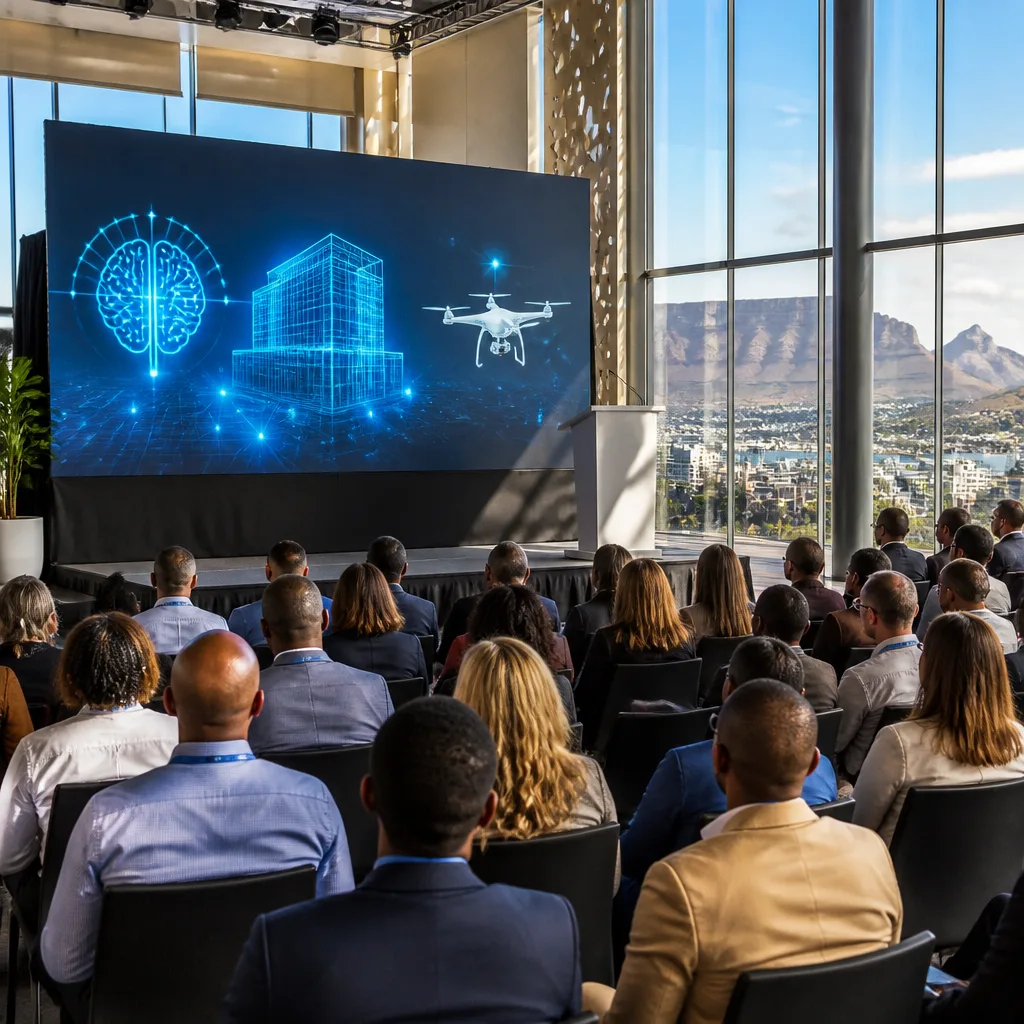
Technology must become core to construction management, Deputy Minister of Public Works and Infrastructure Sihle Zikalala told delegates at the Built Environment Summit in Cape Town on 3 September 2026. Speaking at the Cape Town International Convention Centre, he argued that adoption of digital tools is essential to improve safety, reduce failure rates and ensure projects finish on time and within budget.
Why the message matters
Zikalala framed technological adoption not as optional modernisation but as an "indispensable intervention" for the sector. His address pushed several practical tools to the fore: Building Information Modelling (BIM), advanced data analytics, drones and artificial intelligence. According to the Deputy Minister, these technologies can strengthen inspection, oversight and delivery outcomes across both public and private projects.
“The integration of technology presents an opportunity to revolutionise how projects are monitored, controlled, and delivered. Far from being a threat to employment, AI serves as a powerful catalyst for efficiencies and productivity gains,”
Zikalala said on Thursday that automating routine tasks would free skilled professionals to focus on higher-value activities that require critical thinking and creativity. The comments directly address concerns that AI and automation will displace workers, reframing the technologies as productivity accelerators rather than straightforward job threats.
Practical benefits and limits
The technologies Zikalala highlighted bring different, complementary benefits for the built environment sector:
- BIM—improves project coordination and provides a shared, data-rich model for construction and maintenance decisions.
- Drones—offer rapid site visibility and can capture evidence for inspections without putting people at risk.
- AI and analytics—help detect risks earlier by processing large datasets and automating repetitive checks.
These tools can make inspection systems more evidence-based and help identify emerging problems before they escalate into failures, Zikalala said. However, he also called for closer coordination across government to boost the number of registered building inspectors—an acknowledgement that technology cannot replace the need for skilled, on-the-ground oversight.
What this means for public projects and jobs
South Africa continues to grapple with safety challenges and project delivery problems in the built environment. The Deputy Minister’s comments signal a policy preference for integrating digital methods into procurement, monitoring and compliance processes for public infrastructure work. For ordinary South Africans, the intended result is safer construction sites and better value from projects funded by taxpayers.
On employment, the Deputy Minister’s position is to emphasise redeployment and productivity gains rather than displacement. By automating routine functions, government and industry aim to shift skilled staff into roles requiring inspection judgement, problem-solving and design—tasks that current algorithms cannot fully replicate.
How government plans to act
While the speech underscored technological directions, Zikalala also urged stronger coordination across all spheres of government to increase the number of registered inspectors. That point links digital ambition with human capacity: better tools require more accredited professionals to interpret results, enforce standards and manage complex projects.
| Technology | Primary benefit |
|---|---|
| BIM | Improved coordination and lifecycle data |
| Drones | Safer, faster site inspections |
| AI & analytics | Earlier risk detection and automation of routine checks |
The Deputy Minister’s remarks come amid ongoing public scrutiny of project failures and safety incidents in the sector. By promoting digital tools, the government is signalling an attempt to reduce rework, cost overruns and the human toll of unsafe sites. Successful adoption will depend on procurement rules, training, funding for sensors and data systems, plus an expanded inspectorate to translate digital signals into action.
For industry players and municipalities, the speech is a policy nudge: invest in interoperable systems such as BIM, experiment with drones for inspection and set realistic plans to reskill staff impacted by automation. For citizens, the promise is clearer oversight of projects that affect daily life—roads, schools, clinics—provided implementation keeps pace with the rhetoric.
Deputy Minister Zikalala delivered the remarks at the Built Environment Summit on 3 September 2026, as reported by SAnews.gov.za.


