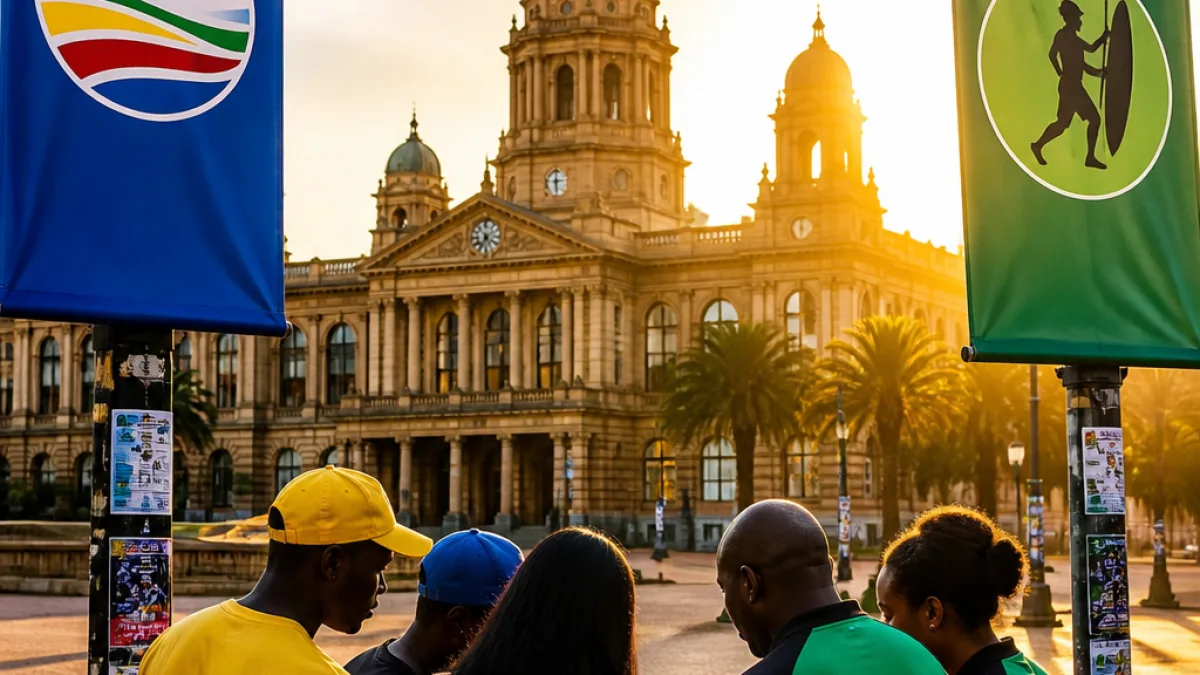
The Democratic Alliance (DA) has told voters and rival parties it will not form a coalition with the MK Party in eThekwini after the 4 November local government elections, saying the party linked to former president Jacob Zuma is “incompetent” and would be destructive to metro governance.
DA stance ahead of negotiations
DA leader Geordin Hill‑Lewis made the party’s position clear in public remarks reported on Thursday, saying the DA would never “get into bed” with the MK Party. The comment comes as local parties prepare for what many observers expect to be a fragmented result in metros and municipalities nationwide.
Coalition arithmetic will be critical in eThekwini, where no single party is assured of an outright majority. Political analysts have flagged the metro as one of the most hotly contested in KwaZulu‑Natal, given its economic importance and the scale of services it provides to Durban residents.
What this means for eThekwini
- Clear red line: The DA has established a firm negotiating boundary by publicly ruling out cooperation with the MK Party.
- Coalition complexity: With a likely fragmented council, parties will need to negotiate across multiple partners to secure a working majority.
- Voter implications: Voters who prefer stable governance may weigh such public commitments when casting ballots for smaller parties that could become kingmakers.
The statement from Hill‑Lewis is framed to reassure voters and potential coalition partners that the DA has firm red lines. It also signals a broader campaign strategy of distinguishing the DA from parties associated with former president Jacob Zuma.
Local context and concerns
eThekwini is South Africa’s fourth most populous metropolitan municipality and is central to KwaZulu‑Natal’s economy. Governance in the metro affects transport, electricity management at municipal level, housing, and basic services for hundreds of thousands of residents across Durban and surrounding suburbs.
Coalitions in South Africa’s metros have, in recent years, been volatile in some municipalities, with shifts in alliances leading to changes in mayoral leadership and administration. Parties entering negotiations therefore often publish their negotiating positions in advance to shape public expectations and exert pressure on potential partners.
Parties to watch
While the DA’s firm stance on the MK Party is now public, the post‑election landscape will depend on the final seat distribution in eThekwini. A number of national and regional parties are contesting the metro, and smaller parties could play decisive roles if no majority emerges.
| Party | Position on MK Party (reported) |
|---|---|
| DA | Will not enter coalition with MK Party |
| MK Party | Linked to Jacob Zuma (context within reporting) |
| Other parties | Negotiating positions to be determined after the vote |
“We will never enter a coalition with the MK Party,”
That direct language is likely to influence smaller parties and independent councillors who might be courted to join a DA‑led coalition. It may also push the MK Party to seek partnerships elsewhere.
What residents should watch for
- Final election results for eThekwini on and after 4 November, which will determine coalition scope.
- Public statements and memoranda of understanding from parties outlining coalition conditions.
- Announcements of mayoral candidates or proposed governance arrangements once coalitions begin to form.
For Durban residents, the most immediate consequence of these negotiations will be who holds the mayoralty and which parties control crucial municipal portfolios such as human settlements, water and sanitation, and electricity distribution at the municipal level.
The DA’s public refusal to work with the MK Party sets a clear tone for negotiations in the months ahead. As the election campaign intensifies, parties will continue to position themselves not only to win seats but to be acceptable partners in the delicate task of running South Africa’s metros.
Further updates will follow as parties publish formal coalition agreements or announce mayoral slates after the 4 November vote.