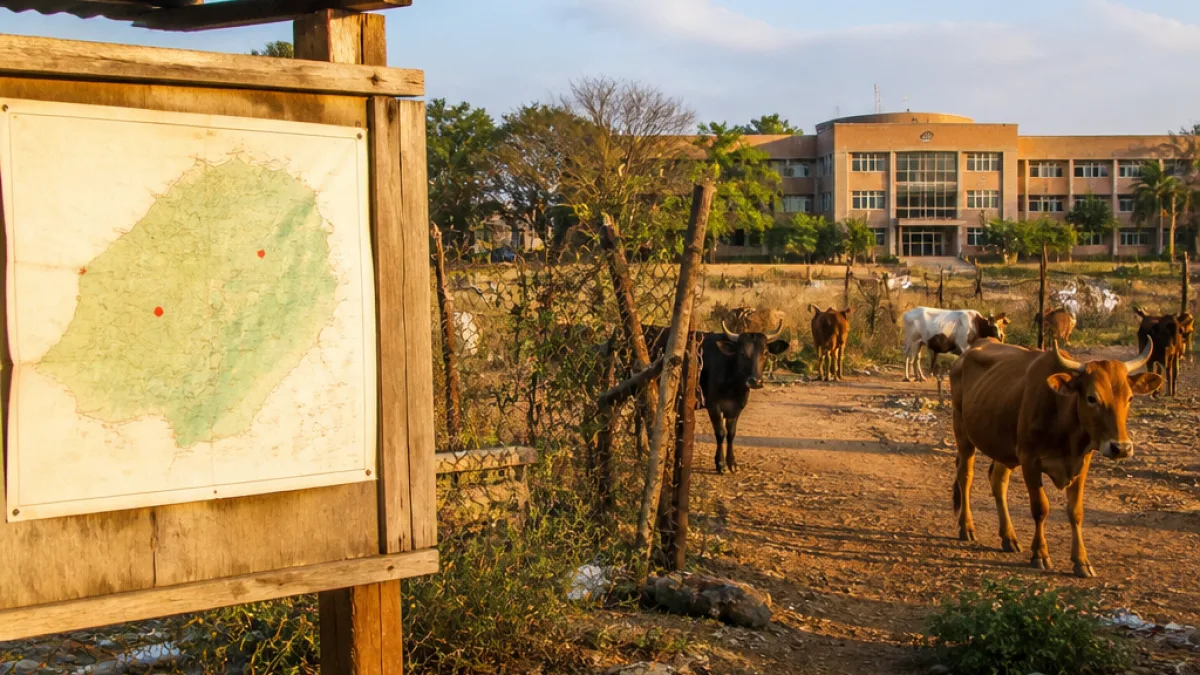
LIMPOPO — The Democratic Alliance (DA) has warned that only 3 of Limpopo’s 22 municipalities currently have operational animal pound facilities, a shortfall the party says increases biosecurity risks and could hinder efforts to contain foot‑and‑mouth disease (FMD) in the province.
DA calls for provincial intervention
Jacques Smalle, the DA’s provincial legislature member, told reporters that the shortage of functioning pounds limits municipalities’ ability to control stray livestock and enforce movement restrictions, both of which are central to limiting the spread of FMD. He said the current state of affairs reflects municipal failure and inadequate provincial oversight.
“This failure increases biosecurity risks and weakens FMD containment by hampering the control of stray livestock and the enforcement of restrictions on unauthorised livestock movement,”
Smalle called on the Limpopo Department of Cooperative Governance, Human Settlements and Traditional Affairs (CoGHSTA) to use its oversight and support powers to present a clear, province‑wide plan to establish and restore functional pound arrangements. He also urged CoGHSTA MEC Basikopo Makamu to ensure municipalities prioritise establishing and maintaining these facilities.
What an animal pound does and why it matters
Animal pounds are used to impound stray or trespassing animals, reunite livestock with owners, and — importantly during disease outbreaks — to control unauthorised animal movement. When animals are moved without permits or stray across boundaries, they can carry and spread contagious livestock diseases including FMD, which affects cattle, sheep, goats and pigs and can devastate farmers’ incomes.
- Current situation: 3 municipalities with operational pounds, 19 without.
- DA demand: Immediate provincial intervention and a coherent plan from CoGHSTA.
- Risk highlighted: Increased difficulty enforcing movement restrictions and controlling stray animals amid FMD concerns.
| Indicator | Number |
|---|---|
| Municipalities in Limpopo | 22 |
| Municipalities with operational animal pounds | 3 |
| Municipalities without operational pounds | 19 |
Local impact and concerns for farmers
Livestock owners and rural communities stand to be most affected if animal‑movement controls cannot be effectively enforced. According to Smalle, a breakdown in coordination between municipal and provincial authorities threatens containment measures and the livelihoods of farmers who depend on healthy herds.
Farmers and community members told local representatives in previous engagements that stray animals and unclear responsibility for impoundment have been long‑standing problems in several districts. The DA’s statement renews calls for clearer roles, prompt response to strays and properly resourced pound facilities that can operate during disease control periods.
What authorities have been asked to do
The DA has asked CoGHSTA to:
- Exercise oversight to ensure municipalities establish and maintain functional pounds.
- Produce a province‑wide plan to establish and restore functional pound arrangements.
- Coordinate with the MEC for Agriculture to ensure pound capacity supports FMD containment measures.
The DA said it had previously raised the matter with the Limpopo MEC for Agriculture, though the party asked for renewed urgency given ongoing FMD containment requirements. The source reporting these demands did not provide a response from CoGHSTA or the MEC at the time of publication.
Practical steps for livestock owners
Veterinary and municipal services are typically responsible for enforcing movement controls and managing impoundment. In the absence of widely available pounds, livestock owners are advised to:
- Keep accurate records of animals and proof of ownership.
- Report and contain stray animals where safe and possible, and notify the nearest municipal or veterinary office.
- Limit movement of animals between farms and across municipal boundaries unless authorised under existing controls.
Community leaders and farming associations in Limpopo will be watching for a formal response from CoGHSTA and the MEC for Agriculture. The DA has signalled it will press for an implementation timeline to ensure that pound capacity is improved before FMD containment efforts are further jeopardised.