DA seeks police probe into misconduct and service failures at two EC municipalities
The Democratic Alliance has lodged criminal complaints with the South African Police Service against the municipal managers of Makana and Sundays River Valley, flagging chronic audit failures, millions of rand in alleged irregular expenditure and an unresolved sewage crisis that threatens local water resources.
DA parliamentary leader and MP George Michalakis submitted affidavits to police earlier this week asking for investigations into Makana municipal manager Pumelelo Kate and Sundays River Valley municipal manager Thabiso Klaas. The complaints cite repeated disclaimers from the Auditor‑General of South Africa (AGSA) and what the DA describes as a failure to implement remedial measures after material findings.
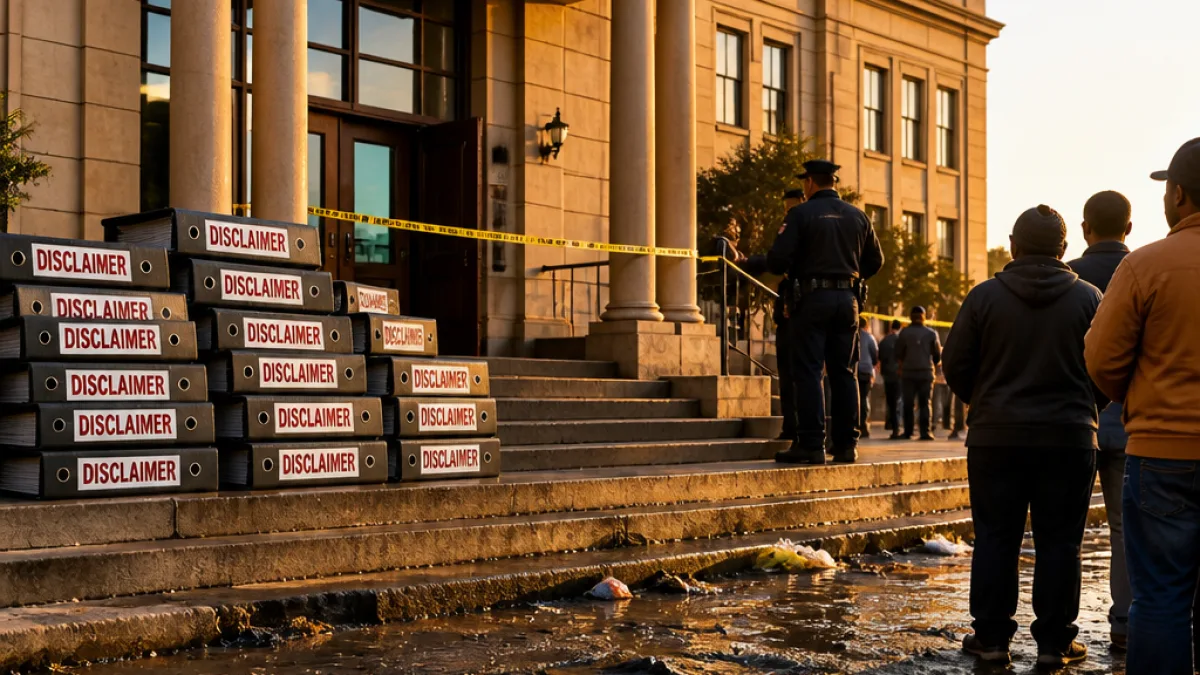
In the affidavit relating to Makana, Michalakis noted the municipality received a disclaimer audit outcome for seven consecutive financial years. A disclaimer means AGSA could not obtain sufficient appropriate evidence to conclude whether the financial statements were fairly presented.
The DA alleges Makana incurred about R66 million in unauthorised expenditure and R15.2 million in wasteful expenditure. The affidavit also refers to numerous procurement irregularities, including bids not being advertised, quotations not being obtained from registered suppliers and missing contract documentation.
“The sewage problem is continuing,”
The affidavit further states AGSA could not determine whether infrastructure grant funding had been used for its intended purposes. It records three material irregularities since 2019 pertaining to internal controls, a landfill and a wastewater treatment plant.
The DA alleges Kate failed to take appropriate action after being notified of material irregularities at a landfill and the Belmont Valley Wastewater Treatment Works, and did not implement prior audit recommendations. A criminal complaint was previously opened at the Makhanda police station on 27 March 2025 concerning alleged breaches of the National Water Act and the risk of raw sewage polluting a water resource; the DA says the problem persists.
Implications for residents and municipal governance
The complaints bring into focus two interlinked governance problems: financial management and basic service delivery. Repeated disclaimer opinions from AGSA typically reflect systemic weaknesses in record‑keeping, internal controls and oversight — factors that can mask or enable irregular expenditure and leave residents without reliable services.
For residents in Makana and the Sundays River Valley local municipalities, the practical consequences are immediate: contaminated water sources, failing wastewater infrastructure, potential health risks and the diversion of scarce municipal funds away from service delivery.
- Audit findings: 7 consecutive disclaimer audit years for Makana.
- Alleged financial impact: R66m unauthorised and R15.2m wasteful expenditure in Makana.
- Environmental concerns: continuing sewage problems and a March 2025 police complaint over potential water pollution.
What the affidavits and prior records show
The DA’s affidavits detail both financial and operational failings. They reference 42 findings of non‑compliance (described as immaterial) and material procurement findings, and point to missing contract documentation and instances where required competitive processes were not followed.
| Item | Alleged/Recorded |
|---|---|
| Disclaimer audit years (Makana) | 7 |
| Unauthorised expenditure | R66m |
| Wasteful expenditure | R15.2m |
| Material irregularities since 2019 | 3 |
The DA has called for the SAPS to investigate potential criminality arising from these matters. The affidavits name specific instances where AGSA could not verify the use of infrastructure grants and point to ongoing environmental and wastewater management shortfalls.
Neither the AGSA’s full reports nor responses from the implicated municipal managers were included in the DA’s public affidavit summaries. The municipality of Makana and Sundays River Valley municipal offices will need to respond formally to the complaints and any follow‑up probes by policing or oversight bodies.
Next steps and what residents should expect
If the SAPS accepts the affidavits as grounds for investigation, criminal probes could include interviewing officials, subpoenaing records and coordinating with AGSA findings. Separately, provincial oversight bodies — including the Eastern Cape provincial government and the Auditor‑General — may pursue institutional remedies, ranging from administrative intervention to requirements for corrective action plans.
For residents, the key questions will be whether sewage discharges are stopped, wastewater works are repaired and whether municipal financial controls are strengthened so grant funding is spent as intended. Civil society groups and ward councillors often use AGSA findings as the basis for municipal oversight; the DA’s criminal complaints add a law‑enforcement dimension to those accountability efforts.
The unfolding investigations will be closely followed by communities in Makhanda and the Sundays River Valley, where failing infrastructure has direct health and environmental consequences. Public updates from the SAPS, AGSA and the affected municipalities will be necessary to establish the facts and any remedial measures.