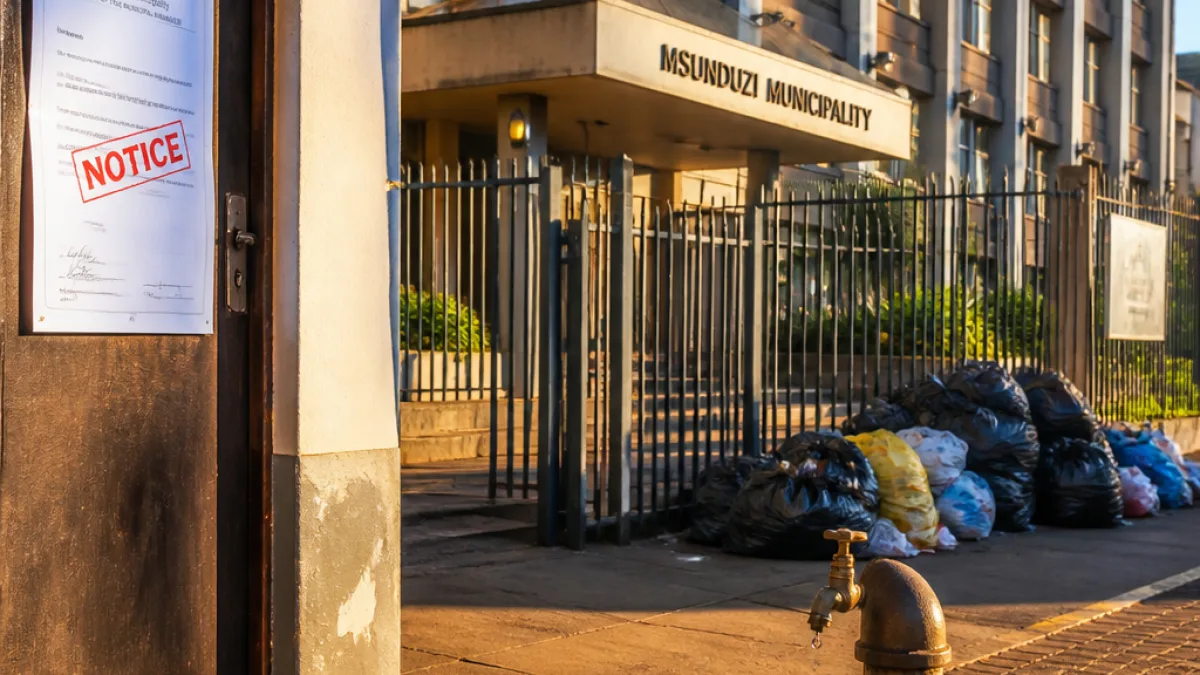
Pietermaritzburg — The KwaZulu‑Natal Department of Cooperative Governance and Traditional Affairs (Cogta) has publicly accused the leadership of Msunduzi Local Municipality of allowing governance and basic service delivery to collapse, a development that deepens concern among residents who rely on the municipality for water, sanitation and electricity services.
What Cogta has said
The department’s statement, reported earlier, directly criticised municipal leaders for failing to maintain stable governance structures and to ensure consistent delivery of essential services. The remarks follow ongoing scrutiny of Msunduzi’s administration and come as residents report disruptions that affect daily life in Pietermaritzburg and surrounding towns.
Impact on residents and local services
Public statements by provincial authorities typically signal serious concern about a municipality’s ability to govern effectively. For residents this can mean:
- intermittent or poor access to water and sanitation;
- delays in responses to service complaints and maintenance;
- uncertainty over municipal administration and long‑term planning for infrastructure;
- possible changes in provincial oversight or administrative interventions depending on further developments.
Many communities in Msunduzi rely on municipal planning for roads, stormwater management and waste removal. Local small businesses and informal traders also depend on predictable municipal services to plan stock, staffing and opening hours.
What provincial intervention could mean
When Cogta publicly highlights governance failure, it often indicates consideration of remedial measures. These can range from intensified oversight and support to broader administrative actions. Any such steps are aimed at restoring functioning governance and protecting service delivery for residents.
Residents and civic groups have previously urged clearer communication from both the municipality and provincial authorities about plans to stabilise administration and restore services. Transparent timelines and contact points for reporting issues are essential to rebuilding trust.
Background: Msunduzi and recent pressures
Msunduzi, which includes Pietermaritzburg, has in recent years faced a mix of financial and operational pressures common to several metros and local municipalities across the country. These pressures include ageing infrastructure, budget constraints and capacity challenges within administrations. While the department’s recent comments singled out municipal leadership, they also highlight broader governance tensions that require coordinated action between municipal and provincial structures.
| Area | Potential resident concern |
|---|---|
| Water and sanitation | Interruptions, slow repairs |
| Electricity provision | Maintenance scheduling, outages |
| Waste collection | Schedule changes, backlog |
What residents should do now
Until the situation is clarified, residents are advised to:
- Keep records of service interruptions and lodge complaints formally with the municipality so there is an auditable trail.
- Use official municipal channels — the Msunduzi customer care centre, official website and published ward councillors — to report urgent issues.
- Engage community forums and residents’ associations to agree collective priorities and to channel concerns to provincial and municipal officials.
Clear, dated communication from municipal and provincial authorities will be crucial in the coming days. Residents looking for updates should follow official Cogta and Msunduzi communications and expect statements that outline corrective measures and timelines.
Further reporting is likely as the province and municipality respond to each other’s claims. The public interest in stable governance and reliable services in Pietermaritzburg remains high, and any steps to remedy administrative weaknesses will be watched closely by residents and civic groups.
As this story develops, residents are urged to keep documented evidence of service failures and to escalate unresolved matters through the municipality’s formal complaint channels and to provincial Cogta structures where necessary.