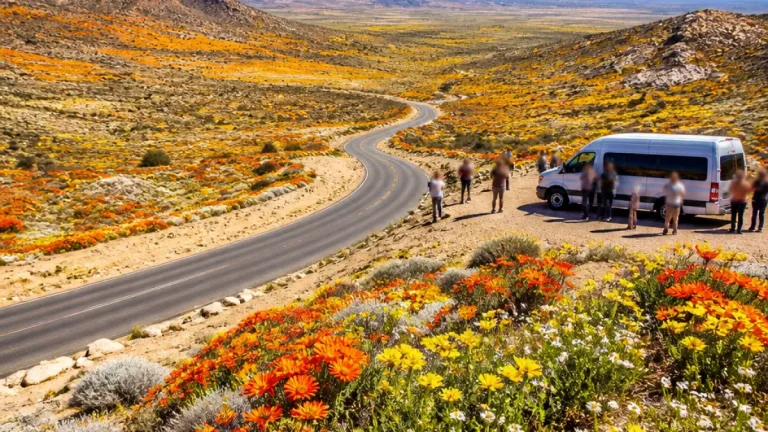
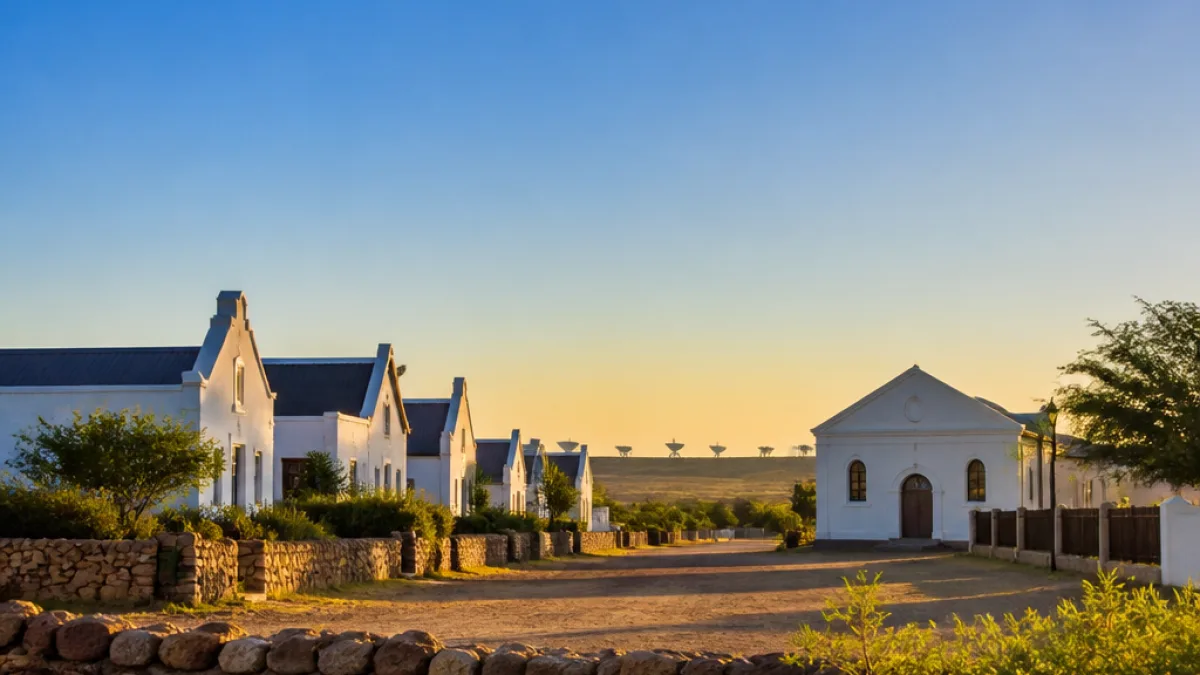
Carnarvon sits under the wide, unbroken skies of the Northern Cape: a small Karoo town whose low horizon and clear nights have made it a focal point for South Africa’s growing astronomy footprint, while its buildings and trails preserve a nineteenth-century rural history rarely seen elsewhere.
From mission station to astronomy neighbour
The settlement around Schietfontein began as a Rhenish mission station in the 1840s. It later became Harmsfontein and was renamed Carnarvon in 1874, in honour of British Colonial Secretary Lord Carnarvon, historical records show. Residents and visitors can still read that layered history in the town’s built fabric.
The Carnarvon Museum occupies a former Dutch Reformed Church community hall dating to 1907, embodying the small-town institutions that anchored rural life. Nearby, corbelled houses — dome-like structures assembled from flat stone — stand as practical responses to timber scarcity and the harsh Karoo climate, and as distinctive local landmarks.
Architecture and landscape
Walking through Carnarvon reveals Victorian-era homes, community buildings and the compact grid of a town shaped by farming, faith and frontier settlement. The local Skietfontein trail provides additional layers of local history and a chance to read the landscape for older traces of human habitation and travel.
Beyond the immediate townscape, the Northern Cape’s plains and flat-topped hills open to horizons that favour radio astronomy. The region’s remoteness brings low levels of radio interference — a decisive factor in the siting of major telescope projects.
A gateway to MeerKAT and the SKA
About 90km from Carnarvon, the 64-dish MeerKAT radio telescope occupies a section of the Karoo. MeerKAT is widely regarded as one of South Africa’s most significant scientific instruments and a precursor to the international Square Kilometre Array (SKA). The dishes are spread across the landscape so that the array can function with minimal radio noise.
For Carnarvon, proximity to these projects has introduced new visitors and attention. Astro-tourism has become a recognisable part of the town’s profile, but the community’s identity remains rooted in farming, local crafts and the preservation of heritage buildings.
- Historic highlights: Carnarvon Museum (1907 building), corbelled houses, Victorian-era homes.
- Outdoors: Skietfontein trail and wide Karoo plains for stargazing and daytime exploration.
- Science: MeerKAT array approximately 90km from town; region forms part of the SKA precinct.
Visitor practicalities and local impact
Visitors drawn by astro-tourism should be aware that Carnarvon is a small service town: accommodation and facilities are limited compared with larger centres, and distances between points of interest in the Karoo can be significant. Road travel is the usual way to reach sites such as MeerKAT, and clear winter nights ofer the best stargazing conditions.
Locally, the presence of astronomy infrastructure has brought both opportunity and questions. Projects have created jobs and drawn scientists and engineers to the region, while also increasing interest in conservation of the radio-quiet environment that makes the Karoo suitable for telescopes. The balance between heritage preservation, community needs and scientific development shapes planning and local discussions.
| Feature | Detail |
|---|---|
| Founding era | Rhenish mission station, 1840s |
| Renaming | Carnarvon, 1874 |
| Museum building | Former church hall, 1907 |
| Nearest major radio telescope | MeerKAT, ~90km from town (64 dishes) |
For travellers interested in both the human and the scientific stories of the Karoo, Carnarvon offers a concentrated experience: stone-built houses and mission-age architecture beside testimonies to the province’s place in global astronomy. The town’s future will likely continue to be shaped by the interaction of heritage, agriculture and science under the same expansive skies that have always defined this part of the Northern Cape.
Reporting from the Northern Cape.