
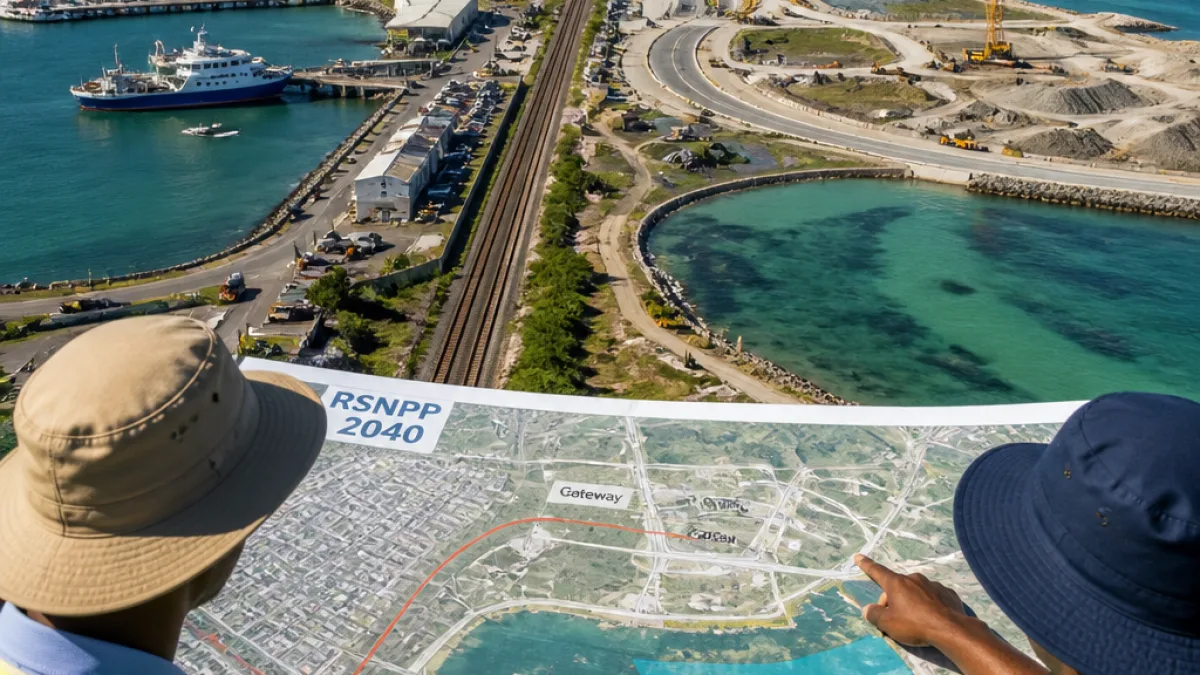
The draft Penang State Structure Plan 2040 (RSNPP 2040) identifies the Butterworth–Kulim railway line as one of 14 high‑impact projects intended to strengthen regional connectivity and stimulate economic growth in northern Malaysia, theedgemalaysia.com reported on 17 August. The plan also highlights a Penang Coastal Ring Road and a mixed‑use reclamation scheme called the Penang Gateway among its catalytic proposals.
What the draft proposes
According to the draft issued by the Penang State Town and Country Planning Department (PLANMalaysia Penang), the Butterworth–Kulim railway would link major transport hubs in Seberang Perai with the industrial centre at Kulim, Kedah. The document says the line could:
- boost economic growth and employment opportunities across the northern corridor;
- alleviate traffic congestion;
- shorten travel times within Seberang Perai.
The Penang Coastal Ring Road is proposed for the northwest coast, a route of roughly 28–30km expected to reduce travel time to about 21–27 minutes and to ease congestion in George Town by bypassing the city centre. The Penang Gateway, involving land reclamation from Tanjong Bungah to Batu Feringghi, is presented as a vehicle to expand tourism, services, trade and property activity in northern Penang.
Environmental and supporting projects
The draft also recommends maintaining the Middle Bank Marine Sanctuary — a roughly 10km² protected area between Penang Island and the mainland — noting its seagrass meadow is the only one in the Strait of Malacca and functions as an effective natural carbon sink, according to the document.
Other catalytic projects listed in the RSNPP 2040 draft include:
- a Third Penang Crossing;
- a Balik Pulau–Paya Terubong tunnel;
- expansion of Penang Sentral;
- a proposed ship lay‑up centre;
- Pulau Burong waste‑to‑energy plant; and
- construction of a biodiesel blending depot.
“It has the potential to boost economic growth and employment opportunities in the northern corridor, alleviate traffic congestion and shorten travel times across Seberang Perai,” the draft states about the Butterworth–Kulim railway, theedgemalaysia.com reported.
Local resonance: why Butterworth readers should care
Although these proposals concern the Malaysian town of Butterworth, they are locally relevant to Butterworth in the Eastern Cape as an example of how transport infrastructure is being marshalled to shape regional development. The Malaysian draft underlines three recurring planning themes that South African municipalities and provincial planners face as they confront mobility and economic challenges:
- Integration of transport and industry: The Butterworth–Kulim rail plan is explicitly framed to connect industrial clusters with passenger and freight hubs — a reminder that rail can be positioned as an economic enabler as well as a commuter service.
- Strategic bypasses to relieve urban cores: The coastal ring road is designed to reduce inner‑city congestion by diverting through traffic — a tool South African metros consider when investing in ring roads or corridors to protect historic city centres and improve travel times.
- Balancing development and conservation: The plan pairs reclamation‑led development with a clear preservation measure for a marine sanctuary, signalling the political trade‑offs between coastal development and environmental stewardship.
For residents in the Butterworth area of the Eastern Cape, where road and rail connectivity to regional economic centres remains central to job creation and service delivery, the Malaysian plan is a cautionary example and a source of practical lessons. It demonstrates how provincial and state planners package sets of linked projects — transport corridors, port and terminal expansions, energy‑from‑waste and fuel logistics facilities — into an integrated vision designed to attract investment.
| Project type | Example from RSNPP 2040 |
|---|---|
| Rail | Butterworth–Kulim railway |
| Road | Penang Coastal Ring Road; Third Penang Crossing |
| Maritime & waste | Ship lay‑up centre; Pulau Burong WTE plant |
| Environmental protection | Middle Bank Marine Sanctuary (10km²) |
Planners and councillors in the Eastern Cape weighing long‑term transport investments should note the role of cross‑sector packages in making projects bankable and politically durable. The Penang draft also highlights the need for environmental assessment and community engagement early in the planning cycle, a point that remains central to public trust and project success anywhere.
The details in this report are drawn from the RSNPP 2040 draft as covered by theedgemalaysia.com on 17 August. South African readers interested in transport and regional development may find it useful as a comparative case when discussing local transport priorities and the long horizon needed for transformative infrastructure.










