
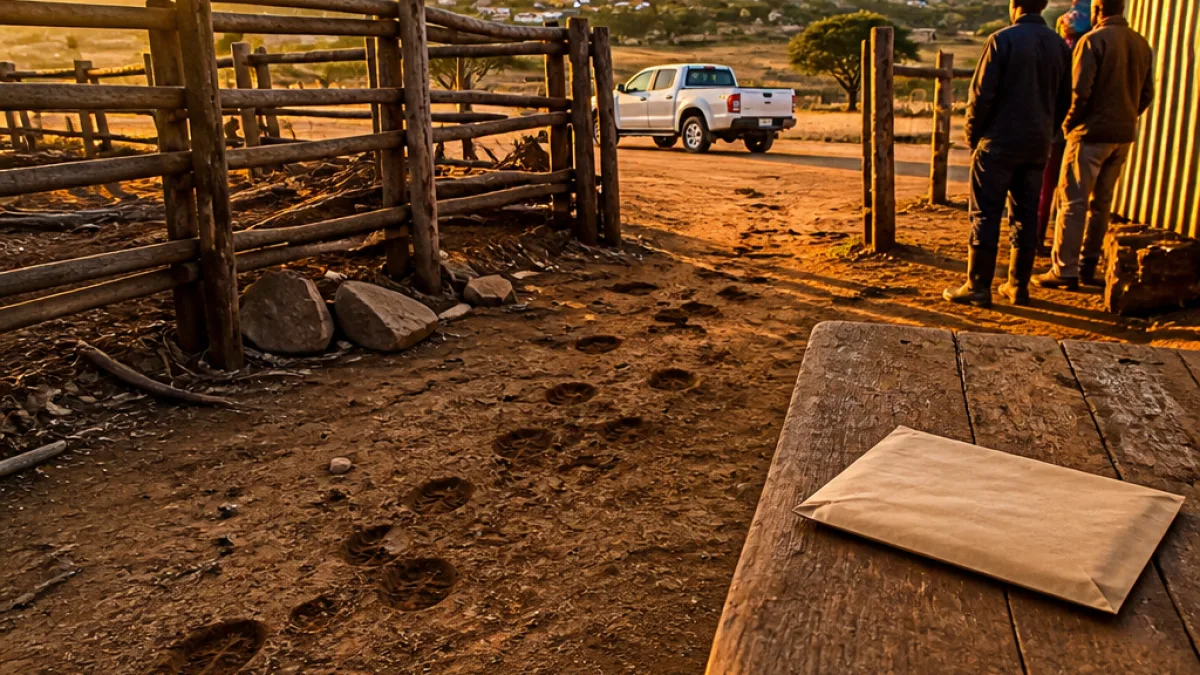
The African Transformation Movement (ATM) has asked President Cyril Ramaphosa to establish a dedicated Eastern Cape Provincial Stock Theft and Rural Crime Task Team, citing widespread livestock theft, cross-border smuggling and allegations of collusion involving some municipal and policing officials. The request follows widespread engagements the party said it held with farmers, traditional leaders and community groups across the province.
Alarm over organised networks and alleged corruption
In a letter delivered to the President and Acting Minister of Police Firoz Cachalia, ATM parliamentary leader Vuyo Zungula described stock theft as a growing threat to food security and rural livelihoods in the Eastern Cape. The party says syndicates are operating across municipal and district boundaries and are able to move animals into neighbouring countries.
“Stock theft has become one of the most serious threats to rural livelihoods, food security and agricultural development in the Eastern Cape,” Zungula said.
Alongside organised theft, the ATM raised concerns that some victims now refrain from reporting incidents because they fear retaliation or are distrustful of local policing responses. The party alleges delays in registering cases and instances where police may have warned suspects about planned operations or otherwise interfered with investigations.
Numbers and hotspots
The ATM pointed to official police statistics showing about 1,500 stock theft cases in the Eastern Cape between January and March 2026, which it said represented roughly 29% of all such offences nationally during that period. The party identified specific towns it says recorded the highest numbers of incidents in that quarter.
| Location | Reported cases (Jan–Mar 2026) |
|---|---|
| Bhityi | 111 |
| Qumbu | 110 |
| Tsolo | 94 |
| Mthatha | 49 |
| Thina Falls | 45 |
The ATM also highlighted recoveries in the OR Tambo, Chris Hani and Joe Gqabi districts, saying these demonstrated that theft is not isolated but organised and mobile across districts and borders.
What the task team would do
The party proposed a multi-agency structure that would bring together law enforcement, intelligence services and prosecutorial authorities to pursue syndicates, disrupt supply chains and improve prosecutions. The ATM argued that specialised coordination was necessary because routine policing had failed to contain the problem in many rural areas.
- Co-ordinate cross-border and inter-district investigations
- Fast-track arrests and prosecutions of organised networks
- Strengthen intelligence-led policing and information sharing
- Address alleged corruption and misconduct within local policing and municipal structures
According to the ATM, farmers and community representatives reported fear of reporting crimes because of potential retaliation and because of perceived ineffectiveness or compromise within some police structures.
Local impact and wider implications
Stock theft damages household incomes and food security in a province where agriculture supports many rural families. Beyond immediate losses of animals and income, theft can disrupt local agricultural supply chains and erode trust between communities and public institutions. Recovery of stolen livestock is often partial and costly, and prosecutions of syndicate members remain challenging without coordinated investigative and prosecutorial support.
Calls for specialised task teams reflect a pattern seen in other provinces where rural crime combines local opportunism with organised activity. For farmers dependent on livestock, improved policing, faster case registration and transparent investigations are seen as essential to restore confidence.
The Presidency and the national police ministry had not provided a response to the ATM's letter at the time of publication. The ATM said it would continue to press for a formal response from both the head of state and policing authorities.
For residents and livestock owners concerned about reporting or preventing theft, practical steps can include improved branding and tagging of animals, community watch co-ordination, and clear documentation of ownership. However, those measures often require support from municipal and provincial authorities to be effective at scale.
The scale of the problem and the allegations of corruption make this a provincial governance issue as much as a policing challenge; how the Presidency and the national police authorities respond will determine whether the proposed task team is established and whether rural communities regain confidence in the system that is meant to protect them.














