
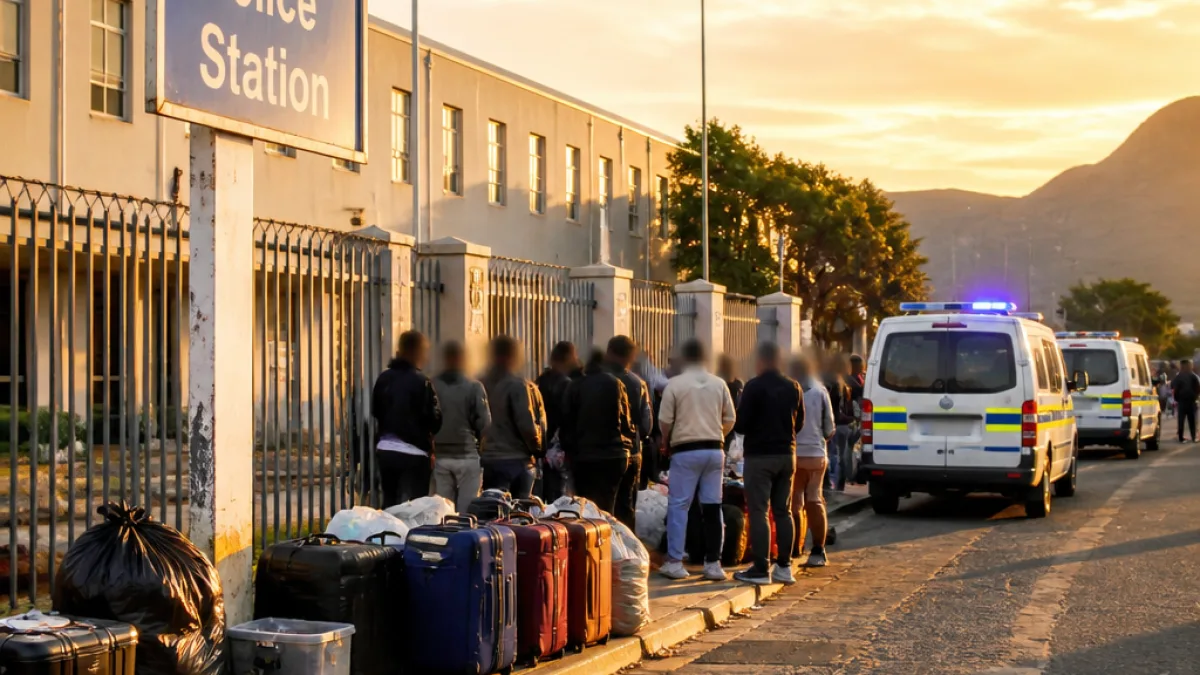
At least 100 immigrants are being held in police cells across five towns in the Western Cape on charges linked to overstaying visas, with some detainees reported to have been in custody since June, according to community groups and recent official documents.
Where arrests took place
The arrests were carried out in towns including Robertson, Montagu, Ashton, Bonnievale and McGregor. Community organisations report that raids and arrests began intermittently in June and continued in the weeks that followed.
One regional civil-society grouping, the Western Cape Coalition Against Xenophobia, has criticised the police operations as indiscriminate, saying people were picked up on the street and in their homes. The coalition said in a statement that many detainees had produced documents to SAPS showing their lawful presence, yet were still taken into custody.
“These individuals, many of whom have produced their documents to SAPS, are lawfully in the country; yet they were detained,” the coalition said.
Numbers and official response
Different sources place the scale of the operations at varying levels. The coalition said up to 200 people had been arrested during the recent wave of enforcement, while an official document seen by reporting organisations states that about 100 people remain in custody across the five towns.
GroundUp reported that some detainees had been held for up to two months. SAPS did not respond to questions from reporters about the total number arrested, how many were released after paying fines and how many remained in custody at the time of publication.
Allegations of mistreatment and problematic prosecutions
Community leaders have raised concerns about overcrowding and the conditions in which people are being held. One case highlighted by advocates involves a man who, they say, presented documentation to police only to be detained until his visa expired; he faces deportation and will apparently be required to pay a fine to re-enter South Africa.
In another reported incident, a community leader, Lovemore Maporisa, was arrested in Robertson on 27 August while visiting detainees to deliver toiletries and to assist with documentation. His lawyer said Maporisa was charged with possession of a falsified work permit and made only a brief court appearance.
Local impact and community reaction
People from Zimbabwe, Mozambique, Malawi and Lesotho make up a large portion of those arrested, community sources say. Local leaders warn that arrests have amplified fear in migrant communities and disrupted livelihoods, with some detained breadwinners unable to support families.
Advocacy groups fear that arrests without adequate checks risk lawful residents being deported or charged on technicalities. NGOs have called for clearer communication from SAPS and for detainees’ access to legal representation and their consulates where applicable.
- Reported detainees: At least 100 currently held across five towns
- Alleged arrests since: From June onward, intermittent raids reported
- Nationalities mentioned: Zimbabwe, Mozambique, Malawi, Lesotho
What authorities and civil groups are asking for
Civil-society organisations are demanding transparency from the police on the basis for arrests, the numbers detained and the conditions in holding cells. They also want assurances that documented individuals are not being unjustly detained or deported.
Police spokespeople have not provided an on-the-record response to the questions raised by the press at the time of reporting. The absence of comment from SAPS leaves several outstanding practical questions about processing, access to legal aid and timelines for release or court appearances.
| Item | Detail |
|---|---|
| Reported arrests (coalition) | Up to 200 |
| Reported in custody (official doc) | About 100 |
| Primary towns affected | Robertson, Montagu, Ashton, Bonnievale, McGregor |
Legal advocates say those detained should be advised of their rights, have access to interpreters where required and be allowed to contact family and legal representatives. They also say police should document the reasons for each arrest and produce detainees for court within the timeframes set out in law.
The situation remains fluid. Community groups continue to monitor developments and are urging anyone with relatives detained in the affected towns to seek legal assistance and to contact civic organisations working on migration and human-rights issues for support.
This reporting is based on statements and documents shared with local news outlets and community organisations active in the affected areas.













