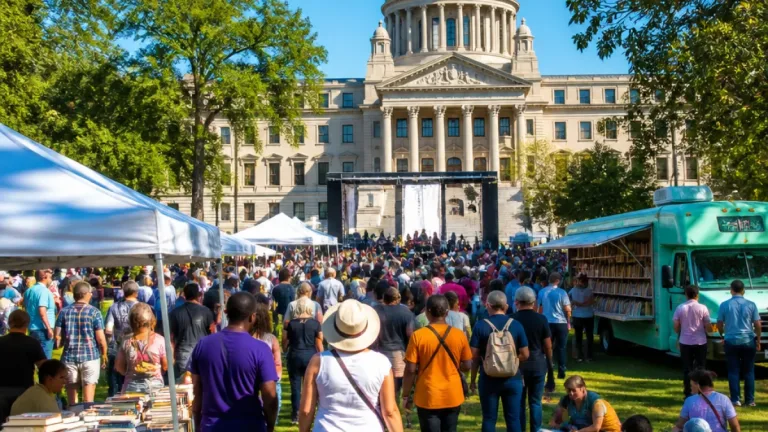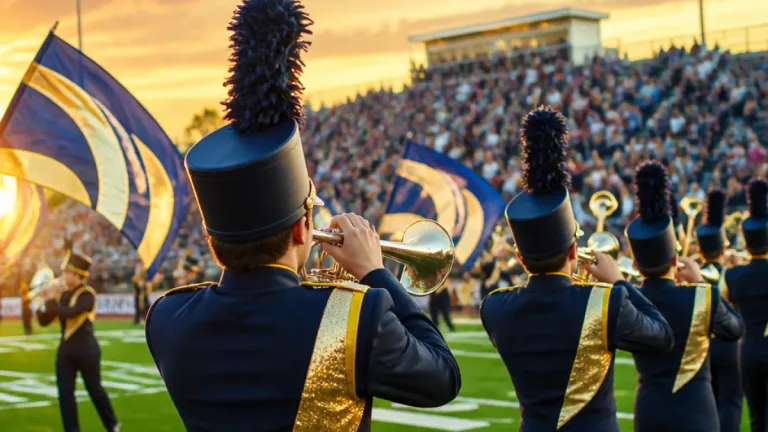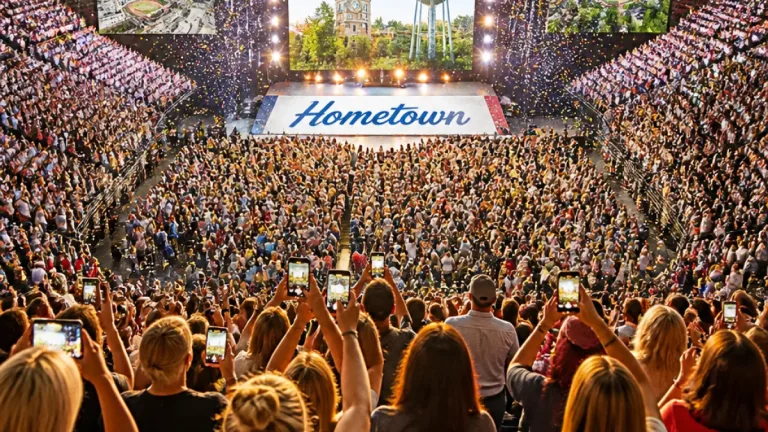
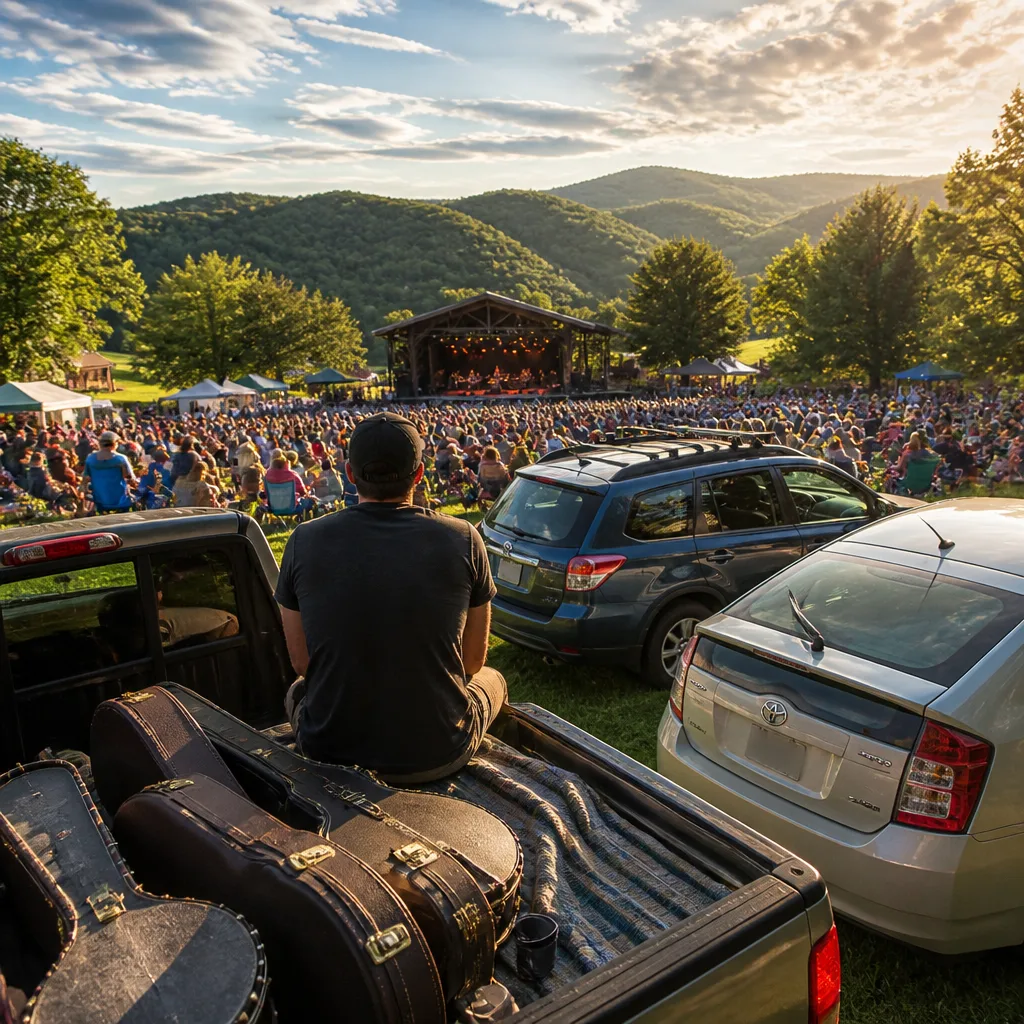
At the Bethel Woods Center for the Arts, a summer afternoon found trucks, Subarus and Priuses parked together as a sizable crowd gathered for a headlining set by bluegrass-influenced guitarist Billy Strings. The scene, recounted by a longtime listener revisiting earlier misgivings about country music, illustrated a wider shift in American music tastes: what once might have been written off as narrow or formulaic now draws fans from disparate scenes.
From skepticism to appreciation
The observer described sitting on the tailgate of his son’s truck, watching the audience assemble. “I don’t know,” he told his son, noting that the crowd didn’t resemble a stereotypical country audience. His son’s reply — “Billy’s not country” — prefaced a concert in which Strings and his ensemble turned in extended improvisational passages featuring mandolin, banjo, upright bass and fiddle. The performance, by one account, included a sustained, technically exacting run of fingerpicking that left an impression on the author.
That reaction contrasts with the writer’s earlier stance. In a 2013 piece for the Daily News, the writer said he was baffled by the rise of country music in the Philadelphia area, and conceded to being somewhat snarky in his description of the genre’s lyrical focus — including themes of alcohol, firearms and rural revelry. The decade between that column and the Bethel Woods performance marks a period of recalibration for the author’s musical tastes.
What changed in the music and the audience
The 2013 story, which leaned on interviews with experts, fans and radio personalities, framed modern country as increasingly mainstream and tied to rock ‘n’ roll sensibilities. Then, as now, some listeners argued that the contemporary sound was no longer the “old twangy country” that many imagine; it became accessible and relatable to a broader audience.
- Bethel Woods drew a mixed crowd — not exclusively country devotees.
- Billy Strings’ set showcased extended, jam-style playing more commonly associated with bluegrass and progressive roots music.
- The author’s reassessment reflects a personal and cultural shift that mirrors wider changes in listener demographics and genre boundaries.
That shift is visible in small details the author singled out: bumper stickers for avant-garde artist Arthur Russell on one truck and a Primus shirt on another, alongside a sea of likely Phish fans. These visual cues suggested that festivalgoers arrived from varied musical backgrounds, united by an appreciation for vigorous live performance rather than a strict genre label.
“I don’t know anything about music,”
The line — self-deprecating and repeated in the author’s retrospect — underscores a willingness to acknowledge past blind spots. The writer recalled earlier criticism from others, including a contentious radio appearance in which he says former talk show host Chris Stigall called him an “elitist” or “smug.” Despite that pushback, the author says his musical tastes evolved alongside the scene.
Broader consequences for music coverage
The anecdote is emblematic of a larger trend in entertainment reporting and music fandom: genres are porous and audiences are eclectic. Artists like Billy Strings, who blend technical virtuosity with improvisational energy, have helped reframe what counts as country or roots music to listeners who may have little interest in Nashville radio norms.
| Year | Event |
|---|---|
| 2013 | Author publishes skeptical piece about country’s rise in Philadelphia area |
| 2026 | Author attends Billy Strings show at Bethel Woods and revises earlier views |
For critics and cultural observers, the takeaway is twofold. First, live performance remains a powerful engine for changing perceptions; extended jams and instrumental prowess can persuade even self-described non-experts. Second, the diffusion of country-adjacent sounds into the playlists and festivals of fans who once gravitated to other genres suggests that the industry’s conventional categories matter less than they used to.
Whether described as country, bluegrass, Americana or something in between, the music’s ability to attract a diverse audience has implications for programming, festival lineups and radio formats. As the author’s visit to Bethel Woods shows, a performance can prompt reassessment, smoothing over earlier skepticism and broadening the definition of what counts as mainstream American music.