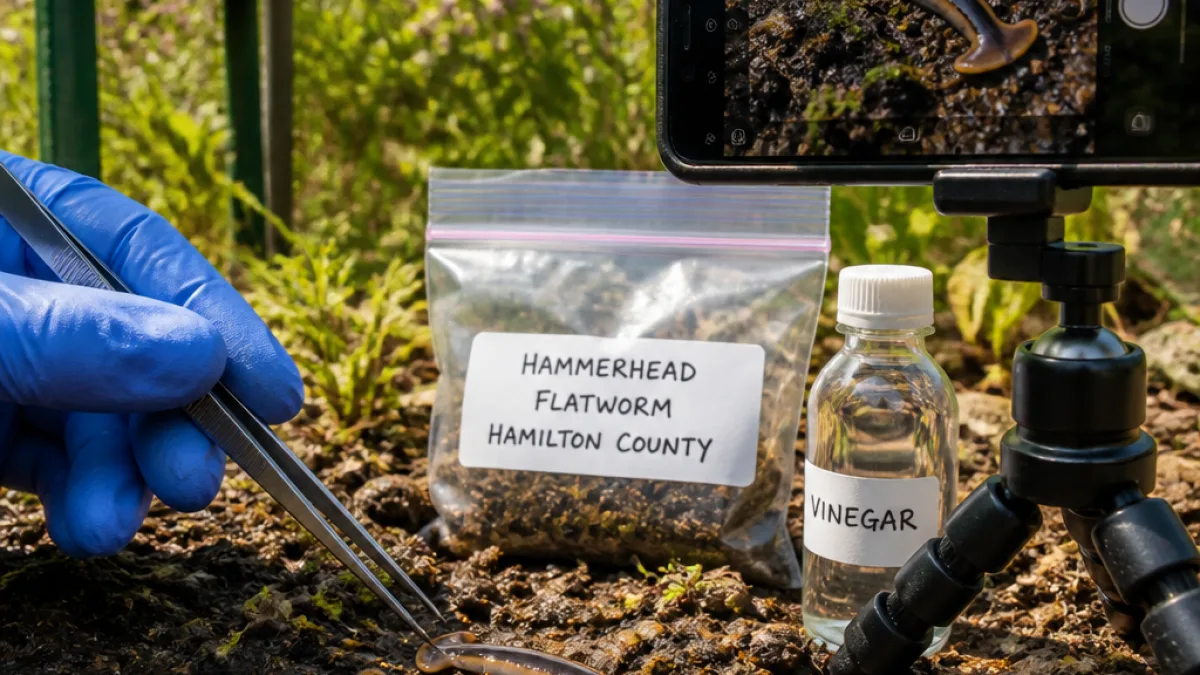
Residents across Tennessee are being warned to avoid handling hammerhead flatworms, an invasive species that has seen increased sightings in recent weeks, including a recent report in Soddy-Daisy. Experts say the worms can secrete a potent toxin and threaten native soil ecosystems by preying on earthworms.
What the experts say
Mithula Girish, assistant professor and extension entomologist at the University of Tennessee, said the worms are not new to the state but are appearing more frequently when conditions are damp. "After a rainfall, when it's like a little bit of moist, you can probably see them popping up," Girish told reporters.
"They do produce a toxin, tetrodotoxin. So, it's better that you do not touch them with the bare hand."
Hammerhead flatworms have been present in Tennessee since at least the 1970s, Girish said, but recent reports compiled by the Protect Tennessee Forests Campaign indicate a spike in sightings that has raised awareness among homeowners, gardeners and naturalists.
Health and environmental concerns
Officials caution that hammerhead flatworms can release tetrodotoxin, a neurotoxin that may cause skin irritation or more serious health effects if improperly handled. More broadly, the worms feed on native earthworms, which play a crucial role in soil health and nutrient cycling.
Local resident John Powers, who photographed a worm found at his Soddy-Daisy home, said he reported the sighting after learning more about the potential risks. "Somebody did a little story on them, and as soon as I saw it, I took a step back and was like, 'Oh, I got to let them know,'" Powers said.
How to respond if you find one
Authorities and university extension specialists recommend the following steps if you encounter a hammerhead flatworm:
- Do not touch the worm with bare hands.
- Wear gloves or use forceps or a tool to pick it up.
- Place the worm into a sealed plastic bag for disposal.
- To kill it, add salt or vinegar to the bag — do not dispose of it in a garden or compost.
- Do not cut the worm; fragments can regenerate into new worms.
- Take a clear photo and report the sighting to the Tennessee Department of Agriculture or the Protect Tennessee Forests Campaign.
Girish emphasized the regeneration risk: cutting a worm can produce multiple new individuals, which makes improper disposal worse for containment efforts.
Reporting and tracking
Officials encourage residents to document and report sightings to help track the invasive species’ spread. Reporting assists state agencies and researchers in mapping populations and prioritizing outreach and mitigation efforts.
| Action | Why |
|---|---|
| Wear gloves or use a tool | Reduces direct exposure to tetrodotoxin |
| Seal in plastic bag with salt or vinegar | Kills the worm; prevents escape or contamination |
| Do not cut or compost | Prevents regeneration into multiple worms |
| Report sighting with photo | Helps agencies monitor spread and coordinate response |
Beyond individual precautions, experts say preventing the unintentional transport of hammerhead flatworms is important. They can hitchhike in potted plants, soil and gardening supplies. Gardeners should be cautious when moving soil or plants between locations.
Local implications
For many Tennessee communities, the increase in sightings is a reminder of how nonnative species can quietly alter ecosystems and complicate everyday activities like gardening and composting. Earthworm declines can influence soil structure and fertility; in agricultural and residential settings, that can translate into slower decomposition and reduced soil quality over time.
State and university extension resources offer identification guides and removal instructions; residents who find suspect flatworms are urged to photograph them, follow safe removal steps and report to the appropriate agency so officials can better understand where these worms are spreading.
For now, the best defense is vigilance: when conditions are wet, keep an eye on lawns, flowerbeds and potted plants, and do not handle suspicious flatworms with bare hands.