
A costumed protester who identified himself as Darth Vader addressed the San Diego Public Safety and Livable Neighborhoods Committee on Wednesday, urging the city to retain and expand use of Flock license plate readers and other surveillance tools. The unusual public comment underscored continuing tensions in San Diego over the balance between public safety and residents' privacy.
Flock technology and the council debate
The man, whose breathing was audible through the room microphone, invoked Star Wars imagery as he spoke at the podium, addressing council members and specifically Councilwoman Jennifer Campbell. He framed the cameras as necessary to find criminals and protect the city, at times using colorful language from the film franchise.
“This is what the emperor needs. This technology will help us find the rebel scum and the hidden base on Hoth,”
During his remarks he urged that the cameras be used broadly, at times claiming they would track movements "from playground to playground, from playground to pool, from pool to gymnasium" and suggesting the systems follow children as well as vehicles. He also tied support for the cameras to other municipal priorities, including clearing storm drains and addressing homeless encampments.
What the city has done so far
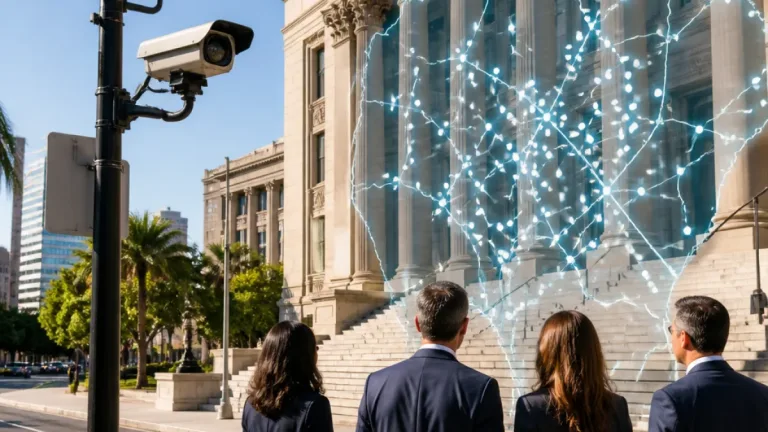
San Diego officials signed a yearlong agreement late last year to grant the San Diego Police Department access to open-source intelligence and data from other law enforcement agencies, according to reporting cited during the meeting. City maps indicate the municipality operates more than 550 Flock cameras across San Diego.
| Item | Detail |
|---|---|
| Number of Flock cameras | More than 550 |
| Vendor capabilities | License plate readers, video cameras, audio detection, vehicle make/model and bumper sticker data |
| Recent agreement | Yearlong deal giving SDPD access to open-source intelligence and interagency data |
Privacy, oversight and public concern
Flock’s system records license plate numbers and collects vehicle data down to make and model, and the company’s map and product descriptions indicate it can capture audio and video in addition to plates. Those capabilities have been central to debates in San Diego and nationwide about how to regulate automated license plate readers and similar surveillance technologies.
Committee members and members of the public have previously raised concerns about privacy, data retention, potential misuse and whether adequate safeguards and oversight exist for law enforcement access to vendor data. The spectacle of a costumed speaker did not change those core policy questions: what limits the city will place on data collection, how long records will be retained, and who will be allowed to query vendor databases.
- Public oversight: The council and its committees determine policy settings, contracts and oversight mechanisms for surveillance technology.
- Law enforcement access: Agreements that grant police access to external databases expand investigative reach but also raise civil liberty questions.
- Community impact: Residents and advocacy groups often weigh the public safety benefits against risks to privacy and disproportionate enforcement.
The committee meeting drew attention largely because of the performative nature of the comment, but the subject matter remains consequential for residents citywide. The presence of hundreds of fixed cameras and contractual relationships that allow cross-jurisdictional data sharing mean decisions made by the City Council and its committees will affect how transportation, neighborhood safety and personal privacy are managed in San Diego.
City officials have not announced new policy changes stemming from the meeting. The debate over Flock and similar surveillance tools is likely to continue at future council and committee sessions as San Diego navigates competing demands for public safety and privacy protections.