
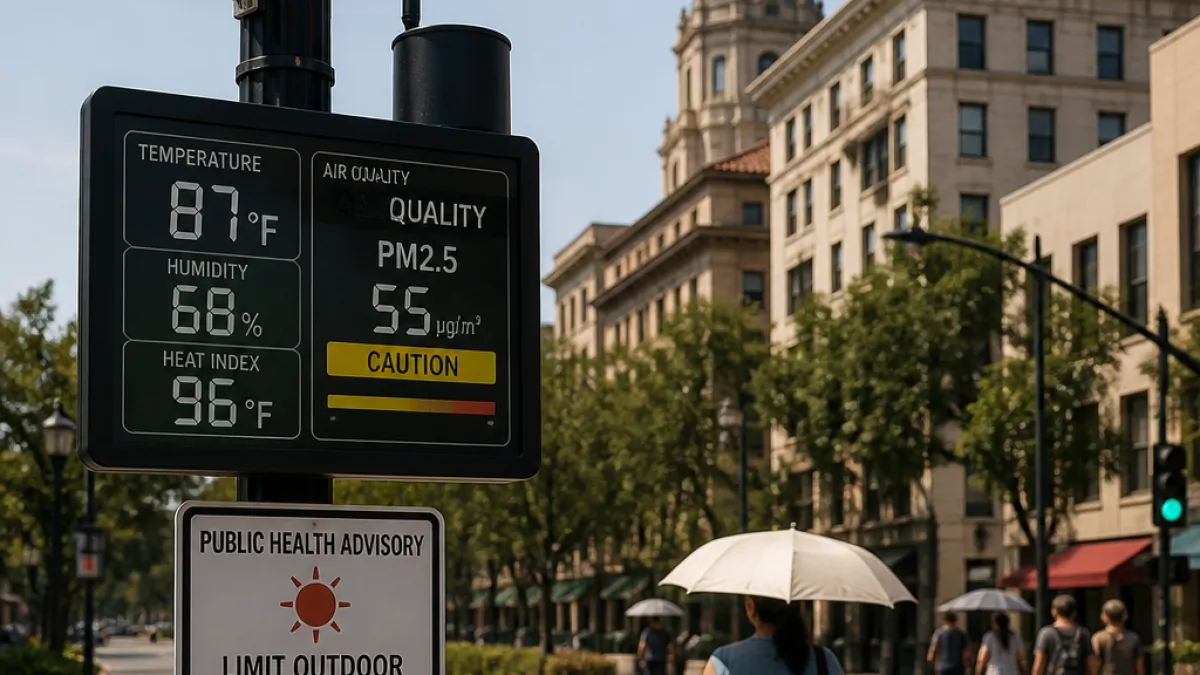
Pasadena’s local weather station reported warm, humid conditions Sunday, with a recorded temperature of 87°F, 68% humidity and a feels-like reading close to 97°F. The station, located at an elevation of 33 feet and positioned at coordinates roughly 29.65°N, 95.14°W, listed a light southerly breeze at about 4 mph and a heat index of 96°F. The report also highlighted nearby pollution-monitoring categories and provided a reminder about fine particulate matter, or PM2.5, as a pollutant of concern.
What the numbers mean for residents
Local readings do not indicate an immediate hazardous air-pollution emergency, but the combination of humidity and heat raises routine health concerns. Heat combined with elevated particulates can increase the likelihood of discomfort and health effects for sensitive groups, including children, older adults and people with cardiopulmonary conditions. The weather-station bulletin emphasized the role of PM2.5 in air-quality assessments.
"PM2.5 are tiny particles in the air which reduce visibility and cause the air to appear hazy when levels are elevated."
That description — provided in the local station report — is a reminder that even when broad pollution categories are not flagged as dangerous, short-term spikes and locally generated smoke or dust can affect air quality at ground level.
Practical guidance for vulnerable residents
Health and environment officials advise taking simple steps when local conditions are hot or particle levels are elevated. Pasadena residents should consider the following precautions:
- Avoid prolonged outdoor exertion during the hottest parts of the day or when haze is visible.
- Keep windows closed if you notice smoky or hazy conditions and run air conditioning with clean filters when available.
- People with asthma, heart disease, chronic lung disease or other sensitivities should follow their treatment plans and consult medical care if symptoms worsen.
- Check local monitoring sources and alerts before planning strenuous outdoor activities.
The local report page also displayed a color-coded map legend for air-quality categories ranging from "Good" to "Hazardous," and listed nearby pollution monitors to help residents track conditions across the region.
Current public-health signals and surveillance
The station page noted there was no local influenza surveillance data available at the time of the report. For respiratory illness trends beyond flu — such as other viral or environmental causes of cough and shortness of breath — residents should consult the Harris County Public Health website or local healthcare providers for updated guidance.
Pasadena’s proximity to industrial, transportation and port activities in the Houston metropolitan area can mean air quality changes rapidly. Local readings from personal weather stations and official monitors provide snapshots; sustained trends and formal advisories come from state and county monitoring networks.
Where to get real-time updates
Residents who want up-to-the-minute data can view the local station report or state and federal monitoring tools for particulate matter and ozone. The Weather Underground station page for Pasadena lists the station’s current observations and links to nearby official monitors. For health advisories, Harris County Public Health and the Texas Commission on Environmental Quality post official air-quality action days and guidance.
| Parameter | Reported value |
|---|---|
| Temperature | 87°F |
| Humidity | 68% |
| Feels like | 97°F |
| Heat index | 96°F |
| Wind | 4 mph from S |
While these conditions are typical for late-summer days in the region, health officials remind residents to stay informed and to take precautions when heat and air pollution combine. Those with specific health concerns should reach out to their healthcare providers for personalized advice.

















