
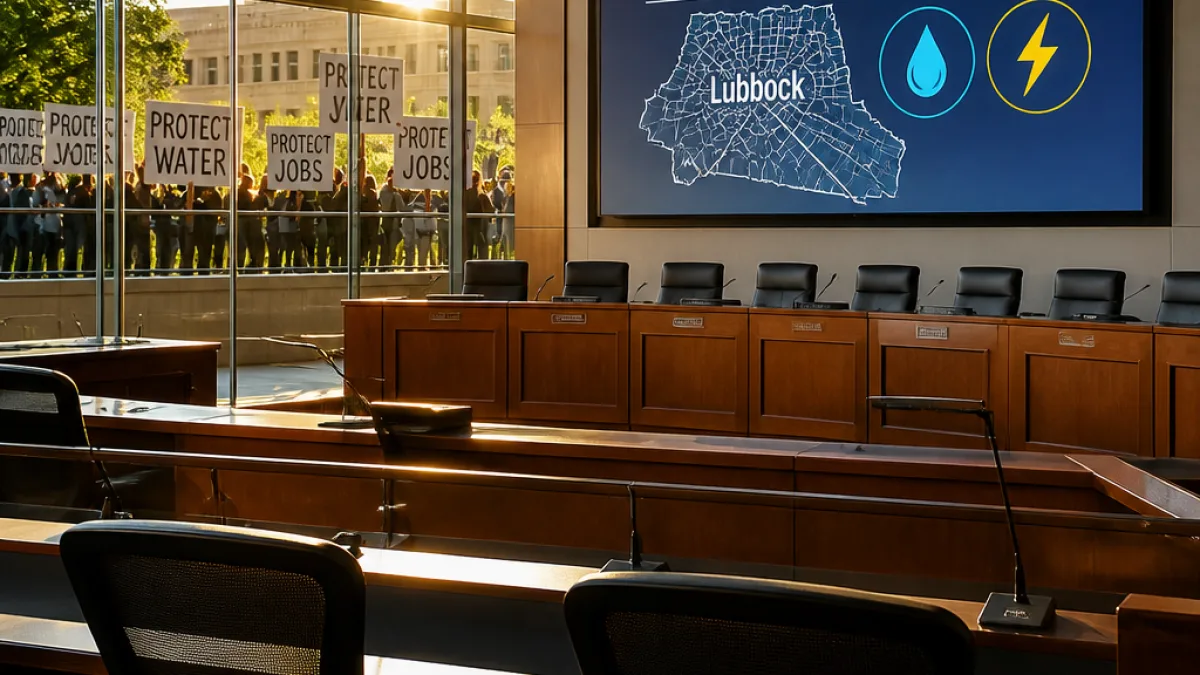
The Lubbock City Council voted 5-2 this week to initiate a 90‑day process aimed at creating rules and protections for potential large-scale data centers in the city while staff drafts an ordinance. The resolution starts a limited moratorium process and directs city planning staff to develop guidelines addressing water use, power reliability, zoning, noise and lighting for any large data center proposals.
What the council approved
Council members approved the resolution after months of advocacy from a local group called Save Lubbock. The group, represented publicly by Stephen Sanders, pushed for stricter controls on data center development. Sanders told the council a 90‑day pause is a necessary step to protect city resources while officials study long-term impacts.
“It gives our city time to establish guardrails, protect our resources, consider the long-term effects on our neighborhoods, and develop a clear plan, rather than rushing forward without adequate preparation,” Sanders said.
Under the action, city planning staff will draft an ordinance and create specific guidance on several fronts. The council also directed staff to schedule a work session within the 90‑day period so outside experts can brief members on potential impacts of large data centers.
Points of contention
The measure was not unanimous. District 6 Councilman Tim Collins and District 4 Councilman Tim Green voted against the resolution, expressing concern that a pause could hinder Lubbock’s competitiveness for economic development as the Texas legislative session continues and as technology evolves.
“We are going to receive a great deal of information... We only have one tool, and that’s this moratorium. If we exercise that tool today, come June, we’re out. We’re out of the game,” Collins said.
Green said data center technology has changed and that Lubbock should consider opportunities, provided potential projects demonstrate responsible operation. District 5 Councilwoman Jennifer Wilson stressed she wants business investment in Lubbock so long as it does not threaten city resources.
“If it threatens Lubbock’s water supply, we shouldn’t approve it, and we won’t approve it,” Green said. “If a company can demonstrate it can operate responsibly, then let’s look at it.”
Next steps and what residents can expect
During the upcoming 90‑day period, planning staff will prepare proposed standards covering:
- Water consumption limits and monitoring
- Requirements for reliable and resilient power connections
- Zoning and siting standards to protect neighborhoods and existing land uses
- Noise and lighting controls to mitigate community impacts
The council’s directive also calls for a work session featuring subject‑matter experts who can brief members on technical topics such as power requirements, water needs and state regulatory developments that could affect data center operations.
| Item | Action |
|---|---|
| Council vote | Approved 5-2 |
| Moratorium window | 90 days (process initiated) |
| Staff tasks | Draft ordinance; develop guidelines on water, power, zoning, noise, lighting |
Supporters of the resolution say the pause gives the city time to build “guardrails” before major projects move forward. Opponents warn a moratorium could remove Lubbock from consideration for investment if the city is seen as noncommittal while other Texas communities compete for data center projects.
For Lubbock residents, the council’s action signals that local leaders intend to weigh economic opportunity against the potential cost to municipal resources. As staff and outside experts prepare briefings, residents concerned about water availability, electrical infrastructure and neighborhood quality of life will have the opportunity to follow the work session and subsequent ordinance drafting, which will shape how — or whether — large-scale data centers can be built in Lubbock.
The council’s steps over the next three months will frame the city’s approach to a growing industry that can bring jobs and investment but also significant demands on utilities and land use.

















