
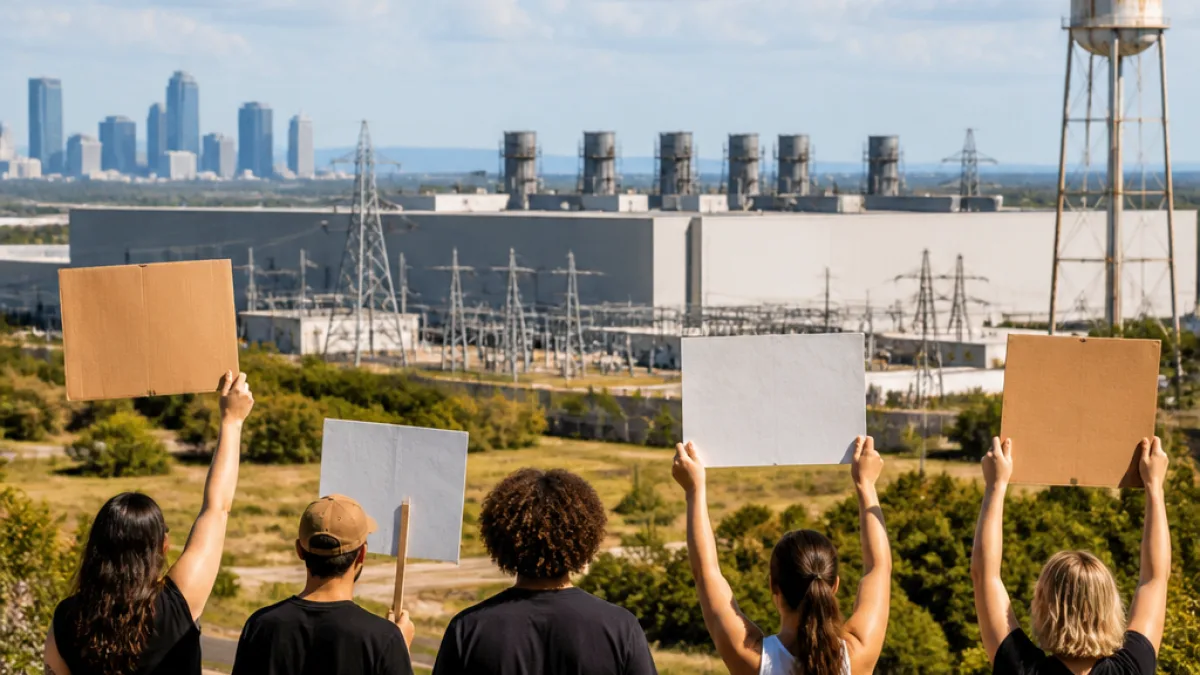
Austin, Texas — A rapid expansion of data centers across Texas has prompted an unusual public intervention from within the Republican Party, with outgoing Agriculture Commissioner Sid Miller arguing the industry’s footprint threatens rural communities and could become a political liability for state leaders.
Skyrocketing growth, rising concerns
Texas has emerged as one of the nation’s leading destinations for data centers. Corporate giants including Amazon Web Services, Microsoft, Alphabet, Oracle and Meta are among those seeking to build or expand facilities that support cloud services and artificial intelligence. The state’s incentives — from discounted utility rates to property tax breaks and streamlined approvals — have helped fuel what supporters call an economic opportunity bonanza.
But Miller, an outspoken conservative who has frequently clashed with party leaders, has sounded the alarm about the local costs of that growth. He argues that the facilities consume disproportionately large amounts of electricity and water, occupy agricultural or undeveloped land, and can alter the character of small communities where many are being proposed.
"They suck up water and energy resources, take up land, disrupt the peace and quiet of the intentional distance you take from the city slickers, and they’re popping up like weeds,"
The quote has circulated widely as evidence of a populist critique of the industry coming from a prominent Texas Republican. Miller’s stance places him at odds with Governor Greg Abbott, whose administration has actively courted data center investment as part of broader economic development efforts.
Polling underscores local resistance
Public opinion appears to back Miller’s concerns. Recent national and state-level surveys show substantial opposition to new data center construction near residents’ communities:
- Gallup: About 7 in 10 Americans said they would oppose building a data center in their community.
- Texas Politics Project (August): Roughly 57% of Texas respondents opposed or strongly opposed construction of data centers in their communities, with resistance higher in rural areas.
| Poll | Opposition |
|---|---|
| Gallup (national) | ~70% |
| Texas Politics Project (state) | ~57% |
What officials are offering — and why it matters
To attract data center projects, local and state officials have used a mix of financial and regulatory incentives. Those incentives include:
- subsidized or discounted utility rates;
- property tax abatements;
- payroll or job-creation credits;
- expedited environmental approvals and zoning accommodations.
Proponents say data centers bring high-paying jobs, construction activity and an expanded tax base. Critics counter that centers employ relatively few permanent workers compared with their land and resource use, and that incentives shift costs onto other ratepayers and taxpayers.
Political stakes
Miller has framed the debate as not only an environmental or land-use concern but also an electoral risk. His public warnings suggest that the policy choice to favor rapid data center development could alienate rural Republican voters who feel overlooked by large-scale tech investments.
The divergence inside the party is notable. Governor Abbott has supported policies and incentives that have helped attract major data center projects to the state. Miller’s critique, by contrast, taps into populist resentment about outside corporations reshaping local economies and consuming scarce resources — a message with appeal in many smaller Texas communities.
Questions for communities and policymakers
As proposals proliferate, local officials face decisions about approving projects, negotiating community benefits and weighing long-term infrastructure impacts. Key questions include how to:
- ensure reliable water and power supply without undermining existing users;
- balance short-term tax incentives with long-term fiscal health;
- protect agricultural land and preserve rural character;
- require community benefits or mitigation from developers.
State lawmakers and regulators will likely face pressure to refine oversight and incentive policies as the debate continues. The interplay of economic development goals, environmental limits and voter sentiment makes the data center boom one of the state’s most consequential policy disputes heading into the next legislative sessions and election cycles.
Reporter note: This article is based on reporting that highlights public statements by Sid Miller and recent polling on public attitudes; it does not attempt to quantify the total number of current or planned Texas data centers beyond widely reported industry trends and corporate involvement.

















