
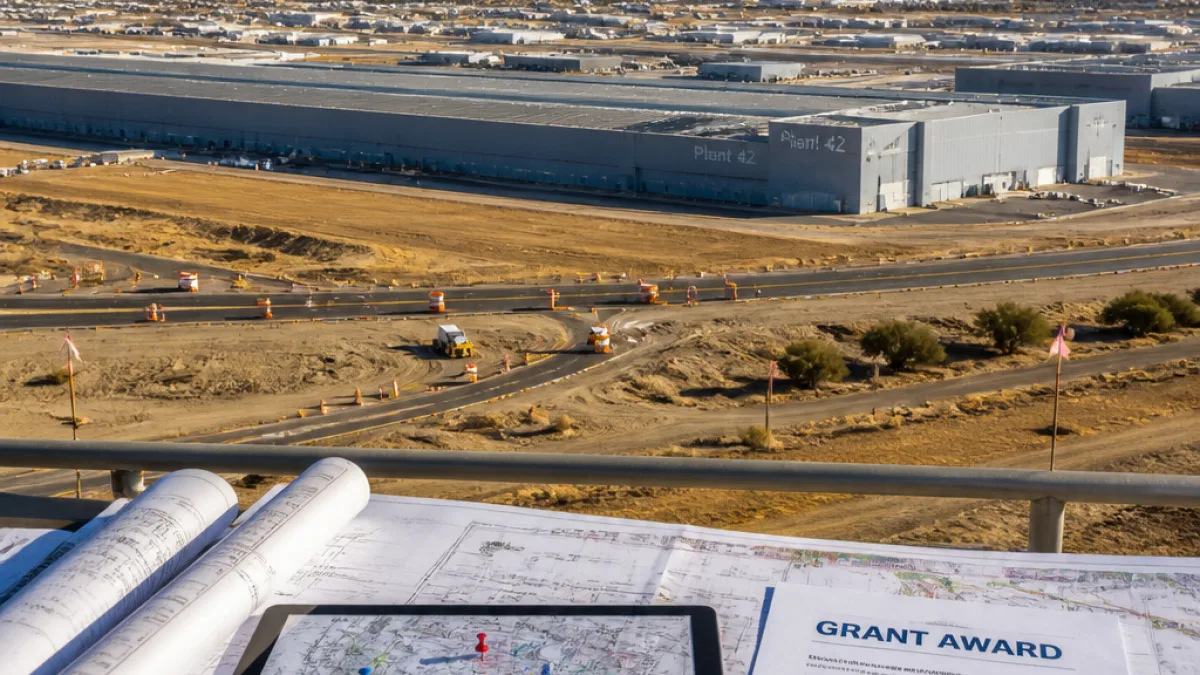
Palmdale has secured a $944,402 federal grant to support planning and infrastructure work tied to U.S. Air Force Plant 42 and nearby industrial areas, city and regional officials announced this week. The award comes from the U.S. Department of the Office of Local Defense Community Cooperation (OLDCC) under its Installation Readiness Program and is intended to advance coordination among the City, the Air Force and other stakeholders.
Focus on long-term readiness for an aerospace hub
The grant will launch what the announcement calls the Plant 42 Installation Readiness Project. City leaders say the project is aimed at addressing land-use and infrastructure needs tied to the installation’s future and the continued growth of aerospace activities in the Antelope Valley.
Plant 42, an Air Force-owned, contractor-operated facility, is a cornerstone of Palmdale’s economy. The site supports aircraft manufacturing and flight testing and anchors an industrial cluster that includes major defense contractors. The installation is managed by the Air Force Industrial Plants Division at Wright-Patterson Air Force Base, Ohio, which serves as the Air Force’s executive agent for Plant 42 facilities management.
- Grant amount: $944,402
- Program: OLDCC Installation Readiness Program
- Primary focus: Infrastructure and land-use planning for Plant 42 and surrounding industrial areas
An Edwards Air Force Base detachment operates the airfield at Plant 42, providing flight operations support and airfield security. The two installations together form the Edwards industrial complex, which the release notes is the largest employer in the Antelope Valley.
“Plant 42 has been part of Palmdale’s identity and economy for generations, and its success is closely connected to the success of our community,” the city announcement said.
Economic and local planning implications
City and regional officials framed the grant as an opportunity to coordinate land-use planning, upgrade infrastructure and ensure the installation and its industrial partners can continue supporting advanced aircraft programs. Plant 42’s presence sustains local suppliers and manufacturers, including nationally recognized defense contractors, and the installation supports thousands of jobs across Palmdale and the Antelope Valley.
Public-facing planning efforts funded by OLDCC typically include assessments of transportation access, utilities, workforce needs and compatible land uses near military installations. Those areas are often focal points for regional job retention and attraction strategies because military facilities and their contractor networks contribute sustained demand for skilled workers and specialized services.
Where Plant 42 fits in the region
Plant 42 serves as a manufacturing and flight test site. According to the announcement, first flights for advanced military aircraft often begin at Plant 42 and conclude about 20 miles away at Edwards, where developmental flight testing is conducted under highly structured programs.
| Item | Details |
|---|---|
| Grant source | U.S. Department of the Office of Local Defense Community Cooperation (OLDCC) |
| Program | Installation Readiness Program |
| Amount | $944,402 |
| Primary partners | City of Palmdale, Air Force (Plant 42/Edwards detachment), regional agencies, industry stakeholders |
For Palmdale residents, the project means local officials will be engaging with federal and military partners on planning matters that could shape future land use, transportation priorities and economic development near the installation. City leaders emphasized that the grant provides an avenue for collaboration to support long-term aerospace activity and the jobs that come with it.
Next steps outlined in the release include convening the City, the Air Force, regional agencies and other stakeholders to develop the readiness project’s scope and priorities. Specific timelines, public outreach plans and detailed project components were not included in the announcement.
The grant underscores Palmdale’s continuing role as an aerospace and defense center in Southern California and signals federal investment in preserving the infrastructure and planning capacity needed to sustain that role.















