Former Odesa district court chief convicted for accepting illicit payment
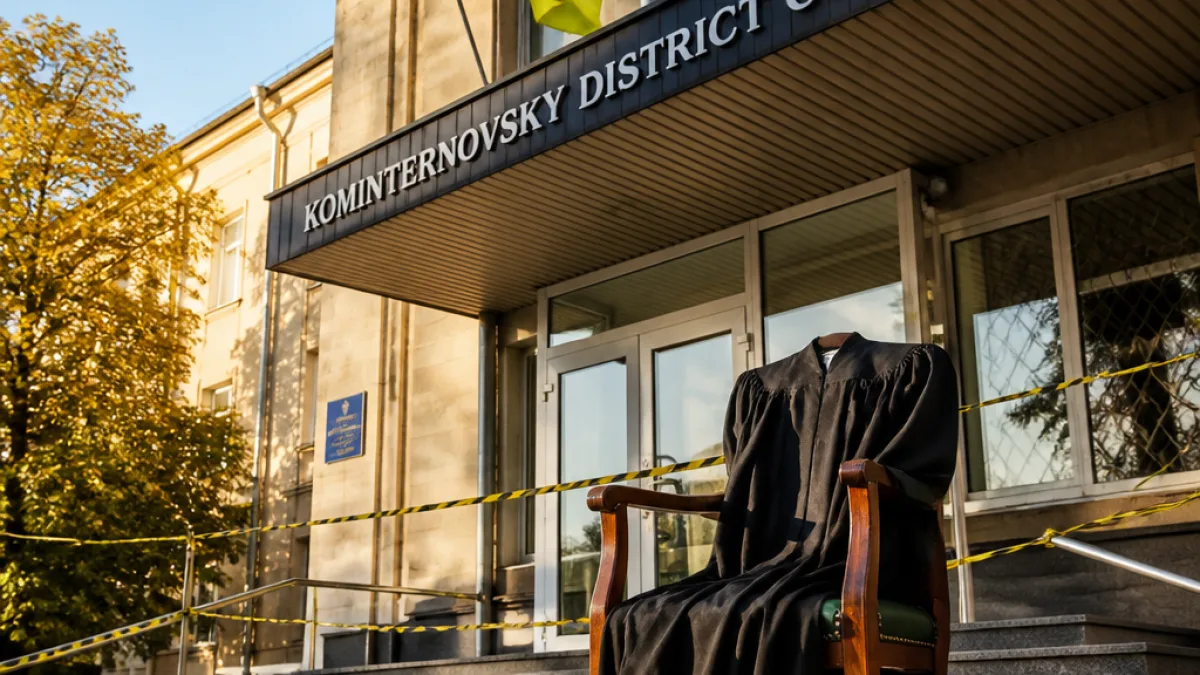
Ukrainian authorities have sentenced Pavlo Dobrov, once the acting chairman of the Kominternovsky District Court in the Odesa region, to seven years in prison after finding he accepted an illegal benefit tied to a civil case. The ruling, announced by national anti-corruption officials, also includes restrictions and property measures that reflect the case's criminal classification.
The court determined Dobrov received nearly 50,000 hryvnias in exchange for promising to make it easier for a civil claimant to secure a favorable decision and to ensure enforcement of previously issued procedural orders. He was convicted under the relevant article of Ukraine's criminal code concerning acceptance of unlawful benefits by a public official.
- Prison term: 7 years
- Barred from public office: 3 years
- Financial consequence: Confiscation of all property
The sentence also included a three-year prohibition on holding positions in state or local government and the confiscation of Dobrov's assets. Ukrainian law enforcement characterized the action as part of broader efforts to address corruption within the judiciary.
"pressure is being exerted on the judges hearing the case of NABU detective Ruslan Magamedrasulov."
The case drew attention from the National Anti-Corruption Bureau of Ukraine (NABU) and the Specialized Anti-Corruption Prosecutor’s Office (SAPO), whose officials briefed reporters in Kyiv. NABU Director Semen Kryvonos and SAPO Head Oleksandr Klymenko used the briefing to outline other corruption patterns they say are affecting the country's defense sector and judicial processes.
| Item | Detail |
|---|---|
| Defendant | Pavlo Dobrov |
| Position | Former acting chairman, Kominternovsky District Court (Odesa region) |
| Conviction | Acceptance of unlawful benefit (Part 3, Article 368) |
| Penalties | 7 years imprisonment; 3 years ban on public office; confiscation of property |
Officials framed the decision as emblematic of the ongoing crackdown on corrupt practices among public servants, particularly in institutions where impartial court decisions are essential. The NABU and SAPO briefing tied the investigation into Dobrov to broader concerns about schemes that, according to the agencies, "undermine the country’s defense capabilities and destroy competition."
For Odessa and its regional neighbors, the conviction is a reminder of the scrutiny facing public institutions across Ukraine. Legal experts and anti-corruption advocates have long said that credible judicial accountability is a prerequisite for foreign investment, rule of law and trust in public institutions. While this case addresses alleged wrongdoing at the district court level, the anti-corruption agencies’ statements suggest authorities are monitoring patterns that could extend beyond a single official.
Observers will watch for follow-up actions from NABU and SAPO, including whether additional charges or related prosecutions emerge from their stated investigations into defense-related corruption and pressure on the courts. The briefing specifically referenced concern about pressure being placed on judges involved in the investigation of a NABU detective, signaling potential institutional tensions between law enforcement and judicial actors.
For residents of Odessa watching developments in Ukraine's justice system, this judgment may carry symbolic importance. It demonstrates how national prosecutors and anti-corruption bodies are actively pursuing cases that challenge the conduct of judicial officials, and it underscores the persistent focus on rooting out influence-peddling in the administration of justice.
As with any criminal conviction, the immediate legal consequences are clear: a multi-year prison term, loss of the ability to hold government office for a time, and the seizure of assets. The longer-term implications — for judicial independence, public confidence and the integrity of cases that moved through affected courts — remain to be seen as Ukrainian authorities continue to probe corruption allegations in other sectors.