
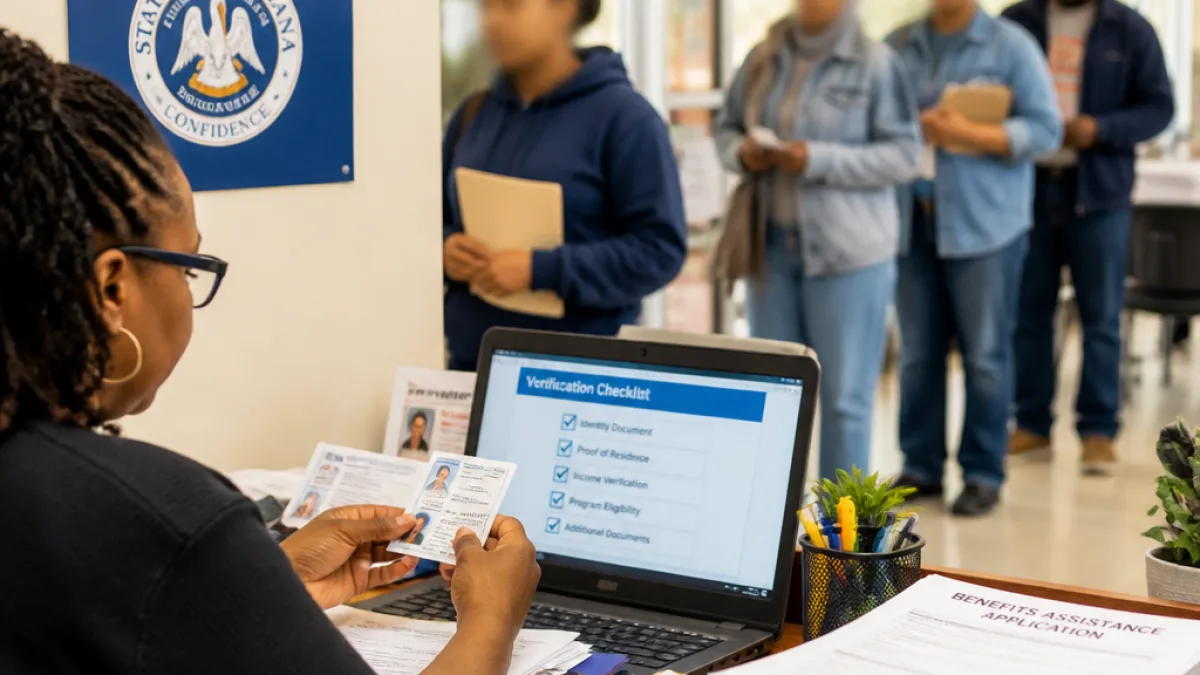
Baton Rouge, La. — A new state law that requires additional verification for non-governmental organizations handling taxpayer-funded public assistance took effect Aug. 1, expanding Louisiana’s efforts to reduce fraud in benefit programs.
What the law does
House Bill 335, enacted as Act 795 and authored by Rep. Chance Henry, R-Crowley, extends existing citizenship and eligibility verification rules that apply to state agencies and political subdivisions to certain non-governmental organizations (NGOs) that administer or distribute state-funded benefits.
The measure is part of a broader campaign from Attorney General Liz Murrill to strengthen safeguards around public assistance and ensure taxpayer dollars reach eligible recipients.
"The State of Louisiana provides public benefits to those in need. They are paid for by the hard-working men and women of Louisiana who get up every morning and go to work to provide for their families. They belong to the people of Louisiana and those who actually qualify," said Attorney General Liz Murrill.
Why officials say the change is needed
State leaders, including Murrill and Rep. Henry, framed the law as closing a gap in oversight by making nonprofit organizations subject to similar documentation and verification that state agencies already perform when determining eligibility for public programs.
"Louisiana taxpayers fund these programs, and they deserve to know the money is reaching people who actually qualify," Rep. Henry said in support of the measure. The attorney general’s office said the statute aligns Louisiana’s approach with steps other states and the federal government have taken to confirm eligibility and curb improper payments.
Key requirements and timing
The law went into effect Aug. 1. It does not change eligibility rules for recipients; instead, it places additional responsibilities on organizations that distribute publicly funded assistance to verify recipients’ qualifications before disbursing benefits.
- Extends verification requirements to certain NGOs administering taxpayer-funded benefits.
- Builds on existing citizenship verification rules for state agencies and political subdivisions.
- Aims to align state oversight with similar federal and interstate efforts to prevent fraud and improper payments.
| Item | Detail |
|---|---|
| Bill | House Bill 335 (Act 795) |
| Author | Rep. Chance Henry (R-Crowley) |
| Effective date | Aug. 1 |
| Primary impact | Verification requirements applied to NGOs handling state-funded assistance |
Practical impact for nonprofits and recipients
For nonprofit providers that partner with state and local governments to deliver benefits, the change is likely to mean additional administrative steps: collecting documentation, confirming eligibility and, in some cases, coordinating with state agencies to ensure records meet the law’s requirements before funds or services are distributed.
Advocates and philanthropic partners that operate small-scale programs may face new compliance costs and paperwork burdens. The law’s supporters say those costs are justified by the need to protect taxpayer-funded programs from misuse. The attorney general’s office has described the statute as a measure to shore up the integrity of programs intended for Louisiana residents who meet eligibility standards.
Enforcement and oversight
The attorney general’s office has positioned itself as a key actor in monitoring and enforcing the state’s anti-fraud rules, though the source material did not detail specific enforcement mechanisms or penalties tied to the new NGO verification obligations.
State officials have said the law complements existing verification systems and is part of a larger effort to coordinate with federal and interstate policies that seek to reduce improper payments and fraud.
Next steps for stakeholders
Nonprofits that accept public funds should review their intake and documentation procedures to ensure compliance. Local governments and state agencies that contract with NGOs may need to update agreements and oversight practices to reflect the law’s verification expectations.
For recipients of public assistance, the law does not alter eligibility criteria; rather, it focuses on who must validate eligibility before benefits are provided. Individuals with questions about how verification may affect the distribution of particular services should contact the administering agency or the nonprofit partner directly.
As the state implements the law, further guidance from the attorney general’s office and state agencies will be important for clarifying operational responsibilities and any reporting expectations for organizations that receive or distribute taxpayer-funded assistance.

















